
Florida Wills | Coral Gables, Florida
Is a Will Valid in Florida If It Was Not Properly Witnessed?
Florida's witnessing requirements leave little room for error. Get a free, confidential first consultation with no obligation to continue.
By Leslie V. Marenco · Published October 31, 2026
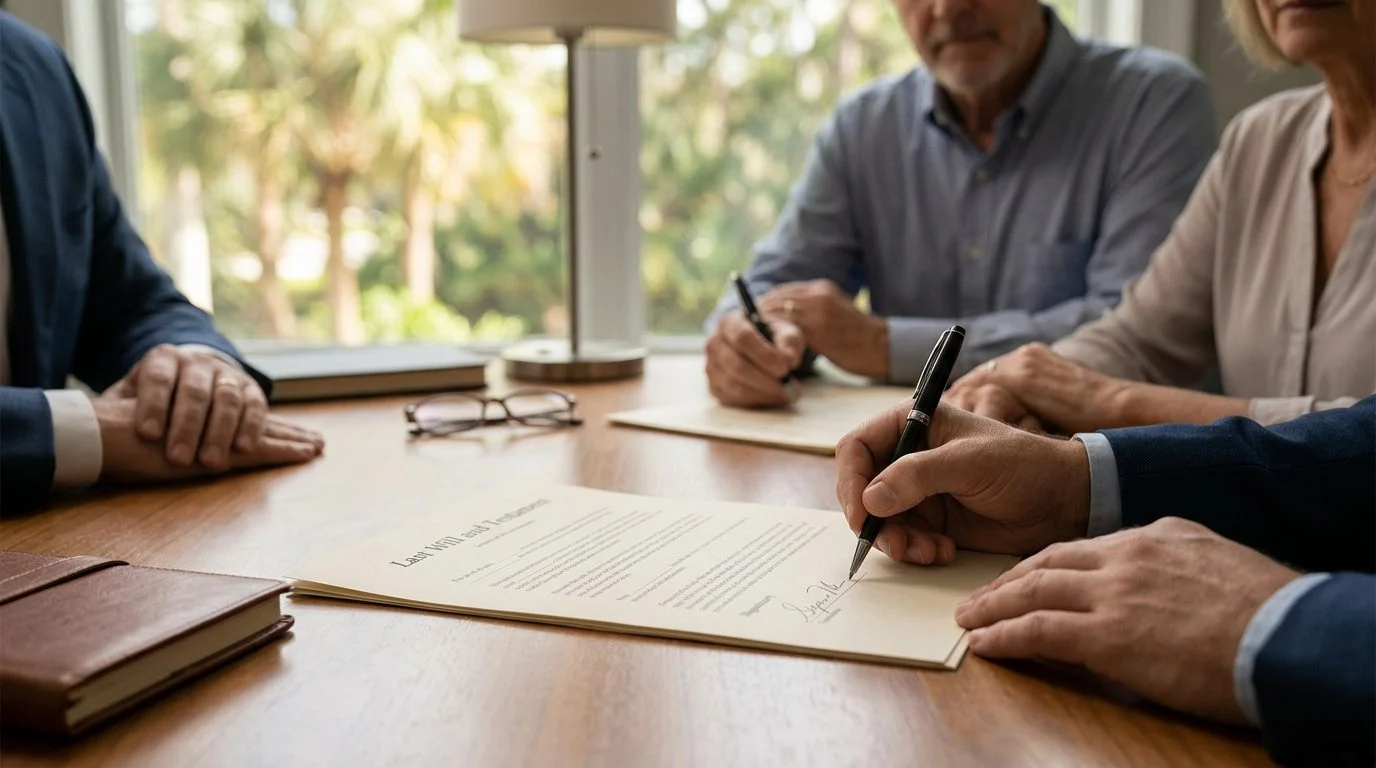
A will that is not properly witnessed in Florida generally cannot be admitted to probate as an ordinary will. Under Fla. Stat. § 732.502, the testator’s signing or acknowledgment must be made in the presence of at least two attesting witnesses, and the attesting witnesses must sign the will in the presence of the testator and in the presence of each other. A missing witness signature can still lead to a court fight, but the statute leaves few easy routes around the rule.
If you’re asking whether a will that is not properly witnessed in Florida still counts, you likely have three questions. Is the document valid? Can a court admit it anyway? What happens if it fails?
What Florida requires for a will to be properly witnessed
Under Fla. Stat. § 732.502, every will must be in writing and executed as the statute provides, including the testator’s signature at the end of the will or a signature made by another person in the testator’s presence and by the testator’s direction. The core rule is in Fla. Stat. § 732.502.
The testator must sign at the end of the will. Another person can sign the testator’s name, but only in the testator’s presence and at the testator’s direction. The testator’s signing, or the testator’s acknowledgment of a signature already made, must happen in front of at least two witnesses.
The witnesses must then sign the will in the testator’s presence. They must also sign in each other’s presence. Each step matters. A witness who signs apart from the others raises a question the court must answer.
Under Fla. Stat. § 732.502, a will must be in writing and signed by the testator at the end, or have the testator’s name subscribed at the end by another person in the testator’s presence and at the testator’s direction. The testator’s signing, or acknowledgment of the signature, must take place in the presence of at least two attesting witnesses, who must sign the will in the presence of the testator and of each other. Under Fla. Stat. § 732.504, any person competent to be a witness may act as a witness. Fla. Stat. § 732.504 says any person competent to be a witness may act. For the broader contest framework, see the trust litigation overview.
Not sure what your next step is?
Talk it through with Trust Counsel, PL — the first consultation is free, confidential, and carries no obligation.
What a missing witness signature does to a will
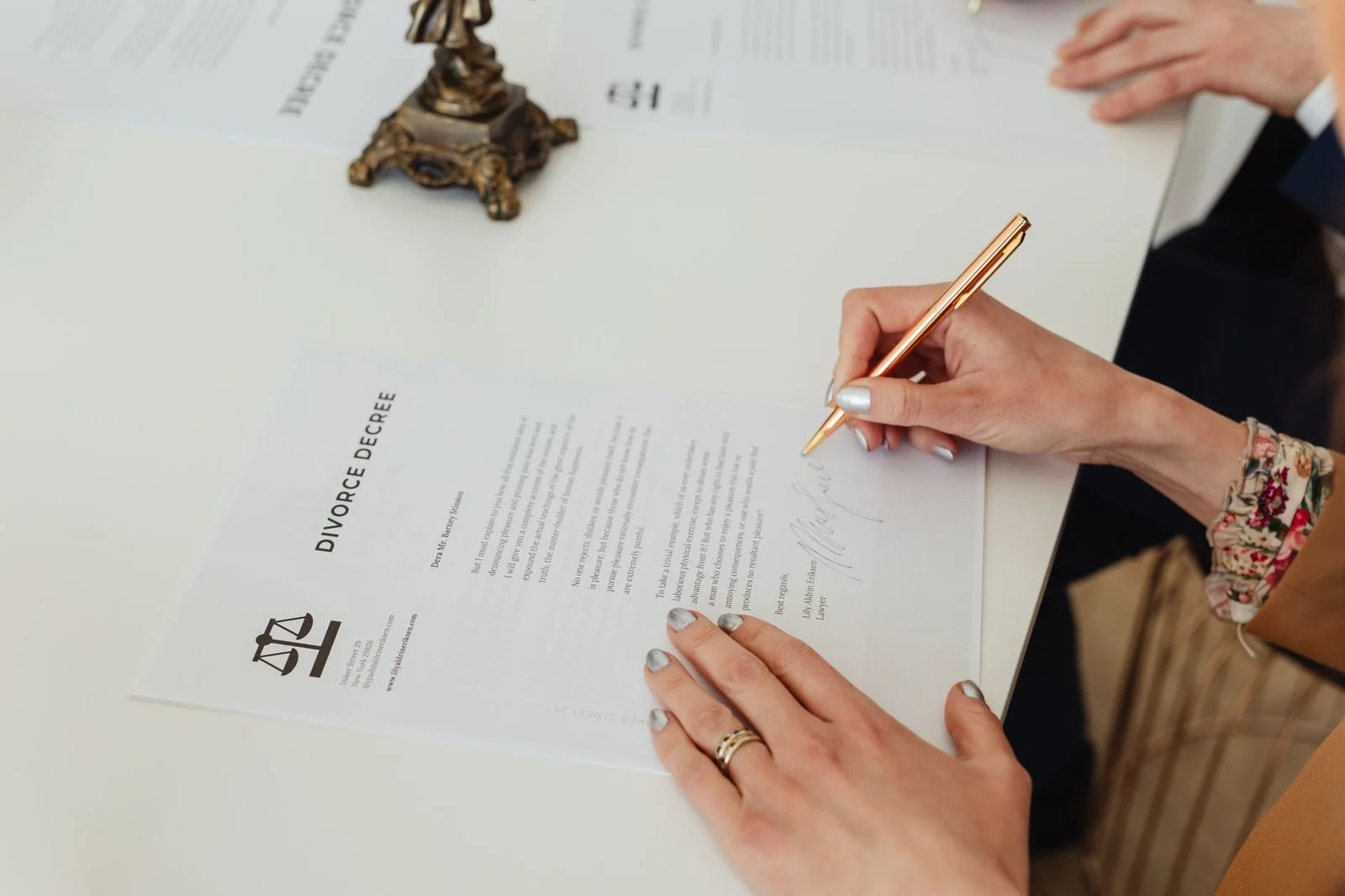
A will with a missing witness signature does not meet the statute’s formal requirements. The court starts with the original document and asks whether the formalities were met.
That question sits with the person offering the will. Under Fla. Stat. § 733.107, the proponent must first establish the will’s formal execution and attestation.
Many people assume one missing witness is a small problem. A will with no witness signatures falls short too.
When the formalities are in doubt, the fight moves from the paper to the evidence. Who saw the signing, and where it happened, becomes central.
Handwritten wills without witnesses: why the statute gives few exceptions
A handwritten will with no witnesses generally is not a valid Florida will under the statute’s text. The statute lists exceptions for certain nonresidents and for military wills, but not a general exception for a handwritten page.
Under § 732.502, a will executed by a nonresident of Florida is valid in this state if it was valid under the laws of the state or country where it was executed; holographic and nuncupative wills are not covered by this provision. Under Fla. Stat. § 732.502, a will executed as a military testamentary instrument in accordance with 10 U.S.C. s. 1044d, Chapter 53, by a person who is eligible for military legal assistance is valid as a will in this state.
The same section says a will in the testator’s handwriting, if signed with the witness formalities, is not treated as a holographic will. Handwriting alone doesn’t change the rule.
The common mistake is treating a page written and signed by the decedent as enough. Check every page of the document, not only the last one.
When witnesses cannot be found: the oath route
There is one narrow path around witness testimony. If the witnesses cannot be found, have become incapacitated, or cannot testify within a reasonable time, the court may act on another oath.
A will may be admitted to probate on the oath of the personal representative nominated in the will only if the attesting witnesses cannot be found, have become incapacitated, or their testimony cannot be obtained within a reasonable time. It may also be admitted on the oath of a person with no interest in the estate who believes the writing is the decedent’s true last will.
This route deals with proof through testimony. Whether the witnesses truly cannot be reached is a fact the court must decide.
The self-proving affidavit: what it does and does not fix
A self-proving affidavit lets a will be admitted without the witnesses testifying. It works only when the will was validly executed first.
Under Fla. Stat. § 732.503, a will executed in conformity with § 732.502 may be made self-proved at signing or later. The testator acknowledges the will, and the witnesses swear to it before an officer authorized to administer oaths. Under § 733.201, a self-proved will executed in accordance with the Florida probate code may be admitted without further proof, but a purportedly self-proved electronic will may be admitted only in the manners prescribed in subsections (2) and (3) if there was a substantial failure to comply with the online notarization procedures in s. 117.265.
It attaches to a will that already meets § 732.502. An affidavit added to a will with a missing witness signature does not make that will conform.
The Florida Department of State’s Florida Notary FAQ on wills says the self-proving procedure can simplify probate. Simpler is not the same as curing a defect. Read the signature blocks before relying on the affidavit.
Interested witnesses: a separate question from validity
A witness who benefits under the will does not, by that fact alone, invalidate the will. Validity and the witness’s interest are separate questions.
Under Fla. Stat. § 732.504, a will or any part of it is not invalid because an interested witness signed it. The signature alone does not end the analysis.
When you read the document, ask two questions. First, were the required witnesses present and signing under § 732.502? Second, did an interested witness sign? The second question does not, by itself, defeat the will under § 732.504(2).
Interested witnesses often appear in family disputes, when a relative signs as a witness. In those cases, the signing question and the influence question can both come up.
Not sure what your next step is?
Talk it through with Trust Counsel, PL — the first consultation is free, confidential, and carries no obligation.
If the will fails: prior wills and Florida intestacy
Find every will the decedent signed, not just the newest one.
If no valid will can be admitted, the estate passes under Florida’s intestacy rules. Under Fla. Stat. § 732.101, any part of an estate not effectively disposed of by will passes to the decedent’s heirs. The decedent’s death is the event that vests that right.
Who asks the court to appoint a personal representative (often called an executor) follows a set order. Under Fla. Stat. § 733.301, in an intestate estate the surviving spouse comes first. Next is the person chosen by a majority in interest of the heirs, then the heir nearest in degree.
If a will is later admitted, the letters already granted are revoked, and new letters are issued under the same section.
Challenging admission: deadlines and grounds
An interested person served with a notice of administration has 3 months to object. Under Fla. Stat. § 733.212, objections to a will’s validity, venue, or jurisdiction must be filed within that period, or they are forever barred.
The 3-month period may be extended only for estoppel based on a personal representative’s misstatement about the deadline. Other reasons, including misconduct, do not extend it. Unless sooner barred, the outside deadline is the earlier of a final discharge order or 1 year after service.
On the merits, Fla. Stat. § 732.5165 says a will is void if its execution was procured by fraud, duress, mistake, or undue influence. Under § 733.107, once the proponent makes the prima facie showing, the contestant must establish the grounds opposing probate.
For a related Florida proof question, read revoked trust proof in Florida. When a trustee or beneficiary dispute reaches court, see suing a trustee in Florida.
Frequently asked questions
Is a will valid in Florida if only one witness signed it?
Florida’s text requires at least two attesting witnesses under § 732.502, so one signature falls short.
The narrow route for admitting a will without witness testimony, such as when the witnesses cannot be found, is in a different section, § 733.201.
Leslie V. Marenco, a lawyer at Trust Counsel, PL in Coral Gables, can review your document and the probate timeline with you. The first consultation is free, confidential, and carries no obligation to continue. Schedule online or call (305) 707-7126.
How Trust Counsel, PL can help
Probate litigation
Trust Counsel focuses on probate litigation, including disputes over whether a will was validly signed and witnessed.
Beneficiaries and heirs
The firm advises and represents trustees, personal representatives and beneficiaries when a will's validity is challenged.
Estate planning
Trust Counsel helps clients plan their wills so that signing and witnessing steps are completed correctly from the start.
Trust administration
Trust Counsel's attorneys can serve individually as trustee or personal representative and advise on the administration steps that follow a contested will.
Do not assume a document is valid
A document that looks like a will may fail in probate if the signing and witnessing steps were not followed. Keep the original and speak with a lawyer before relying on it or acting on it.
Questions to bring to your first consultation
Who signed the document?
Gather the original document, any drafts, and a list of everyone who was present when it was signed.
Where was the document kept?
Tell us where the original has been stored and who has had access to it since it was prepared.
What do the family and heirs expect?
Share the names of beneficiaries, heirs and any fiduciaries so the attorney can understand who may be affected.
What are the next steps?
Discuss whether the document should be reviewed, challenged or replaced, and how each option fits your goals.