
Estate Planning | Coral Gables, Florida
Florida Will Signing Rules: What Makes a Will Legal
Signatures, witnesses and common signing mistakes, explained in plain language by Trust Counsel's Coral Gables estate planning attorneys.
By Leslie V. Marenco · Published November 9, 2026
Finding a will in a parent’s papers, or writing your own, raises one question: what makes a will legal in Florida? The answer starts with a short list of formal steps, and missing one can cause real problems.
This page offers general information about these topics.
The short answer: the core requirements for a Florida will
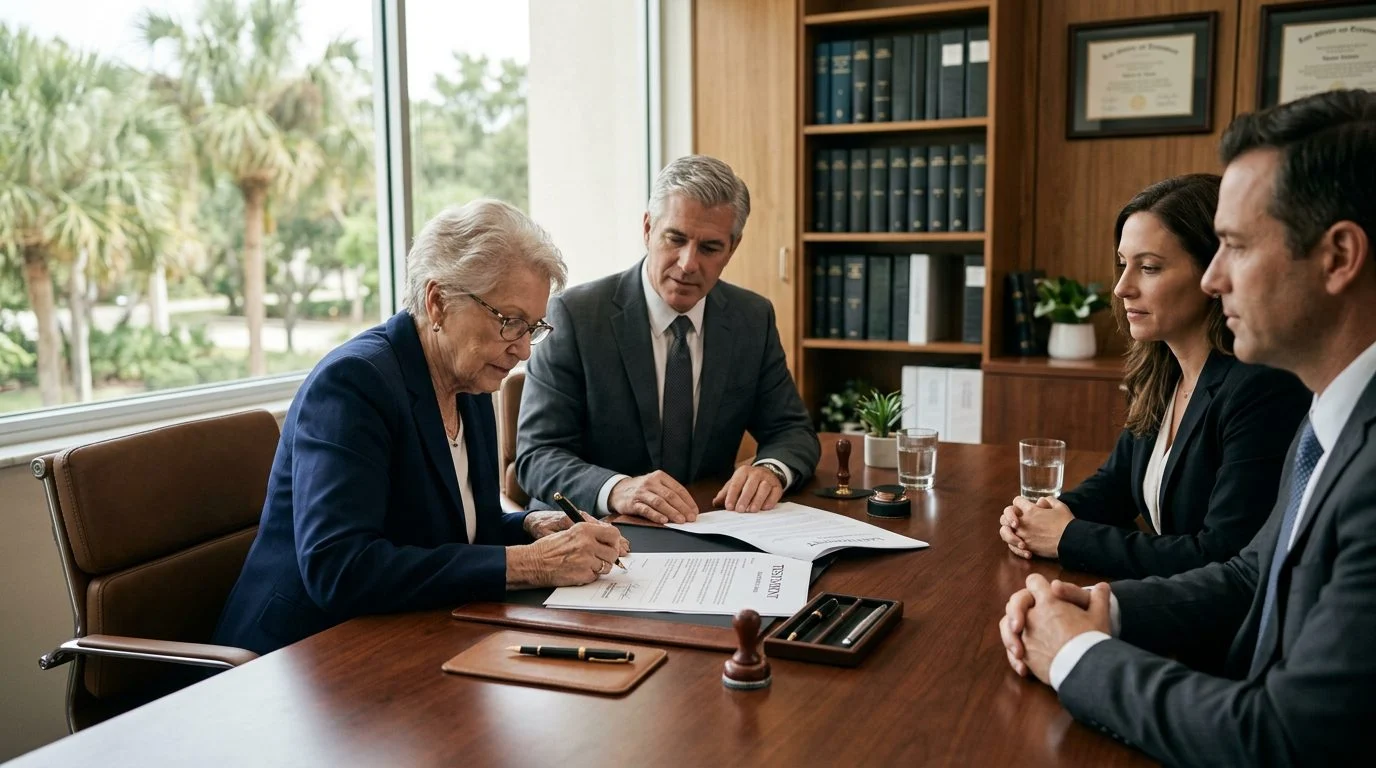
A Florida will must be in writing, signed by the testator at the end, and signed or acknowledged in front of at least two attesting witnesses. The testator is the person making the will. Fla. Stat. § 732.502 sets out these steps.
The witnesses must then sign the will in the testator’s presence and in each other’s presence, as the same statute requires. Each step matters. Skipping one can turn a family question into a court dispute over whether the document counts at all.
For the wider picture of trust and estate disputes, see the guide to trust and estate litigation in Florida.
Not sure what your next step is?
Talk it through with our team — the first discovery call is free, confidential, and carries no obligation.
Capacity and age: who may make a valid will
Anyone who is of sound mind and either 18 or older, or an emancipated minor, may make a will. Fla. Stat. § 732.501 sets that rule.
Sound mind is a legal standard, not a diagnosis. Age and health do not answer the question on their own. The circumstances around the signing do. Courts look at those facts, so the answer depends on the facts.
Undue influence is a separate issue. Fla. Stat. § 732.5165 states that rule.
Timing matters too. Fla. Stat. § 732.518
Signing and witnessing: the steps Florida requires
Another person can sign the testator’s name at the end, but only in the testator’s presence and at the testator’s direction. Fla. Stat. § 732.502 covers this step.
Being a beneficiary is a separate question. A will is not invalid just because an interested witness signed it. Getting the steps right the first time helps. Many people have a lawyer or notary present to keep the steps in order.
Handwritten wills, self-proving affidavits and out-of-state wills
A handwritten will still has to meet the signing and witnessing steps. Florida’s statute says a will in the testator’s own handwriting, executed under those steps, is not considered a holographic will. Don’t assume a handwritten page, signed alone, meets Florida’s will requirements, because the testator’s signature or acknowledgment must be made in the presence of at least two attesting witnesses, who must also sign the will in the testator’s presence and in each other’s presence.
Out-of-state wills follow a different path. A will signed by a nonresident is valid here if it is valid where it was signed. Fla. Stat. § 732.502
The affidavit sets out the acknowledgment and attestation form described in Fla. Stat. § 732.503. A will may be made self-proved under Fla. Stat. § 732.503 by the testator’s acknowledgment and the affidavits of the witnesses, made before an officer authorized to administer oaths and evidenced by the officer’s certificate attached to or following the will.
Have questions about what happened?
Ask our team directly. The first conversation is free, confidential, and there is no obligation to continue.
Checking a will you have been handed: what to look for
Start with the original document and look for the testator’s signature at the end. Then check whether two witnesses signed on the same document. Look for a self-proving affidavit with a notary’s details, and note any handwriting added later.
A missing witness signature, a missing testator signature, or an unclear date can prompt questions. Keep the original as it is, and don’t write on it.
The custodian of a will must deposit it with the clerk of the court having venue of the decedent’s estate within 10 days after learning the testator has died, and must give the clerk the testator’s date of death or the last four digits of the testator’s Social Security number. Fla. Stat. § 732.901 The clerk keeps the original for at least 20 years. Fla. Stat. § 732.901
A photocopy shows the wording, but questions about signatures are easier to answer from the original. For a related read on reviewing a will over time, see how often to update a will.
Quick answers on witnesses and beneficiaries
How many witnesses does a Florida will need?
At least two attesting witnesses must be present for the testator’s signing or acknowledgment. Fla. Stat. § 732.502
Can a witness also be a beneficiary?
Under Florida law, a will, or any provision in it, is not invalid just because an interested witness signed it. Fla. Stat. § 732.504
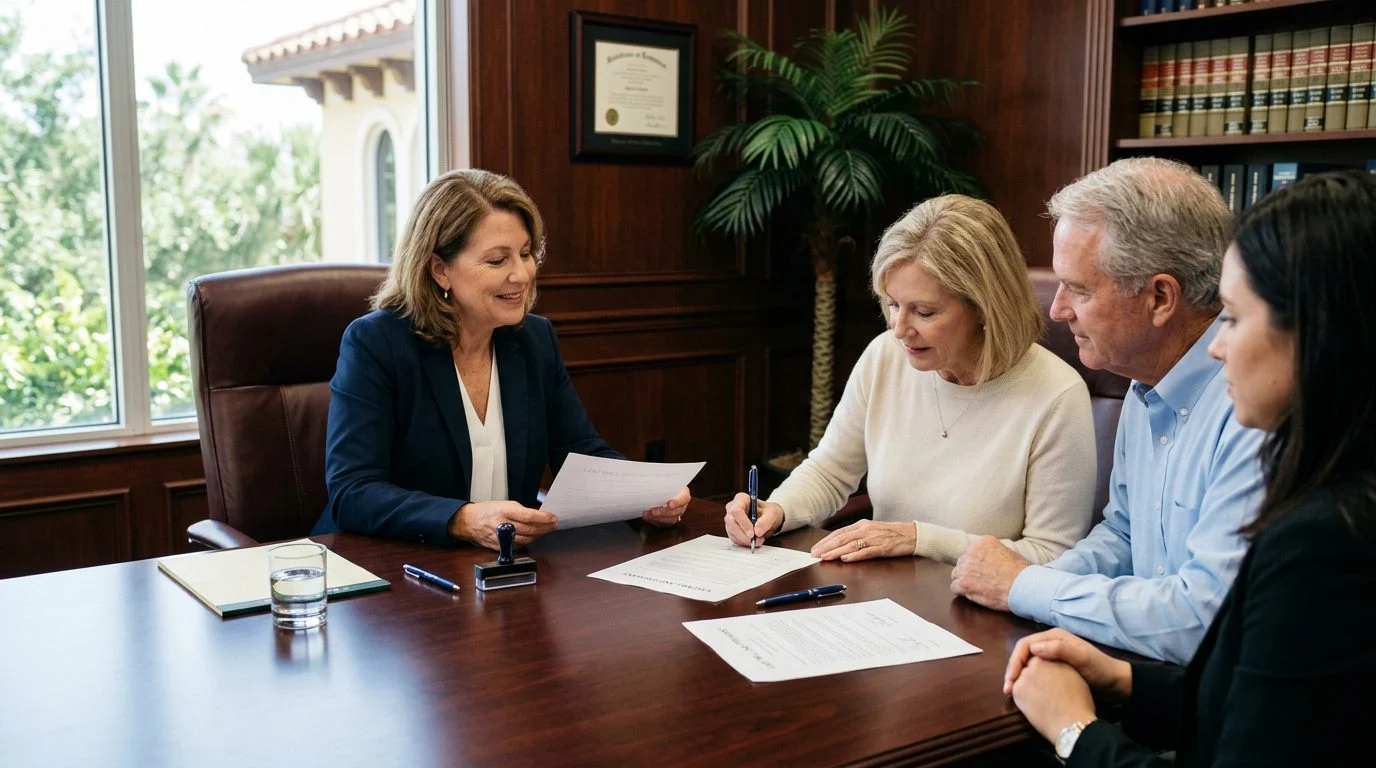
Talking through your situation with Leslie V. Marenco
If you’re holding a parent’s or relative’s will, you may be facing this question at a hard time, and not by choice. That’s a lot to carry.
Leslie V. Marenco is the lawyer responsible for this page. Trust Counsel, PL has its office in Coral Gables, Florida.
Whether one specific will meets these rules, or who qualifies as a beneficiary, turns on the facts. For a related read, see who is a qualified beneficiary of a trust in Florida.
If you’d like to walk through the document you have, you can book a free discovery call. It is confidential and carries no obligation to continue. Call (305) 707-7126 or schedule online.
Want to know where you stand?
Tell us what happened and our team will walk you through the options available to you, at no cost.
What This Guide Covers
The Signature Requirement
How a will must be signed under Florida law, and why the formal steps matter.
Witness Rules
Who may serve as a witness and what the witnesses must see and do.
Interested Witnesses
How a beneficiary serving as a witness can affect a will.
Common Signing Errors
Mistakes that can lead to disputes over whether a will is valid.
Important: Do Not Rely on Informal Signing
A will that is not signed and witnessed the way Florida law requires may not be accepted as valid. Have an attorney review your signing plan before you sign.
Questions to Raise Before You Sign
Who Signs?
Confirm that the person making the will has the required capacity and signs the document as the law requires.
Who Witnesses?
Choose witnesses carefully and make sure the signing process is documented correctly.
Who Benefits?
Consider whether any witness or family member receives a gift under the will, since this can raise questions later.
What Happens Next?
Store the original will safely and review it when your family or finances change.
Have questions about signing your will?
Book a free discovery call with our Coral Gables office or call (305) 707-7126.