
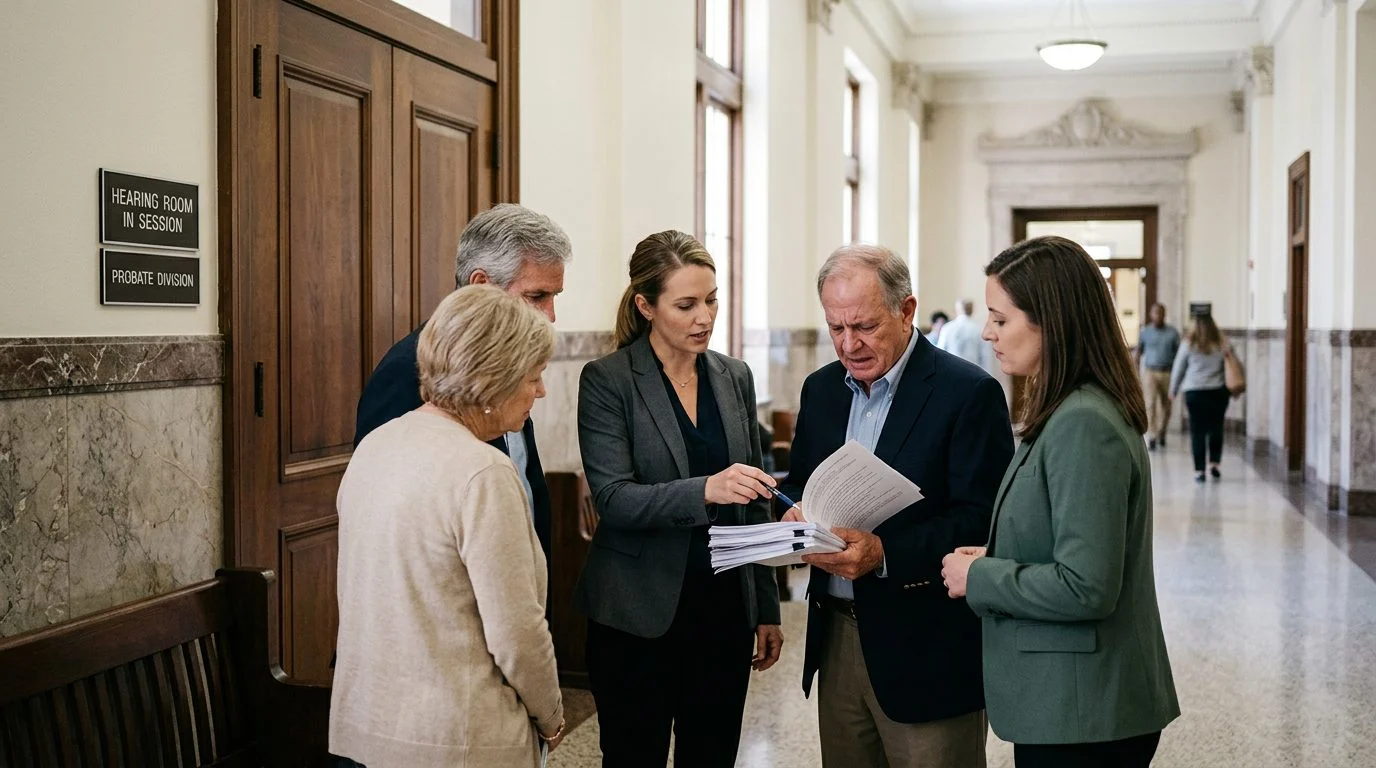
Trust and estate disputes | Coral Gables, Florida
Bring What You Have to Your Trust Dispute Consultation
Trust Counsel, PL reviews trust and probate disputes for beneficiaries, heirs and fiduciaries. Knowing which documents to bring helps make your first meeting more productive.
By Leslie V. Marenco · Published November 3, 2026
Here is what to bring to a trust dispute consultation Florida beneficiaries, heirs and fiduciaries should plan for: the signed trust and every amendment, the death certificate, any court papers, account statements, accountings you received, and written notices. Add a dated timeline of key events. You don’t need every record before you call. A partial set still helps.
Why preparation matters at a first consultation
A trust dispute turns on three things: the trust terms, the assets and the timeline. Organized records help an attorney see how those pieces fit together. That saves time for you and for the attorney.
Trust Counsel, PL is a Coral Gables firm that represents beneficiaries, heirs and fiduciaries in probate and trust disputes. Bringing documents to a first meeting is optional, but it helps. The first consultation is free, confidential and carries no obligation to continue.
You don’t need a complete file. If you have only part of the paperwork, bring what you have and list what you can’t find. Missing items can be identified and requested later. A clear timeline often does more than a full binder. Start with the papers you already hold, then add short notes on dates and people.
If a trustee hasn't sent you the trust or an accounting, you may have a claim, and we'd be glad to talk through your papers with you. Talk it through with Trust Counsel, PL — the first consultation is free, confidential, and carries no obligation.

The trust agreement and every amendment
Bring the signed trust agreement and every amendment, restatement or codicil you have. Focus on the newest signed version. Older drafts may no longer reflect what the settlor wanted.
Check the dates and signatures on each page. Note which version the trustee gave you, and when. If the trust was paired with a pour-over will, bring that will too. It was often signed at the same time as the trust.
Ask for any certification of trust the trustee has given you. A certification can list the trust’s existence, the settlor and the identity and address of the currently acting trustee, § 736.1017. If you are a qualified beneficiary, you can ask for the full trust under § 736.0813, since a trustee may furnish a certification of trust instead of a copy to a person other than a beneficiary, § 736.1017. Under § 736.0813, upon reasonable request, the trustee must provide a complete copy of the trust instrument.
Finally, list the trust’s assets. Include account names, deeds and beneficiary designations. Approximate values are fine at this stage.
Wills, death certificates and probate filings
Bring the death certificate, the decedent’s will and any earlier wills. Also bring every court paper you have about the estate. These documents show who was named, who was appointed and what the court has done so far.
Write down where the original will is kept and who has access to it. If you don’t know, note who might have it.
Include petitions, letters, orders, notices and inventories from the court or the personal representative. Florida’s term for the person running an estate is “personal representative” (often called an executor). The attorney will look at who was appointed, when, and what authority was given.
Under § 733.604, a personal representative must file a verified inventory unless one was filed earlier. It lists each item with its estimated fair market value at the date of death. A residuary beneficiary or heir in an intestate estate can ask the personal representative in writing for an explanation of how an asset’s inventory value was set, covering all inventoried assets; any other beneficiary can make that request only for assets distributed or proposed to be distributed to that beneficiary. Keep any letter that explains those rights.
Trust accounts, statements and accountings
Bring statements for every trust account you know about, plus any accounting you have received. Include the time period in question if you know it. Account records show how money moved, so they are often the first thing an attorney reviews.
Under § 736.08135, an accounting must show all cash and property transactions and significant transactions during the period. It must also show compensation paid to the trustee and the trustee’s agents. Compare what the accounting says with the statements you hold.
Under § 736.0810, the trustee must keep clear, accurate records. If no accounting arrived, write down each request and its date.
Timing matters. Under § 736.1008, a beneficiary generally has 6 months after receiving a trust disclosure document to sue over a matter it adequately disclosed. Under Fla. Stat. § 736.1008, unless sooner barred by adjudication, consent, or limitations, a beneficiary is barred from bringing an action against a trustee for breach of trust with respect to a matter that was adequately disclosed in a trust disclosure document unless a proceeding to assert the claim is commenced within 6 months after receipt from the trustee or a trust director of the trust disclosure document or a limitation notice that applies to that disclosure document, whichever is received later.
Letters, emails, texts and notices
Bring every letter, email, text and voicemail about the trust or estate. Include messages from the trustee, the personal representative, other beneficiaries and family members. Written messages often show what was promised, what was refused and when.
Include demand letters, notices of trust administration and your replies. Notice dates can matter. Under § 736.0813, a trustee of an irrevocable trust must notify qualified beneficiaries within 60 days after acquiring knowledge of its creation, or the date the trustee acquires knowledge that a formerly revocable trust has become irrevocable, but this does not apply to an irrevocable trust created before the effective date of the code or to a revocable trust that became irrevocable before that date.
Keep original files intact. Save emails with their header information, and keep full text threads with dates. Screenshots of only part of a conversation can leave gaps.
Keep the date a trust copy and notice arrived, but note that the six-month period under § 736.0604 runs from the date the trustee sent the copy and notice, not from the date you received it. Under § 736.0604, a challenge to a trust that was revocable at the settlor’s death is barred if not started within the earlier of the chapter 95 period or six months after that notice.
Your role and the facts of the dispute
Your role changes what you need to bring. A beneficiary or heir needs papers showing what was left and what was paid. A trustee or personal representative needs records of what they did, including receipts and decisions. A person who was excluded or received a distribution needs documents showing how the money was handled.
Build a dated timeline. Start with the signing of the trust or will. Then list account changes, distributions, withdrawals, court filings and your concerns. Keep each entry short and factual.
List people who know about the trust’s creation or administration. That can include the drafting attorney, financial advisers, witnesses to signatures and family members. Add contact details if you have them.
Note circumstances you believe matter, such as where a document was signed. Describe them as facts, such as “signed at the hospital on March 3,” not as conclusions.
Florida places the burden on the person challenging a trust. Under § 736.0207, the contestant has the burden of establishing the grounds for invalidity. Early facts help show which grounds may apply. A court may also remove a trustee for a serious breach of trust, § 736.0706, so records of the trustee’s actions matter.
Not sure what your next step is?
Talk it through with Trust Counsel, PL — the first consultation is free, confidential, and carries no obligation.
Questions to prepare and what to expect at the consultation
Prepare a short list of questions. Useful ones include how the attorney would approach a matter like yours, what information is still missing and what the next steps would be.
At the free first consultation, which is confidential and carries no obligation to continue, you can bring your questions and documents and ask an attorney about your situation. No attorney can promise a result at a first meeting.
A personal representative’s compensation is generally governed by Fla. Stat. § 733.617, but a will can provide for the personal representative’s compensation, and the court may increase or decrease the amount on a proper showing. Under § 733.617, a personal representative is entitled to a commission payable from estate assets without court order for ordinary services. That commission is based on the estate’s compensable value. The initial consultation is free, confidential, and without obligation to continue.
A matter may be referred to another lawyer or firm.

Key takeaways and next step
Most first meetings go better with a short, organized file. Gather these items and a dated timeline:
- The signed trust, every amendment and any pour-over will
- The death certificate and all known wills
- Court papers, inventories and personal representative correspondence
- Account statements and every accounting you received
- Letters, emails, texts and notices, with dates
- A list of people with knowledge, plus your questions
For more on Florida trust disputes, read the trust litigation attorney page on this site.
If a trustee hasn’t given you the trust, an accounting or a required notice, you may have a claim worth reviewing. Contact Trust Counsel, PL at (305) 707-7126 or through the contact page to talk through your situation. The firm’s only office is in Coral Gables. Leslie V. Marenco is the responsible lawyer for this page.
Frequently asked questions
What documents should I bring to a trust dispute consultation in Florida?
Bring the signed trust and amendments, the death certificate, court papers, account statements, accountings you received and written messages about the trust.
Do I need every document before I call?
No. Partial records and a clear timeline are still useful, and missing items can be requested.
Is there a deadline to challenge a trust in Florida?
Under § 736.1008, for matters adequately disclosed in a trust disclosure document, a beneficiary is barred from bringing an action for breach of trust unless the proceeding is commenced within 6 months after receipt of the trust disclosure document or of a limitation notice that applies to it, whichever is received later.
What is a personal representative?
A personal representative (often called an executor) is the Florida term for the person who handles an estate under court supervision.
Documents to bring
The trust and any amendments
Bring the signed trust agreement and any amendments, restatements or codicils you have, even if you are unsure whether they are final.
Death certificate and court papers
If a probate or trust case has been opened, bring the petition, notices, pleadings and any orders you have received.
Account statements and accountings
Bring recent statements for trust or estate accounts and any accountings you received from a trustee or personal representative.
Written communications
Bring letters, emails and text messages about the trust, the assets, distributions or decisions made by the fiduciary.
How to prepare
Build a simple timeline
Note key dates, such as when the trust was signed, when a death occurred and when you first noticed a problem.
List the people involved
Write down the names of trustees, personal representatives, beneficiaries and other family members, with their roles if you know them.
Partial records are still useful
You do not need every document before you call. Bring what you have, and note what is missing so it can be requested.
Write down your questions
Listing your concerns and goals in advance helps the meeting focus on what matters most to you.
Keep copies of everything
Bring copies of documents you have, and keep the originals in a safe place.
Do not alter or discard records
Keep original documents, messages and account records as they are. Do not edit, annotate or throw away anything related to the trust or estate. Share copies with your attorney instead.
Free first consultation: confidential and without obligation to continue
Related practice areas
- Trust Litigation Attorney in Florida
- Trust Litigation Attorney in Fort Lauderdale
- Trust Litigation Attorney in Boca Raton
- Mediation Before a Trust Lawsuit in Florida: Is It Required?