
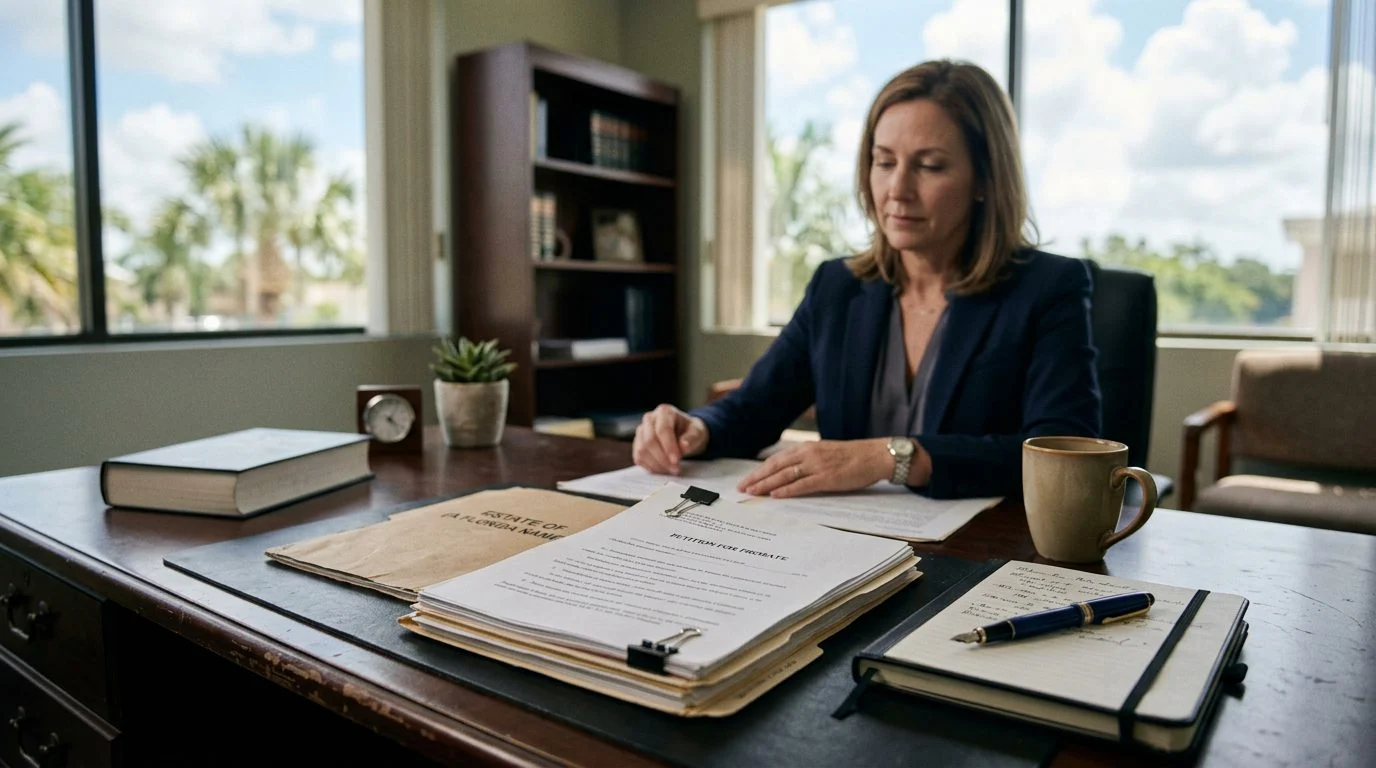
Probate Litigation | Coral Gables, Florida
What Happens If a Will Is Not Probated in Florida?
A will does not automatically move property to the people it names. Here is how the court process works, what can go wrong when a will is never filed, and when to speak with a Florida probate litigation attorney.
By Leslie V. Marenco · Published October 26, 2026
What happens if a will is not probated in Florida? Put simply, the will cannot prove who owns the property. Florida law says that until a will is admitted to probate in Florida or in the state where the decedent was domiciled, the will is ineffective to prove title to, or the right to possession of, property of the testator. If no admitted will controls the property, Florida’s intestacy rules decide who inherits. Families often end up with accounts that won’t release and property that can’t be sold. This page offers general information about these topics. It covers filing the original will, who can step forward, which assets skip the court and the problems that usually follow.
What It Means When a Will Is Never Probated in Florida
A will that is never probated cannot prove who owns the property it covers. Probate is the court process that admits a will, confirms it is valid and lets a personal representative (often called an executor) collect assets, pay debts and distribute what is left. Until that happens, the will is only a signed document.
Florida’s statute is direct about this. Until a will is admitted to probate in Florida, or in the state where the decedent was domiciled, the will is “ineffective to prove title to, or the right to possession of, property of the testator.” Fla. Stat. § 733.103
In plain terms, a will in a drawer, a safe or a desk does not give the people it names a court-recognized right to probate property. The will still matters later. Once a Florida will is admitted, the probate is conclusive, in any collateral action relating to devised property, of its due execution, that the testator was a competent testator free of fraud, duress, mistake, and undue influence, and that the will was unrevoked on the testator’s death.
If you found an original will among a loved one's papers and aren't sure what comes next, we can talk through the document and the property with you. Talk it through with Trust Counsel, PL — the first consultation is free, confidential, and carries no obligation.
How Florida Decides Who Inherits When the Will Is Not Admitted
When no admitted will controls probate property, Florida’s intestacy rules decide who inherits. Property not effectively disposed of by will passes to the decedent’s heirs under those rules. The death itself vests the heirs’ right to that property.
The surviving spouse’s share depends on the family. A spouse can take the entire intestate estate, or one-half, depending on whether the decedent left descendants and whether those descendants are also the spouse’s children.
Take a common case. A man dies with a wife and an adult son from an earlier marriage. The son is not the wife’s child, so the wife takes one-half. The other half goes to the son.
The rest passes down a set order. It goes to the decedent’s descendants first. If there are none, it goes to the parents. If there is neither, it goes to brothers and sisters and the children of deceased siblings.
The will’s wording does not drive this result. The family’s structure does, so the outcome can differ from what the decedent wrote.
Filing the Original Will With the Clerk
Section 733.103 provides that until the will is admitted to probate in this state or in the state where the decedent was domiciled, the will shall be ineffective to prove title to, or the right to possession of, property of the testator.
Section 733.103 does not provide a petition to compel production of a will; it provides that until admitted to probate, the will shall be ineffective to prove title to, or the right to possession of, property of the testator. Section 733.103 does not provide for costs, damages or a reasonable attorney’s fee to be charged to a custodian; it provides that until admitted to probate in this state or in the state where the decedent was domiciled, the will shall be ineffective to prove title to, or the right to possession of, property of the testator.
Section 733.103 does not set how long the clerk must keep an original will; it provides that until admitted to probate in this state or in the state where the decedent was domiciled, the will shall be ineffective to prove title to, or the right to possession of, property of the testator. Section 733.103 does not address recording or copying a will; it provides that until admitted to probate, the will shall be ineffective to prove title to, or the right to possession of, property of the testator. Heirs, interested parties and creditors may file caveats.
Who May Start Probate and Who May Serve as Personal Representative
In an intestate estate, the surviving spouse comes first. Then comes the person selected by a majority of the heirs, then the heir nearest in degree. If more than one person in the same tier applies, the court chooses among them.
Trust Counsel’s attorneys can serve individually as trustee or personal representative. The firm advises and represents trustees, personal representatives and beneficiaries.
Florida’s statute names trust companies, state banks and savings associations, and national banking and federal savings associations as entities that may act as personal representatives.
Assets That Pass Outside Probate and Assets That Do Not
Property held in a trust or passing to a named beneficiary generally follows that trust or contract. Property titled in a trust follows the trust’s terms. Our guide on who legally owns trust property explains that question. Beneficiary designations work differently, and who has the right to change beneficiaries covers that issue.
Property left only in the decedent’s name usually goes through the estate process. Examples include a bank account with no beneficiary and real estate with no survivorship arrangement.
Florida also allows some estates to skip administration. The court can then authorize the transfer in writing. Anyone who pays under that authorization is discharged from liability.
Practical Problems a Family Faces When a Will Stays Unfiled
The main problem is that no one has clear court authority to act for the estate. Until someone does, the family’s options narrow quickly.
Banks often ask for court papers before releasing money held only in the decedent’s name. Title companies and buyers usually want the same proof before real estate can close.
Creditors still have claims. Without an appointed personal representative, no one has clear authority to deal with those claims for the estate.
Venue also matters. A will can be admitted to probate in Florida or in the state where the decedent was domiciled. If the decedent had no Florida domicile, venue lies in any county where the property is located.
Waiting can make these problems harder to solve. Records get harder to pull, and family members may disagree about who should act.
Not sure what your next step is?
Talk it through with Trust Counsel, PL — the first consultation is free, confidential, and carries no obligation.
Questions Families Ask About Probate and Settling an Estate Without It
Short answer: a family can sometimes settle a small estate without full probate. The details decide which path fits.
Can I file probate without an attorney in Florida?
Whether a family can handle the filing alone depends on the facts of the estate.
How is a small estate settled in Florida?
Summary administration is available when the value of the entire estate subject to administration in Florida, less property exempt from creditors’ claims, does not exceed $150,000, and, if there is a will, the will does not direct administration under chapter 733. It is also available when the decedent has been dead more than 2 years. Fla. Stat. § 735.201 That is the statute as amended by ch. 2026-57.
Can an estate be distributed without probate?
Sometimes. For small personal property estates, a court can authorize the transfer without administration.
Talking Through Your Family’s Papers Before Deciding What to Do Next
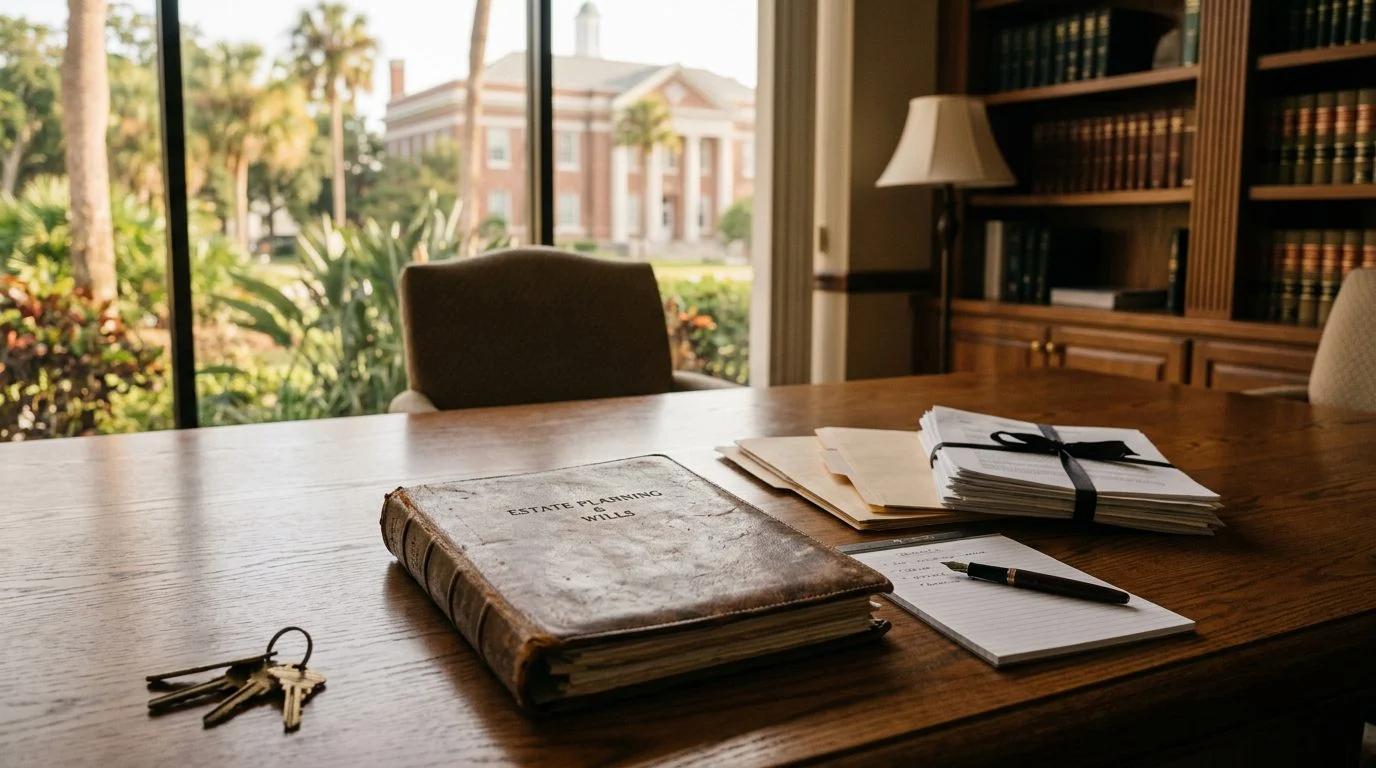
If you found an original will among a loved one’s papers, you may be reading a legal document in the middle of a loss. You may not know whether it must be filed, who should act or what the family should expect.
Your situation may look like this. The original will has not been filed, property is still in the decedent’s name, and no one has asked the court to act. That is a lot to sort out while grieving.
Trust Counsel, PL can talk through the document, the assets and the timing with you. Leslie V. Marenco is the responsible lawyer for this page, and the firm’s only office is in Coral Gables. Call (305) 707-7126, or schedule online. The first consultation is free, confidential and carries no obligation to continue.
How Trust Counsel, PL can help
Review of the will's status
We help families determine whether a will has been filed, whether it is the original, and what steps the court process requires next.
Guidance for beneficiaries and fiduciaries
The firm advises and represents trustees, personal representatives and beneficiaries in probate matters, including disputes over assets that remain unsettled.
Litigation when a dispute arises
When a family member contests a will or challenges a fiduciary's conduct, our probate litigation attorneys evaluate the options and explain them in plain terms.
Free first consultation
The firm offers a free first consultation that is confidential and carries no obligation to continue.
Important: do not act on property alone
Before moving, selling, or distributing assets that belonged to someone who died, ask a Florida probate attorney what the court process requires. Acting without that guidance can create problems that are harder to fix later.
Questions families ask first
Who holds the original will?
Locating the original document and knowing who has custody of it is often the first practical step in any estate matter.
What if the estate is disputed?
Heirs or beneficiaries may disagree about the will, the assets, or how a fiduciary is handling the estate. These disagreements are often resolved in court.
Who manages the estate in the meantime?
Someone must be authorized to act for the estate. Trust Counsel's attorneys can serve individually as trustee or personal representative, and the firm advises those who serve.
Do we need a lawyer?
Every estate is different. A confidential consultation can help you understand the options before you make decisions that affect the estate.