
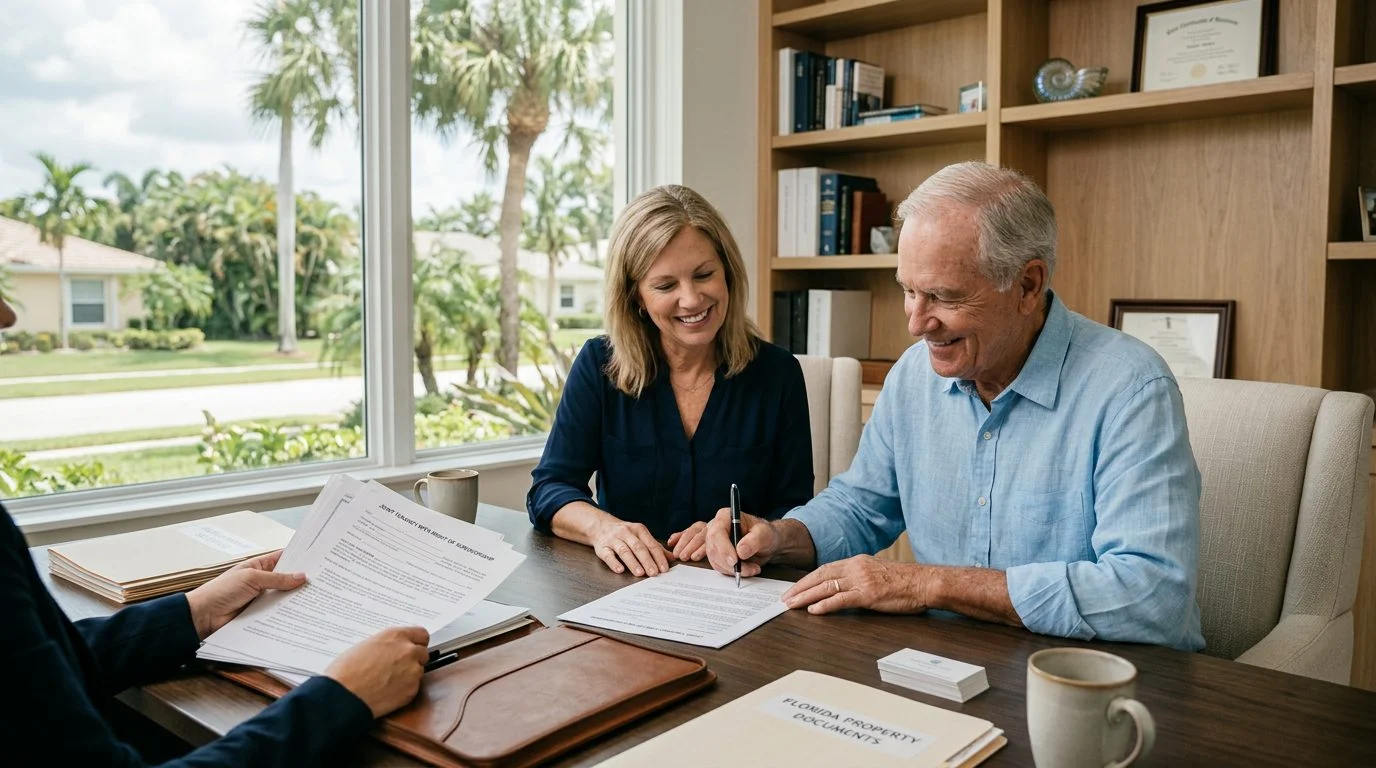
Estate Planning | Coral Gables, Florida
Joint Tenancy With Right of Survivorship in Florida: What Co-Owners Should Understand
Trust Counsel, PL, a Coral Gables firm that focuses on trusts and estates, explains how survivorship ownership works and how it fits into a broader plan for your family and property.
By Leslie V. Marenco · Published November 1, 2026
A joint tenancy with right of survivorship in Florida lets two or more people own property together. This page explains how the arrangement works, what the deed must say, and what can change it. Trust Counsel, PL is based in Coral Gables and focuses its practice on trusts and estates in Florida.
What joint tenancy with right of survivorship means
Joint tenancy with right of survivorship means the owners hold property together, and the last owner living takes the whole thing. No owner holds a specific half or third that can be marked off on a map.
The “right of survivorship” is the feature that sets this form apart. Florida does not assume it. Under Fla. Stat. § 689.15, the doctrine of survivorship “shall not prevail” in this state, except in cases of estates by entirety. Except in cases of estates by entirety, a conveyance to two or more people creates a tenancy in common unless the instrument expressly provides for survivorship. Many families are surprised by that default, so the deed is the first place to look.
Not sure what your next step is?
Talk it through with Trust Counsel, PL — the first consultation is free, confidential, and carries no obligation.
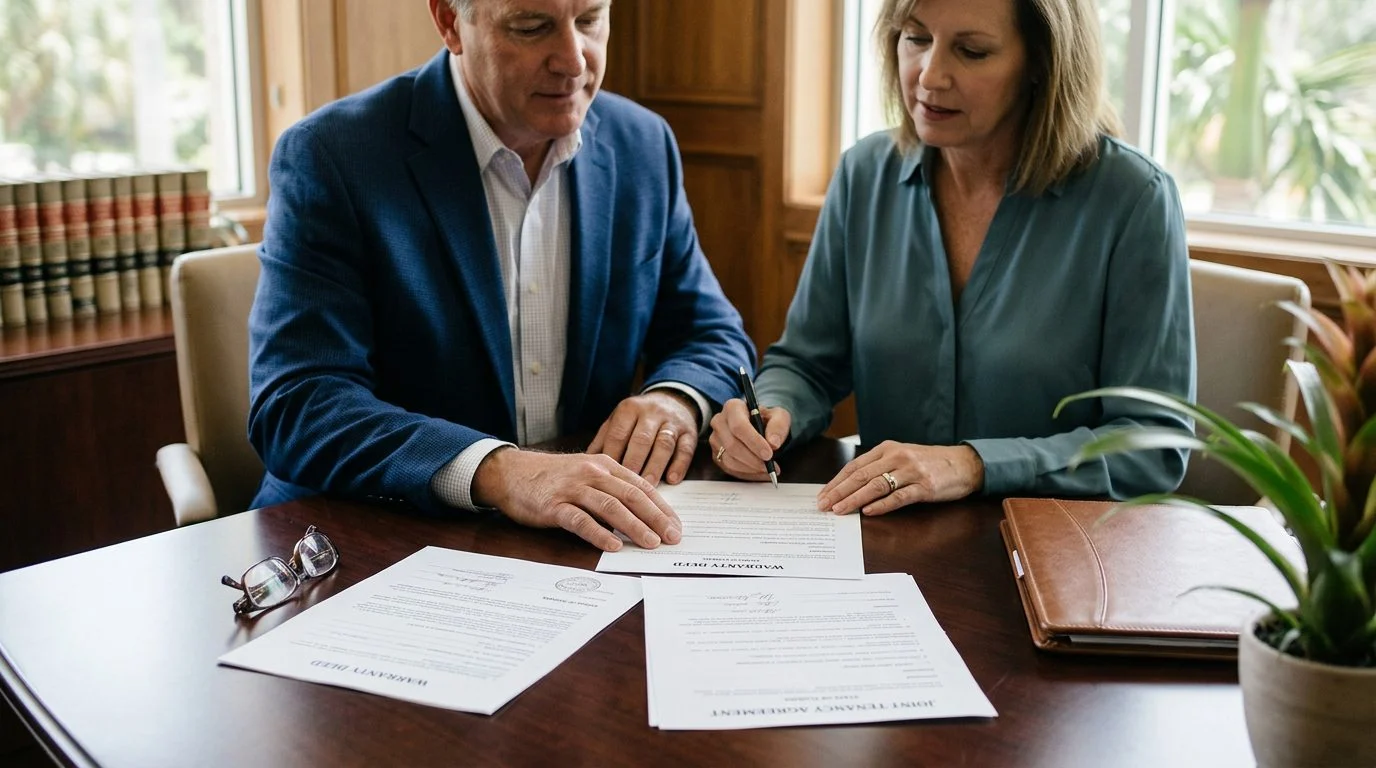
How the surviving owner takes the property at death
The surviving owner takes the deceased owner’s share at death, under the terms of the deed. That is the practical benefit most families are looking for.
Several steps usually follow. First, the family needs proof of death. Under Fla. Prob. R. 5.171, an authenticated death certificate is prima facie proof of the fact, place, date and time of death, and the decedent’s identity. Second, the surviving owner usually needs to update the record title in county records. The paperwork varies by county and by the deed.
Third, a will still matters for property the deceased owned alone. Under Fla. Stat. § 733.103, a will is ineffective to prove title to the testator’s property until it is admitted to probate. The most common mistake is assuming that everything passes under the will. A survivorship deed can send jointly held property somewhere other than the will says.
What Florida law requires to create a survivorship interest
Except for estates by entirety, the deed or other instrument must expressly provide for the right of survivorship. Florida does not read it in by default. Under § 689.15, except in cases of estates by entirety, survivorship applies only when the instrument creating the estate says so. Fla. Stat. § 689.15 reads: “The doctrine of the right of survivorship in cases of real estate and personal property held by joint tenants shall not prevail in this state; that is to say, except in cases of estates by entirety, a devise, transfer or conveyance heretofore or hereafter made to two or more shall create a tenancy in common, unless the instrument creating the estate shall expressly provide for the right of survivorship; and in cases of estates by entirety, the tenants, upon dissolution of marriage, shall become tenants in common.”
Look for wording stating that the owners take with right of survivorship. A deed that is silent or unclear can leave the form in doubt. Under Fla. Stat. § 689.15, except in cases of estates by entirety, a conveyance to more than one person creates a tenancy in common unless the instrument expressly provides for the right of survivorship. Fla. Stat. § 689.15 A deed signed years ago may say something the family does not remember.
How it differs from tenancy by the entirety and tenancy in common
Joint tenancy with survivorship differs from two other forms. Tenancy by the entirety is for married couples. Tenancy in common has no survivorship at all. The statute treats the entirety form separately. Under § 689.15, upon dissolution of marriage the tenants become tenants in common. Fla. Stat. § 689.15 reads: “The doctrine of the right of survivorship in cases of real estate and personal property held by joint tenants shall not prevail in this state; that is to say, except in cases of estates by entirety, a devise, transfer or conveyance heretofore or hereafter made to two or more shall create a tenancy in common, unless the instrument creating the estate shall expressly provide for the right of survivorship; and in cases of estates by entirety, the tenants, upon dissolution of marriage, shall become tenants in common.”
Tenancy in common works differently at death. If there is no will, the share passes to heirs. Under Fla. Stat. § 732.101, property not effectively disposed of by will passes to the decedent’s heirs.
| Form | Who it fits | What happens to a share at death |
|---|---|---|
| Joint tenancy with right of survivorship | Co-owners whose deed expressly says so | Passes to the surviving owner under the deed |
| Tenancy in common | Co-owners without express survivorship language | Passes under the owner’s will, or to heirs |
The same house can pass two different ways.
What can change or sever a joint tenancy
The new owner may not hold it with survivorship.
Claims against one joint owner can also raise questions about the property. How those claims affect title turns on the specific claim and the recorded title.
An owner’s incapacity raises a different question: who can sign for them. Review the ownership structure whenever an owner dies, becomes incapacitated, or a relationship between owners changes.
When a survivorship deed raises questions after a death
When a family member dies and a house or account was held jointly, the title question usually comes first. Picture a father who dies. The family finds an old deed listing him and his daughter as joint owners. The daughter assumes the house is hers. A brother assumes it belongs in the estate. Neither assumption should be made until the deed is read closely.
A surviving owner, an heir who expected to inherit, or a personal representative (often called an executor) who must account for the property may each need the title examined.
Frequently asked questions
Does joint tenancy with right of survivorship avoid probate in Florida?
For jointly held property with a valid survivorship deed, title generally passes to the surviving owner outside the will.
Whether title passes outside the will depends on how the property is held.
Do you need special words in the deed?
Yes. Under Florida law, except for estates by entirety, the instrument must expressly provide for the right of survivorship.
If a parent or sibling recently died and their home or account carried a deed you did not expect, you may be the one sorting it out. Trust Counsel, PL, with its office in Coral Gables, offers a free first consultation that is confidential and carries no obligation. Bring the recorded deed and a short timeline of the death to that conversation.
How We Help Co-Owners Plan
Review of the deed
We look at how title is written, because survivorship language must appear in the instrument itself to work as intended.
Coordination with your estate plan
Joint ownership can interact with wills and trusts. We help you see how the pieces fit together.
Planning for family and business
Co-owned homes, rental properties and family companies often involve several people. We help clarify roles before changes are made.
Practical next steps
We explain the options in plain language so you can decide what to do with confidence.
Check Before You Add a Name to Title
Adding someone as a joint owner can change who receives property, who can make decisions about it and how it is treated by creditors. Review the deed language with a lawyer before you sign anything.
Questions to Discuss With Your Attorney
Who owns the property today?
Start with the current deed, the names on title and any existing estate planning documents.
What do you want to happen next?
Consider who should receive the property, who should manage it and what should happen if a co-owner becomes incapacitated.
How does it affect your other plans?
Review how joint ownership works alongside your will, trust, beneficiary designations and any business interests.
Are your co-owners aligned?
Talk through expectations with the people on title so that the plan reflects what everyone understands.
Speak With Leslie V. Marenco About Your Property Ownership. Your First Consultation Is Free, Confidential and Carries No Obligation.
Related practice areas
- Trust Litigation Attorney
- Trustee vs. Co-Trustee in Florida: What’s the Difference?