
Probate Litigation | Coral Gables, Florida
Challenging a Self-Proved Will in Florida: Grounds and Deadlines
Trust Counsel, PL focuses on probate and trust litigation for beneficiaries, heirs and fiduciaries. Learn how a will contest works and why timing matters. Our free first consultation is confidential and carries no obligation to continue.
By Leslie V. Marenco · Published October 25, 2026
Short Answer: A Self-Proved Will Does Not Block a Challenge
No. A self-proved will in Florida can still be challenged. The self-proving affidavit makes the will easier to admit to probate. It does not bar a later contest on grounds such as lack of capacity, undue influence, fraud, duress, mistake, or revocation.
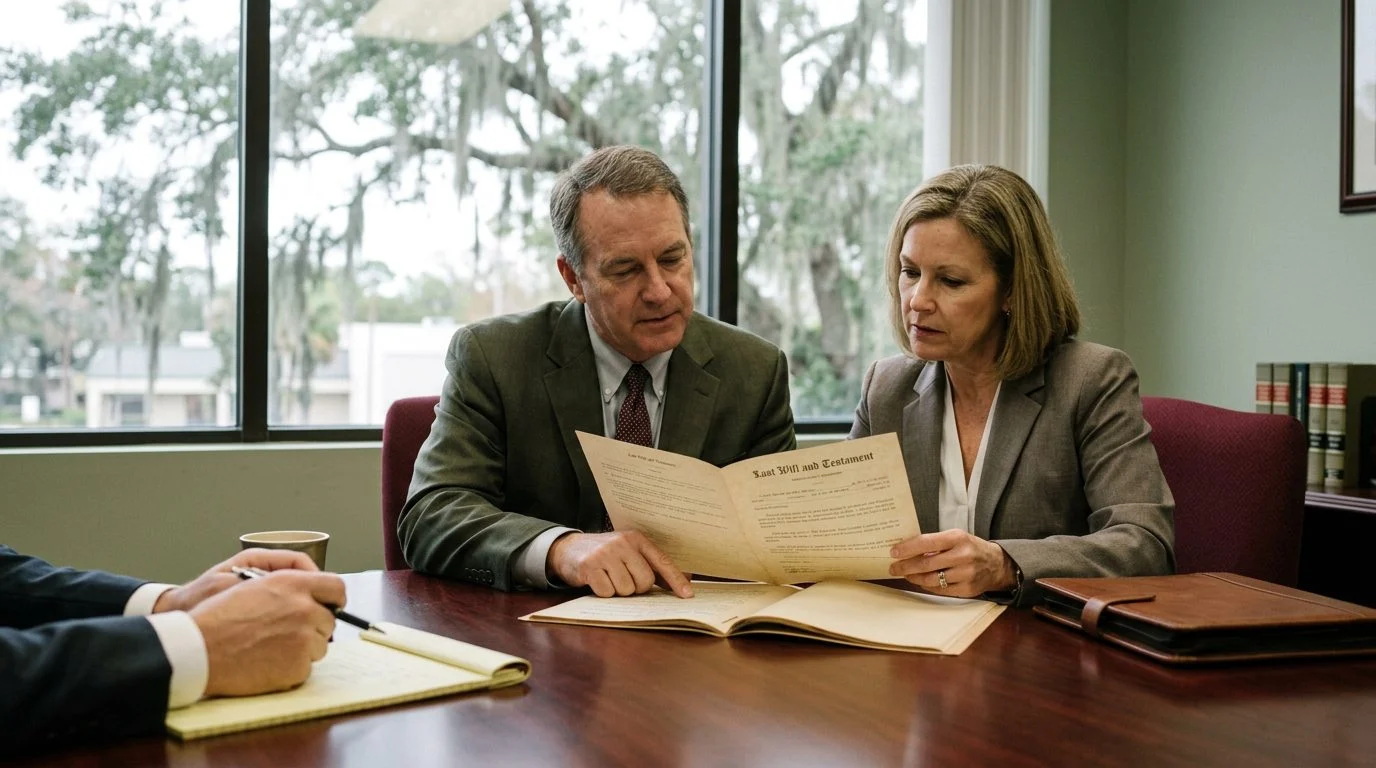
Picture a common situation. A parent dies, and a sibling hands you a will with a notary’s certificate and witness signatures attached. It looks final, so many heirs assume the paperwork has settled the question. It has not.
This page explains what self-proof does, what stays open, how the deadline works, and what to check first. Each section answers one part of the question, so you can read the parts that matter most to your situation.
If a will with a self-proving affidavit has you wondering whether it can still be challenged, you don't have to sort that out alone, and our team is ready to talk it through with you. Talk it through with Trust Counsel, PL — the first consultation is free, confidential, and carries no obligation.
Can a Will Be Self-Proved in Florida?
Yes. A will can be made self-proved when it is signed or at any later date. Under Fla. Stat. § 732.503, the testator acknowledges the will before an officer authorized to administer oaths. The attesting witnesses also swear affidavits before that officer.
In plain terms, the testator (the person who made the will) states that the document is their will. Each witness swears that the testator declared it to be their will and that the witness signed in the testator’s presence and in the presence of the other witness. The officer then completes a certificate attached to or following the will. The Florida Department of State notary guidance notes that making a will self-proving shortens and simplifies the steps of probate.
Self-proof does not replace valid signing. Under Fla. Stat. § 732.502, the will must be in writing and signed at the end by the testator, or the testator’s name must be subscribed at the end of the will by some other person in the testator’s presence and by the testator’s direction. The testator’s signing or acknowledgment must happen in front of at least two attesting witnesses. The maker must also be of sound mind and either 18 or older, or an emancipated minor, under Fla. Stat. § 732.501.
What Self-Proof Changes in Probate
That is the main practical effect. The affidavit does much of the work that witness testimony would otherwise do.
Probate is the court process for handling a dead person’s estate. Normally, someone must prove the will to the court. Under Fla. Stat. § 733.201, a self-proved will executed under the Florida Probate Code may be admitted without further proof. The attesting witnesses usually do not need to testify at the hearing for that reason.
The personal representative (often called an executor) is the person the court puts in charge of the estate. Under Fla. Stat. § 733.201(3), a will may be admitted to probate upon the oath of the personal representative nominated by the will if it appears to the court that the attesting witnesses cannot be found, have become incapacitated after the execution of the will, or cannot give their testimony within a reasonable time. The self-proving affidavit changes how the will gets admitted. It does not decide whether an interested person may later challenge the will’s validity.
There is one important exception for electronic wills. A purportedly self-proved electronic will may be admitted only in the manners the statute sets out if the online notarization involved a substantial failure to follow the required procedures. Anyone reviewing a self-proved electronic will should check the notarization closely.
What Self-Proof Does Not Protect Against
Self-proof does not protect a will from challenges based on capacity, undue influence, fraud, duress, mistake, or later revocation. The affidavit covers the formal steps of signing and witnessing. It does not answer whether the maker was pressured or misled.
Florida law says a will is void when its execution is procured by fraud, duress, mistake, or undue influence. Under Fla. Stat. § 732.5165, any part procured that way is void. The rest survives only if it is not invalid for other reasons. Capacity is a separate requirement, because the maker must be of sound mind under § 732.501. A will can also be revoked by a later inconsistent will, but the revocation extends only so far as the inconsistency, or by a later will, codicil, or other writing executed with the same formalities required for the execution of wills declaring the revocation, under Fla. Stat. § 732.505.
The burden of proof sets how a challenge works. Under Fla. Stat. § 733.107, the proponent of the will must first establish formal execution and attestation. A self-proving affidavit does that. After that, the contestant must prove the grounds for opposing probate. Florida Probate Rule 5.275 states the same allocation. Section 733.107 also says that where the presumption of undue influence applies, it shifts the burden of proof.
How Hard Is It to Contest a Will in Florida?
The answer depends on the facts, and no single rule decides how hard a contest will be. The evidence drives the outcome more than any general label does.
Evidence matters most. Medical records from around the signing date, the circumstances of the meeting, and who arranged it all count. So does whether the drafter took instructions from someone other than the maker, and how the family relates to one another. A will that departs from an earlier plan often leads to more questions.
Time limits are strict. Under Fla. Stat. § 733.212, an interested person served with a notice of administration must object to the will’s validity, venue, or the court’s jurisdiction within 3 months after service. Otherwise those objections are forever barred. The 3-month period may be extended only for estoppel based on a personal representative’s misstatement about the deadline. Objections must also be filed no later than the earlier of final discharge or 1 year after service.
A contest also cannot start before the testator dies, under Fla. Stat. § 732.518. Start preserving documents now. Keep medical records, calendars, emails, texts, and notes about who was in the room.
What Affects Whether a Will Contest Succeeds
No general odds apply to a will contest, because each one turns on its own facts and evidence. A result in one matter says little about another. Each contest must be judged on its own record.
Several facts shape a contest. The testator’s condition near the signing date matters, and a dementia diagnosis can make capacity a central question. Who arranged the meeting, who chose the attorney, and who was present also matter. So does whether the will changed a prior plan that the maker had kept for years.
Each case turns on its own facts and the evidence presented. The contestant must prove the ground asserted. A claim supported by thin proof may fail for that reason alone. A claim that looks strong on paper still needs proof in the record. The facts, as they develop, decide the result.
Not sure what your next step is?
Talk it through with Trust Counsel, PL — the first consultation is free, confidential, and carries no obligation.
Timing and Execution Errors That Invite Challenges
Execution mistakes give a contestant something concrete to argue about. Some issues come up again and again in will disputes, so reviewers look for them first.
Witness rules matter. Under Fla. Stat. § 732.504, any person competent to be a witness may act as one. A will is not invalid just because an interested witness signed it. Still, a beneficiary who also signs as a witness can raise questions that should be reviewed carefully.
Timing and form matter too. Under § 732.502, the attesting witnesses must sign in the presence of the testator and of each other. Missing attestation language, an incomplete notary certificate, or signatures that do not follow the required sequence are the kinds of issues that invite questions.
Do not assume the affidavit closes the door. A notarized affidavit shows formal signing on its face. It does not decide questions of capacity, pressure, fraud, or revocation.
If You Are Facing a Will Challenge or Questioning a Will
A self-proved will can be admitted to probate more easily, but it does not end a contest. Three points matter most. Self-proof simplifies admission. The 3-month objection period is short and strict. The grounds for challenge depend on the facts.
For the broader practice, see our trust litigation attorney page. Trust Counsel’s attorneys can serve individually as trustee or personal representative. The firm advises and represents trustees, personal representatives and beneficiaries.
Leslie V. Marenco is responsible for this page. Trust Counsel’s only office is in Coral Gables, Florida. If a will with a self-proving affidavit has you asking whether it can still be challenged, call (305) 707-7126 or schedule online. The first consultation is free, confidential, and has no obligation to continue.
Frequently Asked Questions
Can a self-proved will be challenged in Florida?
Yes. In a proceeding contesting a will’s validity, Fla. Stat. § 733.107 places the initial burden on the will’s proponent to establish prima facie its formal execution and attestation. A self-proving affidavit or an attesting witness’s oath, executed as that section requires, is admissible and makes that showing, and the contestant then has the burden of establishing the grounds for opposing probate or seeking revocation.
What grounds can be used to challenge a self-proved will in Florida?
Common grounds include lack of testamentary capacity, undue influence, fraud, duress, mistake, or a forged or improperly executed signature. Under Fla. Stat. 732.5165, a will procured by fraud, duress, mistake, or undue influence is void.
How long does someone have to challenge a will in Florida?
Under Fla. Stat. 733.212(3), an interested person generally must file an objection within three months after being served with a notice of administration. Under Fla. Stat. § 733.212(3), the 3-month period may be extended only for estoppel based upon a misstatement by the personal representative regarding the time period within which an objection must be filed, and it may not be extended for any other reason. Unless sooner barred by subsection (3), all objections to the validity of a will, venue, or the jurisdiction of the court must also be filed no later than the earlier of the entry of an order of final discharge of the personal representative or 1 year after service of the notice of administration, so prompt action matters.
Who can challenge a self-proved will in Florida?
An “interested person,” such as a beneficiary, heir, or creditor who would be affected by the will’s validity, may file an objection. Florida law defines who qualifies as an interested person under Fla. Stat. 731.201.
Key Questions in a Will Contest
Formal execution
A self-proved will includes an affidavit or attesting witness oath. Understanding what that document shows is the first step in evaluating a challenge.
Grounds to oppose
Contestants must identify the specific legal grounds on which they rely, such as lack of capacity, undue influence or improper execution.
Procedure and timing
Florida probate procedure and its time limits are strict. Reviewing the document promptly with counsel helps protect your options.
Representation
Trust Counsel's attorneys can serve individually as trustee or personal representative. The firm advises and represents trustees, personal representatives and beneficiaries in these disputes.
How Trust Counsel, PL Can Help
Probate litigation
Representation for beneficiaries, heirs and fiduciaries in disputes over wills and estates.
Trust litigation
Guidance on disputes involving trust terms, administration and fiduciary conduct.
Trust administration
Advice to trustees and personal representatives on their duties under Florida law.
Serving South Florida
Our only office is in Coral Gables. We serve clients in Miami-Dade, Broward and Palm Beach counties.
Do Not Assume a Self-Proved Will Is Beyond Challenge
A self-proving affidavit makes a will easier to admit, but it does not prevent a contest. Gather the document and related records, and speak with a Florida probate attorney before taking or skipping any step.