
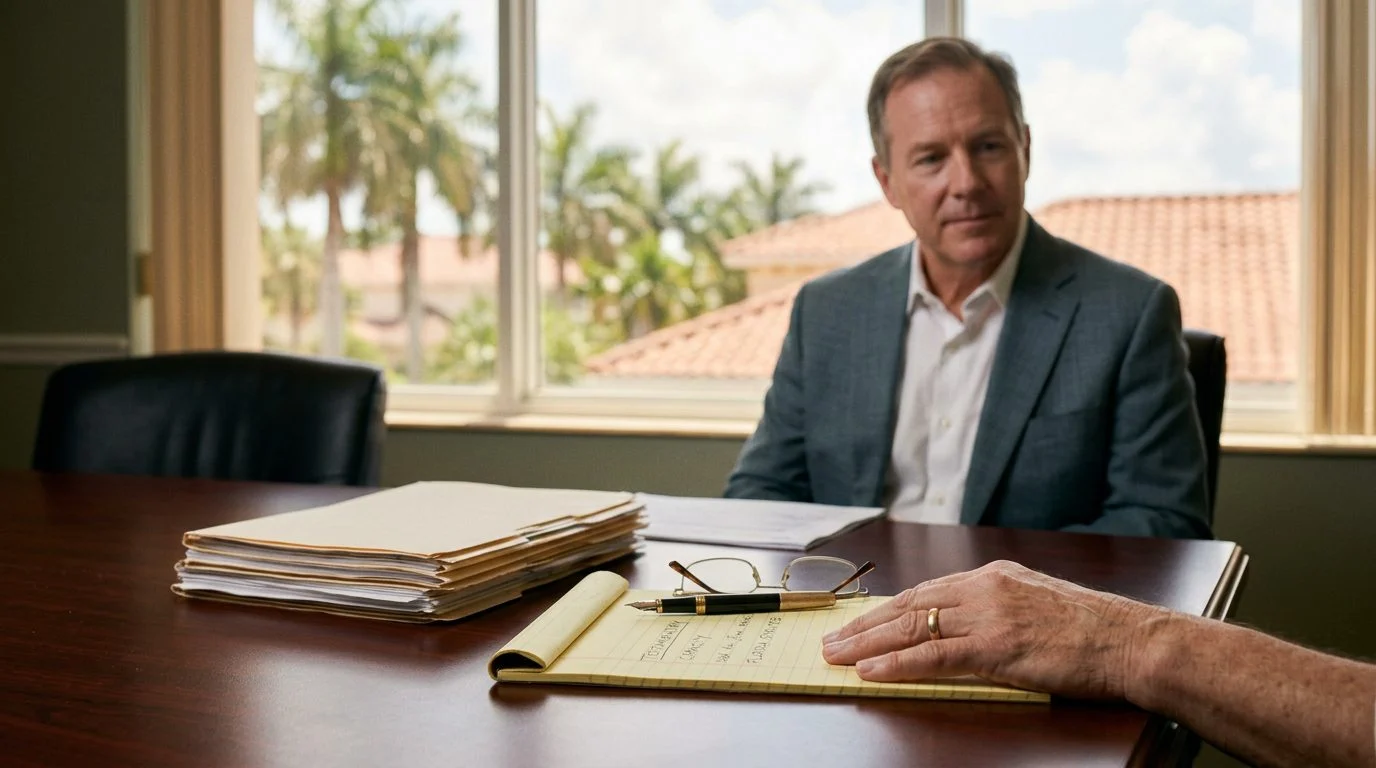
Probate Litigation | Coral Gables, Florida
Questioning a Will Signed During Dementia? Understand the Capacity Rules First
Trust Counsel, PL focuses on probate and trust litigation for beneficiaries, heirs and personal representatives. Learn how Florida law looks at a person's mental capacity and undue influence when a will is challenged.
By Leslie V. Marenco · Published October 25, 2026
Short Answer: A Diagnosis Alone Is Not the Test
A dementia diagnosis can be part of a will contest in Florida, but it does not decide the case by itself. The core question is whether the person had sound mind when they signed the will.
Two grounds come up most often. The first is lack of sound mind, often called lack of capacity. The second is undue influence, which means someone pressured or steered the person so the will no longer reflected their own wishes.
Trust Counsel, PL is a Coral Gables firm that handles probate and trust disputes. For background on will and trust litigation in Florida, see the firm’s trust litigation attorney page. This page focuses on the will itself and the facts that matter most.
Not sure what your next step is?
Talk it through with Trust Counsel, PL — the first consultation is free, confidential, and carries no obligation.

What Florida Requires for a Valid Will
Florida allows a person to make a will if they are of sound mind and either 18 or older or an emancipated minor. Under Florida law, any person who is of sound mind and either 18 or older, or an emancipated minor, may make a will.
A person can have a serious medical condition and still meet the legal standard on the day the will is signed.
The will must also meet form rules. It must be in writing and signed at the end by the person making it, called the testator, or have the testator’s name subscribed at the end by another person in the testator’s presence and at the testator’s direction. That signing, or the testator’s acknowledgment of it, must happen in front of at least two attesting witnesses. The witnesses must then sign in the testator’s presence and in each other’s presence. Fla. Stat. § 732.502
Form problems and capacity problems are separate issues.
Why a Diagnosis Alone Does Not Decide the Question
A diagnosis records a medical condition at one point in time. It does not, on its own, show what the person could understand on the day they signed. Doctors and courts both need a picture of that specific day.
Dementia rarely moves in a straight line. A person may have clear stretches and foggy ones, sometimes within the same week. That is why timing matters so much. A will signed on a clear day can look very different from one signed on a bad day, and the records must show which it was.
The timing can take three shapes. The diagnosis may come before the will, after it, or around the same time. Each shape raises different questions. A diagnosis made years earlier may say little about a signing after a long stable period. A diagnosis made soon after a signing may still matter, because the decline may have started earlier.
A common mistake is treating the diagnosis as the whole case. Family members often assume a dementia label voids any document signed later. The court instead looks at the whole picture of the person’s condition at signing.
Which Records From the Signing Period Matter Most
Records made close to the signing date usually matter most. Start with medical records from the weeks before and after the signing. Office visit notes, cognitive screening results, and physician observations about orientation, memory, and judgment all help.
Medication records come next. Changes in prescriptions around the signing date can show whether the person’s condition shifted. Ask for the pharmacy history, not only the doctor’s list.
Witness accounts matter too. The attesting witnesses saw the person sign. If a notary was present, that person may have notes or a journal entry. Their memory of what the person said and did that day can be important evidence.
The drafting attorney’s file can be central. Intake notes, meeting notes, and any questions asked to confirm the person understood the plan may capture the person’s own words. Those words often carry more weight than a general description written later.
Finally, look at daily life records from the same period. Bills, banking activity, calendars, and written messages show how the person handled money and conversations. These details add context that a doctor’s note may not give.
Timing is the common thread. A record from the same week describes the person at the moment that counts. A record from months earlier describes a different point. Gathering these documents early helps prevent gaps.
Undue Influence and Other Grounds Beyond Capacity
Undue influence is a separate ground. A person can have sound mind and still sign a will that was procured by undue influence. Florida law says a will is void if its execution is procured by fraud, duress, mistake, or undue influence. Fla. Stat. § 732.5165
Some facts come up again and again in these disputes. They include isolation from family, a beneficiary who arranged the meeting or chose the attorney, and a sudden change to a plan that stayed the same for years. Dementia can matter here, because memory or judgment problems may make it harder to resist pressure. Still, the facts of each case decide the question.
Burden of proof is the next issue. In a will contest, the proponent must first establish prima facie the will’s formal execution and attestation. After that, the contestant has the burden of establishing the grounds on which probate is opposed. Fla. Prob. R. 5.275
When the presumption of undue influence applies, it shifts the burden of proof. Under Florida law, the presumption of undue influence shifts the burden of proof in any transaction or event to which the presumption applies.
Can People With Dementia Write Wills?
Yes, a person with dementia can make a will in Florida if they are of sound mind when they sign it.
A person may have lucid periods. A will signed during one of them may be valid, even if the person declined later. The reverse is also true. A will signed during a confused stretch may face a serious challenge. Each signing stands on its own record.
Families make two common mistakes here. One is assuming that a later decline cancels an earlier signing. The other is assuming that a signing during a good week settles the matter. Both assumptions skip the record of the actual day the will was signed.
A new will made after a diagnosis is not automatically invalid. Its validity depends on the person’s condition when they signed it and on whether undue influence played a role.
Not sure what your next step is?
Talk it through with Trust Counsel, PL — the first consultation is free, confidential, and carries no obligation.
Who Can Contest a Will in Florida and How Quickly They Must Act
Heirs and beneficiaries affected by a will are the people who usually raise a challenge. Florida statutes tie these rights to being an “interested person.” The statutes give the interested person specific tools and deadlines.
One early tool is a caveat, which is a filing with the court. Any interested person who fears a will may be admitted to probate without their knowledge may file one. Fla. Stat. § 731.110 A caveat filed before the person’s death expires 2 years after filing. Once an interested person files a caveat, the court may not admit the will or appoint a personal representative until formal notice of the petition for administration has been served on the caveator or the caveator’s designated agent and the caveator has had the opportunity to participate in proceedings on the petition.
The main deadline comes after notice of administration. An interested person served with that notice should review the time limits under Florida law for objecting to the will’s validity, venue, or jurisdiction.
Under Fla. Stat. § 731.110, a caveat filed before the death of the person for whom the estate will be administered expires 2 years after filing. Under Fla. Stat. § 731.110, a caveat filed before the death of the person whose estate will be administered expires 2 years after filing. Reviewing the documents early is the safest course.
Do You Have to Go Through Probate If You Have a Will in Florida?
A will generally must be admitted to probate before it can prove title to property the person owned. Until it is admitted, the will is ineffective to prove title to, or the right to possession of, the testator’s property.
A will contest is usually raised inside that probate case. The personal representative, often called an executor, is the person appointed by the court to manage the estate. The personal representative must promptly serve a notice of administration on persons known to them, including the decedent’s surviving spouse. Fla. Stat. § 733.212
Trusts work differently. Which document controls the property is a key question.
Steps That Help Document Capacity Before a Will Is Signed
A clear record made at signing can reduce disputes later. Several steps help build that record.
- Meet with the drafting attorney outside the presence of beneficiaries. Private meetings make it easier to show the person’s own goals.
- Note the person’s own explanation. Record how they describe their property, their family, and their reasons for the plan.
- Use independent witnesses. Florida law says a will is not invalid because an interested witness signed it. Independent witnesses still give a cleaner record.
- Consider a self-proving affidavit. A will can be made self-proved at signing, or later, by the testator’s acknowledgment and the witnesses’ affidavits. This helps establish execution in probate.
- Get a physician’s evaluation near the signing date. When a diagnosis is known, a recent medical note adds to the timeline.
These steps create a clearer record. They do not make a will immune from challenge.
Talk With Trust Counsel About Your Family’s Situation
Picture a parent with a dementia diagnosis who signed or changed a will. Now a sibling wonders whether that signing was valid and whether the deadlines are running. The timeline and the documents from that period decide what comes next.
Call Trust Counsel, PL at (305) 707-7126 or schedule online to discuss the will, the signing date, and the timeline. The firm’s office is in Coral Gables, and the responsible lawyer for this page is Leslie V. Marenco. The first consultation is free, confidential, and carries no obligation to continue.
Can people with dementia write wills in Florida?
Yes, a person may make a will in Florida if they are of sound mind when they sign it and are either 18 or older or an emancipated minor.
Can a dementia diagnosis void a will?
Not by itself. The question is the person’s condition at signing and whether undue influence procured the will.
How long do you have to contest a will in Florida?
Objections made after a notice of administration are subject to time limits under Florida law. Fla. Stat. § 733.212
What Shapes a Dementia-Related Will Challenge
Who was involved
The people present, their relationship to the signer, and who arranged the meeting can matter as much as the medical record.
Possible undue influence
Pressure, isolation or control by someone who benefits can be a separate ground to examine alongside capacity.
Records gathered early
Medical notes, witness accounts and drafting files are often easier to collect while they remain fresh.
Act Early on Evidence
Medical records, drafting files and witness recollections can become harder to obtain over time. Speak with counsel before important documents are lost or altered.
How Trust Counsel Can Help
Probate litigation
Representation for beneficiaries, heirs and personal representatives in disputes over whether a will should be admitted or upheld.
Trust litigation
Guidance on challenges involving trusts, amendments and trustee conduct when a signer's capacity or independence is questioned.
Case review
A confidential look at the documents, timeline and relationships involved, so you understand your position before deciding on next steps.
Guardianship and planning
Related matters, including guardianship and estate planning, where diminished capacity affects the family's decisions going forward.