
Trusts & Estates | Coral Gables, Florida
Do Attorneys Keep Copies of Trusts? A Florida Guide for Trust Owners
Find out who may hold a copy of your trust, where the original should be kept, and what to ask your attorney. Leslie V. Marenco is the responsible attorney for this page. The first discovery call is free, confidential and comes with no obligation to continue.
By Leslie V. Marenco · Published November 7, 2026
Do attorneys keep copies of trusts? Sometimes. The answer depends on who drafted the trust and where the signed original went. This guide explains what Florida law requires a trustee to share, where copies usually turn up, and what to do when a document can’t be found.
The short answer: sometimes, depending on who prepared and stored the trust
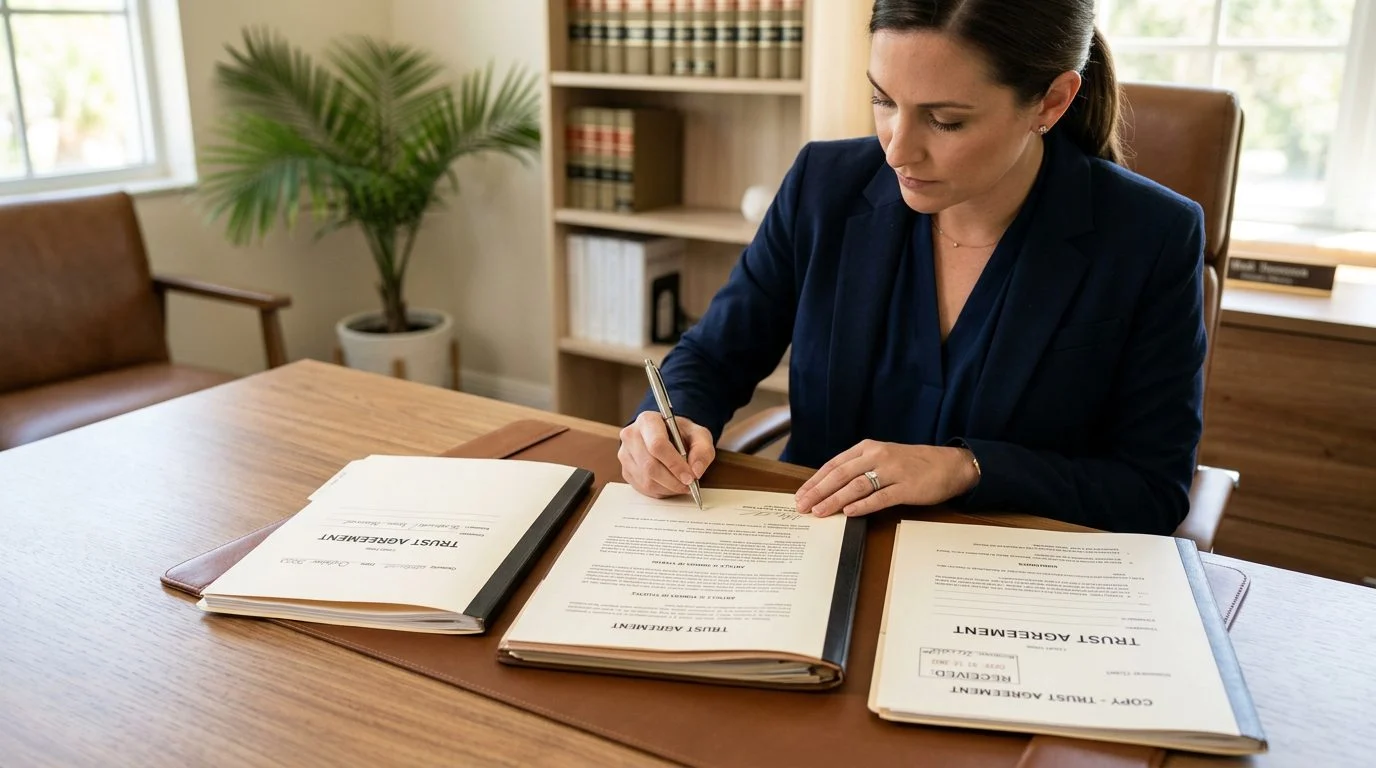
An estate planning attorney may keep a copy of a trust in the client’s file. The attorney may also hold the signed original for safekeeping if the client asked. If the client took the only signed original home, the attorney may have no copy at all.
Three facts usually decide the answer. First, who drafted the trust. Second, when it was signed and whether it was changed later. Third, whether the client asked for the original back.
A common mistake is assuming the copy in a parent’s desk is the final version. Often it is a draft, or it predates a later amendment. Ask the drafting attorney in writing whether a copy is on file and when it was last updated.
For a family searching for papers, start with the trustee. The trust is the working document the trustee uses to run the trust. If the trustee has no copy, the drafting attorney’s file is the next place to ask.

Not sure what your next step is?
Talk it through with our team — the first discovery call is free, confidential, and carries no obligation.
Why the location of the original matters more than a copy
A copy shows what the signed original said on the day it was made. It may not show the signatures, notary pages or the final version. That is why the location of the original matters.
Originals, photocopies and digital scans are different things. A photocopy can leave out a page that holds a change. A scan can show a draft instead of the signed version. Ask who made each copy and when.
Amendments, restatements and schedules of assets are often separate papers. A copy of the trust alone may leave out a later amendment or an asset list signed on a different date. Gather every part of the trust’s history before comparing them.
To check a copy, count the pages. Look for every signature and notary block. Match the date on each amendment to the trust’s own records.
Is a copy of a trust as good as the original?
A copy can show what the trust says. It may not prove which version controls. The signed original and every amendment usually matter.
What Florida law says a trustee must share with beneficiaries
A trustee must keep qualified beneficiaries reasonably informed about the trust and its administration. Chapter 736 may be cited as the “Florida Trust Code” under Fla. Stat. § 736.0101.
For irrevocable trusts, the trustee must give notice to the qualified beneficiaries within 60 days after the trustee acquires knowledge of the creation of the irrevocable trust, or of the date a formerly revocable trust became irrevocable (Fla. Stat. § 736.0813(1)(b)). This duty does not apply to an irrevocable trust created before the effective date of the code, or to a revocable trust that became irrevocable before that date. The notice must cover, among other things, the trust’s existence, the identity of the settlor or settlors, the right to request a copy of the trust instrument, the right to accountings under this section, and that the fiduciary lawyer-client privilege in s. 90.5021 applies with respect to the trustee and any attorney employed by the trustee (Fla. Stat. § 736.0813(1)(b)).
Can a beneficiary get a copy of a trust in Florida?
Yes. On reasonable request, the trustee must provide a complete copy of the trust instrument to a qualified beneficiary, under Fla. Stat. § 736.0813. That duty belongs to the trustee, not the drafting attorney.
Who else may hold a copy of the trust
The trustee is the most likely holder, but other people and places may also have a copy. Check these:
- A successor trustee or co-trustee
- The person who created the trust
- The drafting attorney’s file
- The family’s safe deposit box
- Banks that hold trust accounts
- An accountant or financial advisor who received the document for tax or account purposes
Some trusts require a notice to be filed with a court after the settlor dies. It is a notice, not the full trust, so a court filing may not give you the document itself.
Write down every place the person kept papers. Then ask each holder, in writing, whether they have a copy, the original or a later amendment. A written request creates a record you can use later.
Have questions about what happened?
Ask our team directly. The first conversation is free, confidential, and there is no obligation to continue.
When the will is missing or the original cannot be found
If a custodian does not deposit the will, an interested person can ask the court to compel it.
If an original will is lost or destroyed, an interested person may ask the court to establish its terms. For a lost or destroyed will, the full terms may be proved through the testimony of disinterested witnesses, meaning people with no stake in the will.
Search the home, desks, safe deposit box, mail, and email or cloud accounts. Contact the drafting attorney. Write down each search, its date and what you found.
When a document question becomes a dispute
A disagreement over which version controls, or whether a beneficiary can see the trust, can become a trust dispute. Some disputes can be discussed through mediation first. Florida’s court-related alternative dispute resolution rules include mediation confidentiality provisions that may apply, according to the Florida State Courts System’s ADR handbook.
According to ACTEC’s guide to probate, probate is the court-supervised process for administering an estate, and disputes may require court involvement.
Three related questions have their own facts. Whether you’re named in a trust is covered in looking up a trust beneficiary. Whether an amendment is genuine is covered in forged trust amendments in Florida. Whether someone is blocking an inheritance is covered in interference with an inheritance. For the broader picture, read the trust litigation attorney guide.
Talking with a Coral Gables trusts lawyer about your situation
You may be grieving, handling a parent’s affairs for the first time, or facing a document that isn’t where you expected. You don’t have to sort out the paperwork alone.
Trust Counsel, PL is a trusts and estates law firm with its only office in Coral Gables. The firm advises and represents trustees, personal representatives and beneficiaries. Trust Counsel’s attorneys can serve individually as trustee or personal representative. Leslie V. Marenco is responsible for this page. Some matters may be referred to another lawyer or firm.
If you’re asking whether attorneys keep copies of trusts because a document is missing, a conversation can help you see your options. Trust Counsel, PL offers a free first discovery call, confidential and with no obligation to continue. Call (305) 707-7126 or schedule online.
Want to know where you stand?
Tell us what happened and our team will walk you through the options available to you, at no cost.
Frequently Asked Questions
Do attorneys keep copies of trusts?
Often, yes, especially when the attorney drafted the trust. Whether a firm keeps a copy depends on its file retention policy and your engagement agreement, so ask the attorney who prepared your trust.
Who is responsible for keeping the original trust document?
The person who created the trust, and later the trustee, is usually responsible for keeping the signed original safe and accessible. Store it with your other estate planning papers, and make sure your trustee knows where it is.
Can a trustee or beneficiary request a copy of a trust?
A trustee can generally request a copy of the trust document to carry out its duties. Under Florida’s trust code (Fla. Stat. 736.0813), a trustee generally must provide a qualified beneficiary a copy of the trust instrument upon request. Trust Counsel, PL advises trustees, personal representatives and beneficiaries on these questions.
What should I do if I cannot find my trust document?
Start by checking with the attorney who prepared the trust, your personal files, and the trustee named in the document. Trust Counsel, PL offers a free first discovery call that is confidential and comes with no obligation to continue. Call (305) 707-7126 to schedule one.
Questions to ask about your trust documents
Who holds the original?
Ask whether the signed original trust, its amendments and related papers are with you, with your attorney, or somewhere else.
Does the firm keep a copy?
Ask whether the drafting firm keeps a copy in its file and how long it retains client files.
What does your engagement agreement say?
Your engagement agreement may address file retention and how documents are returned to you. Review it before you assume a copy is on file.
Who else needs to know where it is?
Your successor trustee and family members often need to know where the trust and its amendments are kept.
Do not rely on a single copy
A copy in a law office file may not match your latest amendments. Keep the signed original and every amendment in a known, secure place, and tell your trustee where to find them.
Where trust documents are commonly kept
The person who created the trust
The person who created the trust, often called the grantor or settlor, frequently keeps the signed original and later amendments.
The drafting attorney's file
Some firms keep a copy in their file. Retention practices vary, so confirm the policy with the attorney who prepared your trust.
The trustee
A trustee may need the trust document to carry out the trust. Trust Counsel's attorneys can serve individually as trustee or personal representative, and the firm advises and represents trustees, personal representatives and beneficiaries.
Secure storage at home or in a safe deposit box
Many families keep originals in a fireproof safe or safe deposit box, with a note to family members about how to access them.
Have questions about your trust documents?
Start with a free, confidential discovery call with Trust Counsel, PL in Coral Gables.