
Special Needs Trusts | Coral Gables, Florida
Professional Trustee Support for Special Needs Trusts in Florida
Trust Counsel, PL focuses on trusts and estates law in Florida, advising families, trustees and beneficiaries on special needs trusts and the trustee duties that come with them. Leslie V. Marenco is responsible for this page.
By Leslie V. Marenco · Published October 23, 2026
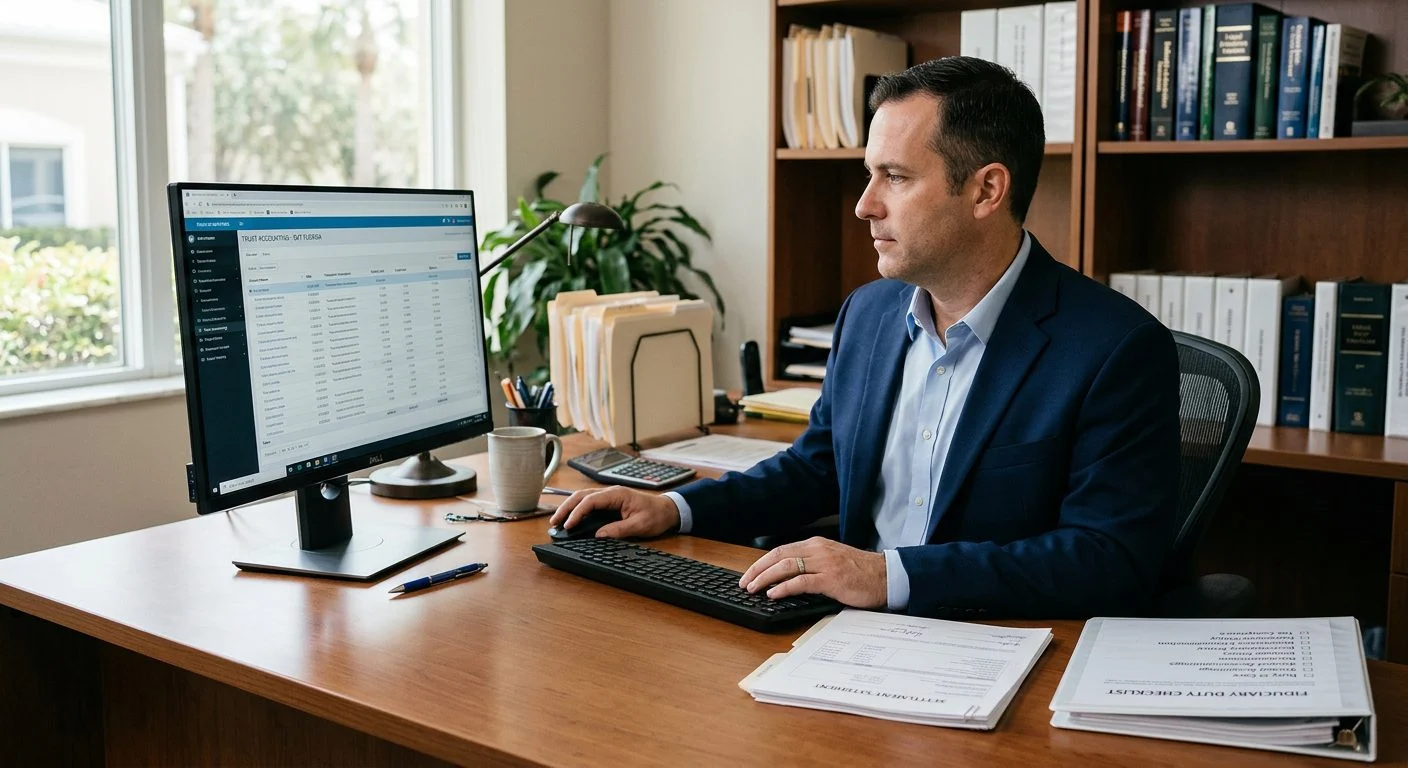
A professional trustee is a person or entity who manages a special needs trust for a person with a disability. In Florida, that trustee must follow the Florida Trust Code, keep clear records, and act only in the beneficiary’s interest. This guide explains the role, the options for who can serve, and what the work involves day to day.
Most families face this question during a hard moment. A new disability diagnosis, a guardianship case, or a relative’s illness can force a choice about who should handle the money. Understanding the role before you choose makes that decision easier.
What a Professional Trustee Does in a Special Needs Trust
A special needs trust holds money or property for a person with a disability. Its purpose is to add to that person’s life without costing needed government benefits.
There are two main types:
- Third-party special needs trusts are funded with a family member’s assets, such as a parent’s will or lifetime gift.
- First-party special needs trusts are funded with the disabled person’s own assets.
Not every trust set up for a disabled person is a special needs trust. The trust’s terms and funding decide what it is, so read the document closely.
The trustee manages the trust assets and decides when to make distributions. Those payments should supplement government benefits, not replace them. Families often choose a professional trustee when no suitable relative is available, when they want neutral administration, or when relatives disagree.
If you're deciding who should manage a special needs trust for someone you love, you don't have to work it out alone. Our Coral Gables team can talk it through with you. Talk it through with Trust Counsel, PL — the first consultation is free, confidential, and carries no obligation.

Who Can Serve as Trustee and How the Options Compare
Each option has trade-offs:
- A family member knows the beneficiary well. But this person may lack administrative skills, face time pressure, or be pulled into family conflict.
- An individual professional, such as an attorney, can serve personally. An attorney who serves as a trustee, or a person related to that attorney, is generally not entitled to trustee pay under Fla. Stat. § 736.0708 if the attorney prepared or supervised the trust that appointed them, unless an exception or required disclosure applies. This rule applies to trust instruments executed by a Florida resident on or after October 1, 2020.
- A corporate or professional trustee is a company that handles trust administration. Florida’s Office of Financial Regulation describes non-deposit trust companies that provide trustee and estate administration services.
Trust Counsel is a trusts and estates law firm in Coral Gables. The firm itself is not a trustee. Trust Counsel’s attorneys can serve individually as trustee or personal representative, and the firm advises and represents trustees, personal representatives and beneficiaries.
The trust document names the first trustee and any successor. If the named person cannot serve, Florida law sets an order. For a noncharitable trust whose trusteeship must be filled, a successor named in the trust comes first, then a person chosen by unanimous agreement of the qualified beneficiaries, then a person the court appoints (Fla. Stat. § 736.0704); charitable trusts follow a different order.
If the trust does not set the trustee’s pay, the trustee is entitled to compensation that is reasonable under the circumstances (Fla. Stat. § 736.0708).
Core Duties a Trustee Owns
A trustee must administer the trust in good faith, following its terms and the beneficiaries’ interests (Fla. Stat. § 736.0801). The trustee must act solely in the beneficiaries’ interests (Fla. Stat. § 736.0802).
That means reasonable care, skill and caution (Fla. Stat. § 736.0804). If there are two or more beneficiaries, the trustee must act impartially (Fla. Stat. § 736.0803).
Recordkeeping matters. The trustee must also keep trust property separate from personal property (Fla. Stat. § 736.0810).
A trust accounting must show all cash and property transactions, including compensation paid to the trustee and the trustee’s agents (Fla. Stat. § 736.08135).
How the Engagement Works, Step by Step
- Intake and document review. Gather the trust, any amendments, the beneficiary’s benefit notices, and a list of assets.
- Acceptance. The named trustee accepts the role. A designated trustee who does not accept within a reasonable time is deemed to have declined (Fla. Stat. § 736.0701).
- Asset review. Identify what the trust holds and what needs retitling. Confirm what should not pass to the beneficiary directly.
- Required notices. Within 60 days after accepting the trust, the trustee must notify the qualified beneficiaries. The notice includes the trustee’s full name and address (Fla. Stat. § 736.0813).
- Ongoing administration. Make distributions, keep records, and account to beneficiaries as the statute requires.
- Transition or dispute. If a successor is needed or a beneficiary raises concerns, the file moves to the next step.
Protecting Benefits and Avoiding Common Mistakes
Distributions can affect a disabled person’s government benefits. A trustee should review the benefit rules before paying for anything. Each payment should be checked against the beneficiary’s specific programs.
Common mistakes include:
- Mixing funds. Paying personal bills from trust money makes records unclear.
- Skipping documentation. Each distribution should have a written record of its amount and purpose.
- Transferring assets outright. Handing the beneficiary cash or property without review can affect benefits.
Guardianship and trust administration are different roles. A guardian has authority over the person and assets under the guardianship. A trustee has authority under the trust document. Check which role each person actually holds.
Why Families Bring This Work to Trust Counsel
Trust Counsel, PL is a trusts and estates law firm with its only office in Coral Gables, Florida. We serve clients in Fort Lauderdale, Boca Raton, West Palm Beach, Doral, Kendall, Pinecrest, Key Biscayne and Aventura.
The firm focuses on trust litigation, probate litigation, trust administration, guardianship, and estate planning, and the firm advises and represents trustees, personal representatives and beneficiaries. Trust Counsel’s attorneys can serve individually as trustee or personal representative. Leslie V. Marenco is the responsible lawyer for this page. Tanya Vega is also a lawyer at the firm.
The firm advises families on whether a trust was set up properly and how it should be run. When a dispute arises, it represents trustees and beneficiaries. Some matters may be referred to another lawyer or firm. If that happens, we will say so.
Not sure what your next step is?
Talk it through with Trust Counsel, PL — the first consultation is free, confidential, and carries no obligation.

Special Needs Trust Questions Families Ask
A trustee of a special needs trust must act in the beneficiary’s interest, manage money prudently, and keep records. Here are common questions.
Is a qualified disability trust a special needs trust?
Not always. The label matters less than how the trust is funded and written, so the answer depends on the facts.
Does a trustee have fiduciary duties?
Yes. A trustee must act prudently, with reasonable care, skill and caution (Fla. Stat. § 736.0804).
Can a beneficiary get a copy of the trust?
Yes. On reasonable request, the trustee must give a qualified beneficiary a complete copy (Fla. Stat. § 736.0813).
Can a trustee be removed?
A court may remove a trustee for reasons such as a serious breach of trust or persistent failure to administer the trust (Fla. Stat. § 736.0706).
How long does a beneficiary have to sue a trustee?
For matters a trust disclosure document adequately disclosed, a beneficiary generally must sue within 6 months after receiving that document or a limitation notice, whichever is later (Fla. Stat. § 736.1008).
If you’re weighing a trustee choice after a diagnosis, a guardianship filing or a change in a trustee’s health, you don’t have to decide alone. Call (305) 707-7126 or schedule online for a free initial consultation, which is confidential and without obligation to continue.
How Trust Counsel Can Help
Trustee Representation
Trust Counsel's attorneys can serve individually as trustee. The firm advises and represents trustees, personal representatives and beneficiaries, so each role gets clear legal guidance.
Trust Review and Administration
We help families and fiduciaries review special needs trust language, funding and administration so the trust is written and managed as intended.
Fiduciary Duty Guidance
A trustee must act prudently, with reasonable care, skill and caution (Fla. Stat. § 736.0804). We explain what those duties mean in practice.
Coral Gables Office
Our only office is in Coral Gables. We serve clients in Fort Lauderdale, Boca Raton, West Palm Beach, Doral, Kendall, Pinecrest, Key Biscayne and Aventura.
Free First Consultation
Call (305) 707-7126 or schedule online. The first consultation is free, confidential and comes with no obligation to continue.
Review Before You Rely on the Trust
A special needs trust is only as effective as its drafting and funding. Have the trust language and the trustee's role reviewed with a Florida attorney before you rely on them.
Common Questions About Special Needs Trusts
Who Can Serve as Trustee?
A trustee can be a family member, a friend or a professional. Trust Counsel's attorneys can serve individually as trustee, and the firm advises trustees, personal representatives and beneficiaries.
What Does a Trustee Owe?
A trustee must manage the trust prudently and keep the beneficiary's interests in view. Our attorneys explain these obligations and how to meet them.
When Should You Call?
Contact us when you are planning a special needs trust, considering a trustee role, or facing a question about an existing trust. A free first consultation is available.