
Florida Probate & Trust Law | Coral Gables
Executor or Personal Representative? What Florida Calls the Role
Plain answers on the terms you will see in wills and court papers, and why the difference matters when a family is settling an estate.
By Leslie V. Marenco · Published November 19, 2026
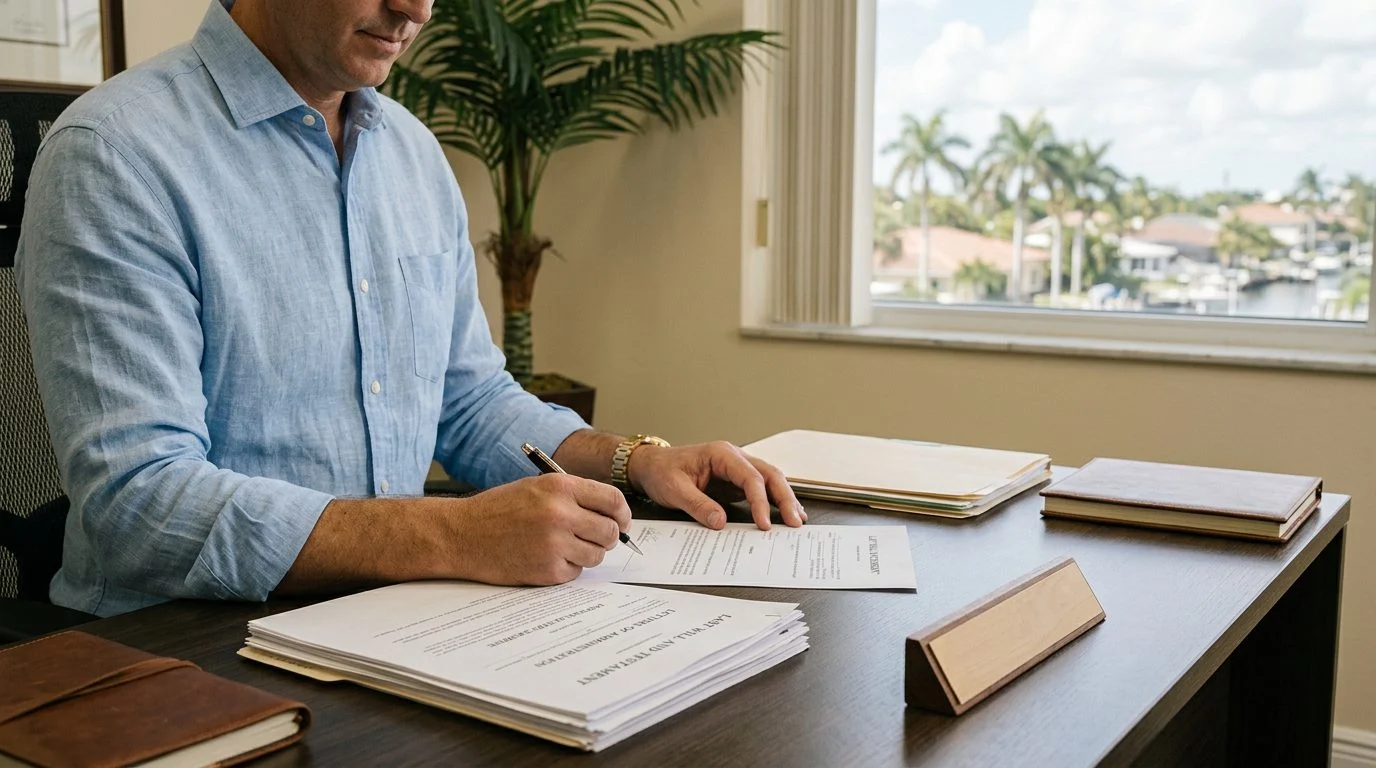
Florida uses the term personal representative. Many people still say executor, but in Florida both words describe the same court-appointed role over a deceased person’s estate. This page explains the term, how it shows up in court papers, and what the role involves.
Short answer: Florida uses “personal representative”
Florida’s statutes use the term personal representative, and the court papers you’ll see use that title. The statute defines it as “the fiduciary appointed by the court to administer the estate” (Fla. Stat. § 731.201). A fiduciary is someone legally trusted to act for others.
The word “executor” is the older name that many wills still use. The same definition says the term covers what has been known as an executor, along with several other old titles. So if you searched for “executor,” you’re usually looking for this same office.
This page uses personal representative throughout. It uses “executor” only as a bridge, as in “personal representative (often called an executor).” For the broader picture of disputes over trusts and estates, see the trust litigation attorney guide.
Not sure what your next step is?
Talk it through with our team — the first discovery call is free, confidential, and carries no obligation.
Why the statute uses personal representative
Florida defines this role by what it does, not by the name on a will. Under Fla. Stat. § 731.201, the office is the court-appointed fiduciary who administers a decedent’s estate. The estate is the property of the decedent that is subject to administration.
Court authority comes through “letters.” The statute defines letters as the authority the court grants to the personal representative to act for the estate. It also says all letters are designated “letters of administration.” That is why a court order or filing may use the formal title even when the will says executor.
The statute also treats the personal representative as an interested person in any proceeding that affects the estate. So if you’re handed a stack of court papers, expect the words personal representative and letters of administration. Those terms describe the same job a will might call an executor.
Are an executor and a personal representative the same thing?
Yes. In Florida practice, the two words describe the same fiduciary role over an estate. A will may use “executor,” “personal representative,” or both. What determines the role is the court’s appointment.
The role’s powers begin at appointment. Under Fla. Stat. § 733.601, the duties and powers of a personal representative commence upon appointment. Some acts taken before appointment can count later, if they help the estate. Even so, a person named in a will should not assume authority before the court acts.
A law firm, as an entity, does not serve as personal representative. Trust Counsel’s attorneys can serve individually as trustee or personal representative. The firm advises and represents trustees, personal representatives and beneficiaries.
What a personal representative does first
The first job is to understand the estate and protect it. Under Fla. Stat. § 733.602, a personal representative is a fiduciary who must observe the standards of care that apply to trustees. The role must also settle and distribute the estate under the will and the Probate Code, as efficiently as fits the estate’s interests.
Early steps usually include finding the will, taking control of estate property, and listing what the estate holds. The statute says the personal representative shall take all steps reasonably necessary to manage, protect and preserve the estate until distribution (Fla. Stat. § 733.607).
Unless an inventory was already filed, the personal representative must file a verified inventory. It lists estate property with reasonable detail and an estimated fair market value at the date of death (Fla. Stat. § 733.604). Claims also carry timing rules. Under Fla. Stat. § 733.705, the personal representative pays claims within one year after first publication of notice to creditors, with extensions for some claims. Fla. Stat. § 733.705 reads: “(1) The personal representative shall pay all claims within 1 year from the date of first publication of notice to creditors, provided that the time shall be extended with respect to claims in litigation, unmatured claims, and contingent claims for the period necessary to dispose of those claims pursuant to subsections (5), (6), (7), and (8).” Florida law sets a deadline for the personal representative to pay claims against the estate, and that deadline can be extended in certain situations, such as for claims in litigation or when the court finds good cause. The exact timing depends on the facts of the estate.
Skipping the court process has its own consequences, covered in what happens if you don’t probate a will.
Have questions about what happened?
Ask our team directly. The first conversation is free, confidential, and there is no obligation to continue.
Who can act as a personal representative, and what if there is no will
Many adults can qualify. Under Fla. Stat. § 733.302, a person who is sui juris (legally able to act for themselves) and was a Florida resident when the decedent died is qualified, subject to the Probate Code’s limits.
Some people cannot serve. Under Fla. Stat. § 733.303, a person is not qualified if convicted of a felony, convicted of abuse, neglect or exploitation of an elderly person or disabled adult, mentally or physically unable to perform the duties, or under age 18. For the full list, read who can act as a personal representative in Florida.
A named person may still face eligibility questions.
Under Fla. Stat. § 733.202, any interested person may petition for administration of a decedent’s estate. Any interested person may petition for administration (Fla. Stat. § 733.202).
If you’re planning ahead, see how to prevent your family from contesting your will.
Talk with Trust Counsel about your situation
If a parent or relative has just died, and you’ve been named to handle the estate, these titles can feel like a foreign language. Maybe a will says executor. Maybe a court form says personal representative. Maybe there is no will and no clear person to act.
Each of those situations raises different questions. Who has priority? When does the role start? What comes first? If that’s where you are, you can talk through the facts with Trust Counsel, PL in Coral Gables. Call (305) 707-7126 or book a free discovery call online.
The firm offers a free discovery call — confidential, with no obligation to continue. Leslie V. Marenco is the responsible lawyer for this page.
Frequently Asked Questions
Does Florida use the term executor or personal representative?
Florida law uses the term “personal representative” for the person who manages a deceased person’s estate (Fla. Stat. 731.201). People often still say “executor,” which is the common term in many other states, but the role is the same.
Is an executor the same as a personal representative in Florida?
Yes. In Florida, the person a will names to handle the estate is called the personal representative, the same role other states call an executor. A Florida court formally appoints that person before they can act.
Can a law firm serve as personal representative in Florida?
No. The firm itself is not appointed to that role, although Trust Counsel’s attorneys can serve individually as trustee or personal representative. Trust Counsel’s attorneys can serve individually as trustee or personal representative, and the firm advises and represents trustees, personal representatives and beneficiaries.
What should I do if I’ve been named as personal representative in a Florida will?
Start by reading the will and confirming who the court has appointed, if anyone yet. Florida estate matters often involve filing deadlines and court steps, so it helps to book a free discovery call with Trust Counsel, PL early. Trust Counsel, PL offers a free discovery call — confidential, with no obligation to continue.
Want to know where you stand?
Tell us what happened and our team will walk you through the options available to you, at no cost.
Key terms to recognize
Personal representative
The Florida term for the person who manages a deceased person's estate under Florida law (Fla. Stat. 731.201).
Executor
A common word in many other states and in older documents. In Florida, people often use it as a reader's word for the same role.
Same role, different label
The label changes from state to state, but the duties tied to administering an estate are what matter when reviewing a will.
Trustees are separate
A trustee manages assets held in a trust, which is a different role from the personal representative of a probate estate.
Read the document carefully
Where the two terms come up
Wills and older documents
Wills drafted in other states, or many years ago, may still say 'executor.' Reading the whole document helps show who is meant.
Court filings
Petitions, letters and orders in Florida probate matters refer to the personal representative by that title.
Everyday conversation
Families often say 'executor' in ordinary speech. The label matters less than understanding the responsibilities attached to the role.
Questions about a will, an estate or a trust?
Start with a free discovery call with Trust Counsel, PL in Coral Gables. The first call is confidential and comes with no obligation to continue.