

Business Succession Planning | Coral Gables, Florida
Business Succession Planning in Florida, Built Around Your Company
Trust Counsel, PL focuses on business succession planning, buy-sell coordination and estate tax planning for business owners and their families. Our office is in Coral Gables, and we serve clients in Fort Lauderdale, Boca Raton, West Palm Beach, Doral, Kendall, Pinecrest, Key Biscayne and Aventura. Free first consultation: confidential and without obligation to continue.
By Leslie V. Marenco · Published October 19, 2026
Business succession planning is the written plan that decides who will own, control and run a closely held business after the owner retires, becomes incapacitated or dies. A written plan gives family members and co-owners clear rules instead of guesswork.
This guide explains the main parts of a succession plan, the documents that must agree with each other, and the points where a business succession planning attorney often becomes involved. Trust Counsel, PL focuses on estate planning and business succession planning from its only office, in Coral Gables.
What business succession planning means in Florida
A business succession plan is the set of decisions and documents that controls a company’s future after its owner steps away. A closely held business is a company owned by a small group, often family members, rather than public shareholders.
The plan usually covers four things. It sets who owns the ownership interests, who has management authority, how the owner and family receive income, and how disagreements will be handled.
Many owners treat succession as a distant event. In reality, several documents touch the same shares or membership interests at once. These include an operating agreement or corporate bylaws, a buy-sell agreement, and the owner’s will or trust. If these documents point in different directions, the family may face a dispute at the worst possible time.
Not sure what your next step is?
Talk it through with Trust Counsel, PL — the first consultation is free, confidential, and carries no obligation.

Why ownership and management need a written plan
Without a written plan, ownership and control follow default rules, the company’s existing documents, or a court process. The result is often slower and less predictable than the owner intended.
Florida’s default rules matter here. Under Fla. Stat. § 605.0407, a Florida limited liability company is member-managed unless its operating agreement or articles of organization say otherwise. In a member-managed company, management is vested in the members. An heir who receives an interest may therefore gain a voice in management the owner never planned for.
Common triggers force the decision. These include retirement, illness, death, divorce, a co-owner who wants to leave, and a family member who wants out of the business. Each trigger can change who has authority and who receives value.
A plan also needs review. Revisit it when the business grows, when ownership changes, or when the family changes through marriage, divorce or births.
How to create a succession plan for a business
A succession plan starts with a clear inventory of the business and its owners. Four steps guide most planning work.
First, list every owner and what each one holds. Include voting rights, membership percentages and any options or promises already made.
Second, identify the possible successors and judge their readiness. A child who is not yet ready to run operations may still be able to hold ownership while a manager runs the company.
Third, decide how control and value will move. Choose whether ownership passes at death, during life, in stages, or through a sale to co-owners or employees.
Fourth, document each decision in writing. Oral understandings often fail when the family needs them most.
The owner should also gather business records, tax returns, shareholder or member lists, and existing agreements before the first meeting with counsel. Clear records make the planning faster and more accurate.
Buy-sell agreements and tools that move ownership
A buy-sell agreement is a contract that sets when an owner must sell or can be bought out, and how the price will be set. Its triggers often include death, disability or a departure from the business.
Transfer restrictions in the company’s own documents also matter. Under Fla. Stat. § 607.0627, the articles, bylaws, an agreement among shareholders or an agreement between shareholders and the corporation may restrict share transfers. A restriction does not affect shares issued before it was adopted unless their holders are parties to it or voted for it. Such a restriction may first require the shareholder to offer the shares to the corporation or to other persons. A restriction is valid and enforceable against a holder or transferee when it is authorized and its existence is noted conspicuously on the certificate or in the information statement. Unless it is noted, the restriction is not enforceable against a person without knowledge of it.
Other tools can move ownership over time. These include trusts, lifetime gifts of ownership interests, and staged transfers that give the successor more control in steps. Each tool has tax and control effects, so the choice should follow the business’s facts.
For the detailed process of drafting and funding a buy-sell agreement, see our business succession buy-sell service page.
Generational transfer and estate tax planning for owners
Passing a business to children or other relatives can raise estate, gift and income tax questions. The answers depend on the value of the business, the family, and how the transfer is structured.
Federal figures set the starting point. The IRS states that the basic exclusion amount for estate and gift tax is $15,000,000 for 2026. The IRS also lists the gift tax annual exclusion for 2026 at $19,000 per donee.
Liquidity can be a problem for a family that holds mostly business value. Under IRC § 6166, if the decedent was a U.S. citizen or resident at death and the value of an interest in a closely held business exceeds 35 percent of the adjusted gross estate, the executor may elect to pay part or all of the estate tax in 2 or more, but not more than 10, equal installments. The executor is the personal representative under Florida law.
Valuation also drives the numbers. Under IRC § 2031(b), where stock of a corporation cannot be valued from bid and asked prices or sales prices because it is not listed and has no sales, its value is determined by considering, among other factors, the value of stock of corporations in the same or a similar line of business that are listed on an exchange.
For planning that ties the business to the owner’s wider estate plan, see our generational transfer service page.
Foreign family members and foreign-owned businesses
Owners with family, assets or residency abroad need to plan for more than one legal system. The plan must address which country’s rules may affect a transfer and how the Florida documents will be carried out in Florida.
Some promises about succession carry strict formal rules. An owner who relies on a family promise should not treat it as enforceable without that formality.
Foreign heirs or co-owners can also complicate management and the handling of disputes. Distance, language and differing expectations often make clear written terms more important, not less.
For planning that covers domestic and foreign families with business interests, see our foreign-owner service page.
Not sure what your next step is?
Talk it through with Trust Counsel, PL — the first consultation is free, confidential, and carries no obligation.
Planning for incapacity, guardianship and management continuity
An owner who cannot manage the business may leave the company without anyone authorized to act. Continuity planning answers who can sign, borrow, pay employees and make decisions during that time.
A durable power of attorney is one common tool. Under Fla. Stat. § 709.2104, a power of attorney is durable if it contains words showing the principal intends the authority to be exercisable despite later incapacity. Fla. Stat. § 709.2104 reads: “Except as otherwise provided under this part, a power of attorney is durable if it contains the words: “This durable power of attorney is not terminated by subsequent incapacity of the principal except as provided in chapter 709, Florida Statutes,” or similar words that show the principal’s intent that the authority conferred is exercisable notwithstanding the principal’s subsequent incapacity.”
When no document exists, the court may be asked to appoint a guardian. Under Fla. Stat. § 744.361, a guardian of an incapacitated person is a fiduciary who may exercise only the rights removed from the ward and delegated to the guardian. The guardian must act within the scope of the court’s authority. Under Fla. Stat. § 744.331, each member of the examining committee must file his or her report with the clerk of the court within 15 days after appointment.
Court proceedings take time, and they are public. Documents signed in advance usually give the family more control.
Fiduciaries, personal representatives and trustees in a business plan
A trustee manages property held in trust, and a personal representative manages a deceased person’s estate. In Florida, this role is called the personal representative, and this page uses that term throughout.
Trust Counsel’s attorneys can serve individually as trustee or personal representative. The firm advises and represents trustees, personal representatives and beneficiaries. The firm itself does not serve as a fiduciary.
A trustee must act for the trust’s beneficiaries. Under Fla. Stat. § 736.0802, a trustee shall administer the trust solely in the interests of the beneficiaries. This duty matters when a trust holds business interests that the family also runs.
The choice of fiduciary belongs inside the business plan, not after a crisis. The plan should name who holds authority, what powers they have, and how they report to the family. A will or trust may also require arbitration of certain disputes between beneficiaries and a fiduciary. Under Fla. Stat. § 731.401, that arbitration provision is enforceable, except for disputes over the validity of all or part of a will or trust.
What type of lawyer handles business succession planning
Business succession planning usually calls for a lawyer who can handle estate planning, business structure and tax questions together. The work often overlaps with estate tax planning and asset protection.
Trust Counsel, PL focuses on estate planning, trusts and estates, and business succession planning. The firm also handles probate litigation and trust litigation. These matters matter when owners, heirs or beneficiaries disagree after a transfer.
A business succession matter may also need coordination with accountants, corporate counsel or other advisers. Each adviser covers a different part of the plan. A good plan connects their work.
Some matters may be referred to another lawyer or firm. When that happens, we will say so and explain why.
Disputes among owners, heirs and beneficiaries
Most succession disputes center on value, control, unequal shares, or whether the plan was followed. A disagreement that starts over a buy-out price can quickly become a question about management.
When a dispute goes to court, the process runs through the court system. Whether a probate dispute goes before a court depends on the facts of each matter. Trust and probate litigation attorneys handle these contested matters in Florida courts. The outcome depends on the facts and the documents involved.
Some planning documents choose a different path. Under Fla. Stat. § 731.401, a provision in a will or trust requiring arbitration of disputes between or among the beneficiaries and a fiduciary under the will or trust, other than disputes over the validity of all or part of the will or trust, is enforceable. Unless the will or trust specifies otherwise, such a provision is presumed to require binding arbitration under chapter 682, the Revised Florida Arbitration Code.
Clear written terms reduce the room for disagreement. A buy-sell agreement that sets a valuation method, and an operating agreement that matches it, give everyone a shared reference point.
Florida clients and the Coral Gables office
Trust Counsel, PL’s only office is in Coral Gables, Florida. The firm serves clients across Florida from that office.
We serve clients in Fort Lauderdale, Boca Raton, West Palm Beach, Doral, Kendall, Pinecrest, Key Biscayne and Aventura.
Owners with questions about a specific step can read our related pages. These cover how to create a succession plan for a business and what type of lawyer handles inheritance for an owner’s family.
Not sure what your next step is?
Talk it through with Trust Counsel, PL — the first consultation is free, confidential, and carries no obligation.
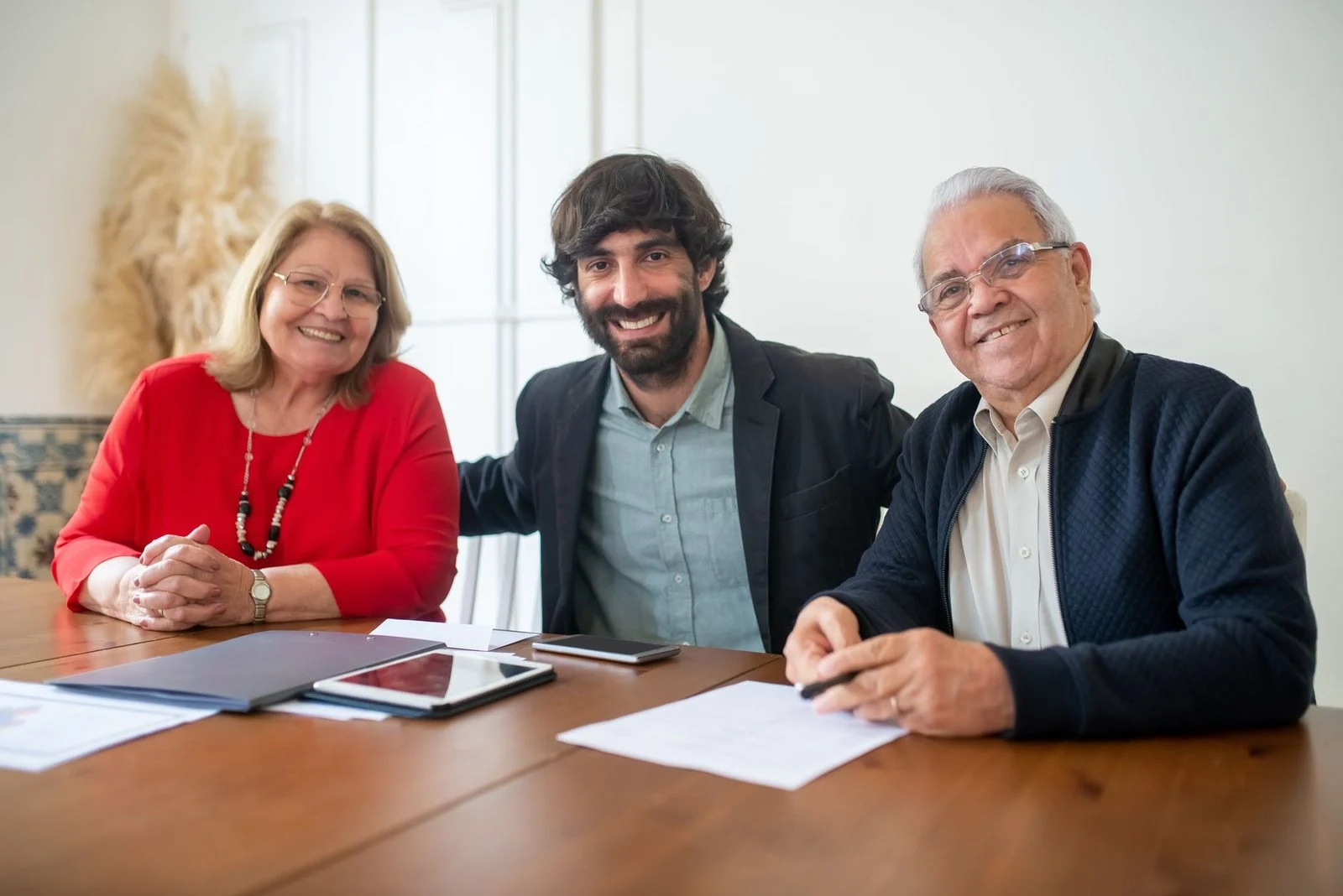
Talk with Trust Counsel, PL about who will own and run your business
If you are an owner deciding who will take over the company after retirement, or what happens to the business if you become ill or die, a conversation can bring the open questions into focus. Call (305) 707-7126 or request a consultation through our contact page.
Your first consultation with Trust Counsel, PL is free, confidential and carries no obligation to continue. Leslie V. Marenco is the lawyer responsible for this page. Our support staff help schedule and organize your first meeting.
Common questions
Does a business succession plan need to match the operating agreement?
Yes. The operating agreement governs relations among members and the company, so the estate plan and buy-sell terms should fit with it.
Can a durable power of attorney help during incapacity?
It can, if it contains the durable language Florida law requires. It may avoid the need for a guardian.
The answer depends on the facts.
Business succession services
Business succession planning
Planning for who will own, manage and lead your company when you step back, retire or are no longer able to serve.
Asset protection
Structuring your planning so business and family assets are organized with protection in mind, consistent with applicable law.
Trust administration
Guidance for trustees, personal representatives and beneficiaries as business interests move through a trust or estate.
Probate and trust litigation
Representation for beneficiaries, heirs and fiduciaries when disputes arise over a business interest, a trust or an estate.
How we approach business succession
Coordinated documents
We review your operating agreement, buy-sell terms, will and trust together so the plan works as one system.
Focused practice
Trust Counsel, PL focuses on trusts and estates matters, including business succession, estate tax and asset protection planning.
Attorney-led, with support staff
Leslie V. Marenco is the attorney responsible for this page. Our support staff assists with scheduling and documents.
Free first consultation
Confidential and without obligation to continue. Start the conversation before any decisions are made.
Review your operating agreement early
Buy-sell terms and estate planning documents should fit the operating agreement that governs your company. Reviewing them before a change in ownership or health event gives you more time to make decisions.