
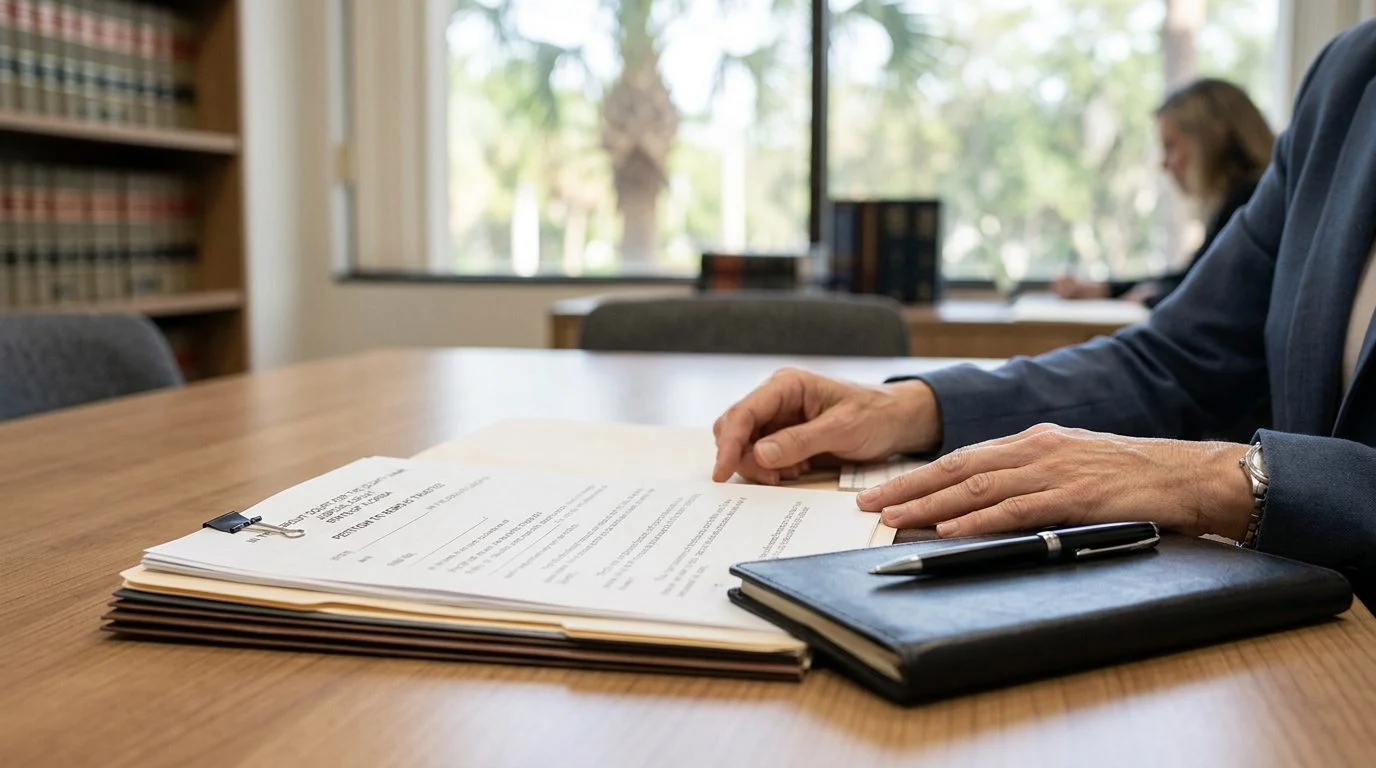
Trust Litigation | Coral Gables, Florida
Petition to Remove a Trustee in Florida: What Happens Next
Trust Counsel, PL represents beneficiaries, heirs and fiduciaries in trust litigation. Here is how a petition to remove a trustee moves through the court, and what each step means for you.
By Leslie V. Marenco · Published November 2, 2026
Filing a petition to remove a trustee opens a court case. It does not remove the trustee on the day it is filed. In Florida, the judge reviews the grounds, the trustee receives notice and responds, both sides exchange information, the court may protect trust property, and a hearing comes before any final ruling.
Many people read about trustee removal after a trustee stops sending reports, delays payments, or makes decisions that worry the family. The steps below describe the process only. They do not predict how any case will end, because each case turns on its own facts and the trust’s language.
What a Petition to Remove a Trustee Is in Florida
A petition to remove a trustee is a formal request asking a Florida court to take a trustee out of office. Under Fla. Stat. § 736.0706, the settlor, a cotrustee, or a beneficiary may request the court to remove a trustee, and the court may also remove a trustee on its own initiative.
Under that statute, the settlor, a cotrustee or a beneficiary may ask the court to remove a trustee. The court can also remove a trustee on its own initiative. The settlor is the person who created the trust. A cotrustee shares the trustee role with someone else. A beneficiary is a person the trust benefits.
Filing alone does not remove anyone. The petition asks the court to decide the question. The statute also lets the court order protective relief while the request is pending.
Who can file? The settlor, a cotrustee or a beneficiary can ask the court to remove a trustee under the statute.
If a trustee has gone silent or is holding back trust distributions, you may have a claim worth discussing, and you don't have to sort it out alone. Talk it through with Trust Counsel, PL — the first consultation is free, confidential, and carries no obligation.

Grounds the Court Considers Under Fla. Stat. 736.0706
The court may remove a trustee only for reasons the statute lists. The removal statute lists these grounds:
- The trustee has committed a serious breach of trust.
- Lack of cooperation among cotrustees substantially impairs administration of the trust.
- The trustee is unfit, unwilling, or persistently fails to administer the trust effectively, and removal serves the beneficiaries’ interests.
- A substantial change of circumstances has occurred, or all qualified beneficiaries request removal. Under § 736.0706(2)(d), when there has been a substantial change of circumstances or all of the qualified beneficiaries request removal, the court must find that removal of the trustee best serves the interests of all of the beneficiaries and is not inconsistent with a material purpose of the trust, and that a suitable cotrustee or successor trustee is available.
Useful facts often come from how the trust has been run. Examples include missed accountings, unexplained transfers, or refusal to make required distributions. The judge decides whether the facts fit a ground the statute names.
Step One: Filing and Serving the Petition
A removal case starts with a court filing, and the trustee must receive notice of it. Under Fla. Stat. § 736.0201, judicial proceedings about trusts start by filing a complaint. They are governed by the Florida Rules of Civil Procedure. The same statute lists appointing or removing a trustee among the proceedings a court may hear.
The filing should identify the trust, the trustee, the conduct alleged, the statutory ground, and the relief requested. Clear facts at this stage shape everything that follows.
Service means delivering the papers to the trustee the right way. Under Fla. Stat. § 736.02025, service on a person may be made as chapter 48 provides. Under Fla. Stat. § 736.02025, service of process on a person may be made as provided in chapter 48; the trust code’s notice rules are in a separate statute. The notice statute names methods such as first-class mail, personal delivery, and delivery to the person’s last known residence or place of business.
Court trust cases are not supervised day to day. Under the same trust-proceedings statute, a trust is not subject to continuing judicial supervision unless the court orders it. The removal case is therefore the stage where the court steps in.
Notice and the Trustee’s Duty to Inform
Several specific duties apply.
The accounting statute says an accounting must be a reasonably understandable report. It must show all cash and property transactions and significant administration transactions. It must also show compensation paid to the trustee and the trustee’s agents.
A beneficiary who asks for records in writing creates a dated record of the request. Later, the court can compare what was asked with what was provided. A qualified beneficiary can waive the accounting duty, but only in writing, and can withdraw that waiver.
The Trustee’s Response and Discovery
The trustee answers the petition in writing. The answer may admit or deny each allegation, explain the trustee’s actions, and raise defenses. The trustee may also file its own requests with the court. This written response defines what the judge must decide.
After the pleadings, both sides gather information. Under the trust-proceedings statute, the Florida Rules of Civil Procedure govern trust cases. In probate and guardianship proceedings, Florida Probate Rule 5.080 applies the civil discovery rules. Those tools include depositions, written interrogatories, document requests and requests for admission.
The probate rule also gives the court broad discretion. The court can limit the scope, place and manner of discovery. It can assess discovery costs, including attorneys’ fees, against the party making the discovery, one or more estate beneficiaries, or the ward, considering the benefit derived among other factors. A trustee who believes a request is too broad can ask the court to narrow it.
Many readers assume the file will fill itself. It usually doesn’t. Records such as bank statements, tax filings and invoices often must be requested and organized early.
Interim Steps to Protect Trust Property
While a removal petition is pending, the court can order steps to protect the trust. The removal statute allows the court to order appropriate relief to protect trust property or the beneficiaries’ interests. The statute ties that relief to s. 736.1001(2), and the order can be in addition to, or instead of, removal.
The court also has another tool. Under Fla. Stat. § 736.0704, the court may appoint an additional trustee or special fiduciary whenever it finds the appointment necessary for administration. That power applies even when no vacancy exists.
Which protective steps apply depends on the facts of the case. The general aim is simple. The court wants trust assets preserved and the trust kept in order while the question is decided.
Not sure what your next step is?
Talk it through with Trust Counsel, PL — the first consultation is free, confidential, and carries no obligation.
The Evidentiary Hearing
The hearing is the stage where the judge receives evidence and argument on the statutory grounds. Testimony can come from the trustee, beneficiaries, financial professionals, or a third-party expert witness who explains financial records. Documents such as accountings, bank records and the trust instrument often serve as exhibits.
Each side tries to show that its version of the facts fits the ground it relies on. The trustee must answer that evidence with its own records and explanations.
The judge decides the petition on the evidence and the law. No one can predict the ruling in advance. A careful review of the records before the hearing is the best preparation a party can make, and that review is where most of the real work happens.
Possible Outcomes: Removal, Denial or Other Orders
The court can remove the trustee, decline to remove, or enter other orders the statute allows. Removal under § 736.0706 is one path. Protective orders and a special fiduciary are others.
When a trustee is removed, the trust needs someone to take over. Under Fla. Stat. § 736.0704, a vacancy must be filled if the trust has no remaining trustee. For a noncharitable trust, a vacancy that must be filled is filled in this order: first, a person named in the trust; second, a person appointed by unanimous agreement of the qualified beneficiaries; third, a person appointed by the court. Charitable trusts follow a different order.
The removed trustee does not leave the property behind. Under Fla. Stat. § 736.0707, unless a cotrustee remains in office or the court otherwise orders, a removed trustee keeps the duties and powers needed to protect trust property until it is delivered. The trustee must deliver the property within a reasonable time. The trustee may keep a reasonable reserve for debts, expenses and taxes.
What happens after a trustee is removed in Florida? A successor trustee is named under the trust or the statute’s order. The former trustee must then turn over trust property within a reasonable time.
Resigning as Trustee and Personal Representative Breaches
A trustee can also step down by resignation. That is a different route from a contested removal. Or the trustee may resign with court approval.
Resignation does not erase past responsibility. Under Fla. Stat. § 736.0707(1), unless a cotrustee remains in office or the court orders otherwise, a trustee who has resigned or been removed continues to have a trustee’s duties, and the powers necessary to protect the trust property, until that property is delivered to a successor trustee or another person entitled to it. Until the trust property is delivered to a successor trustee or other person entitled to it, a trustee who has resigned or been removed keeps the duties of a trustee and the powers necessary to protect the trust property, unless a cotrustee remains in office or the court otherwise orders (Fla. Stat. § 736.0707(1)).
Concerns about a personal representative (often called an executor) follow probate law instead.
In Coral Gables, the firm advises and represents trustees, personal representatives and beneficiaries. Trust Counsel’s attorneys can serve individually as trustee or personal representative. The firm itself does not serve as a fiduciary.
Talk With Leslie V. Marenco About Your Trust Concern
If a trustee is not sending reports, is holding back distributions, or is acting against the trust’s terms, a short conversation can help you organize the facts. Leslie V. Marenco, one of the firm’s lawyers, is responsible for this page. Bring your questions, the trust papers you have, and any letters or accountings you received. Describe what worries you in your own words.
The first consultation is free, confidential, and carries no obligation to continue. Call (305) 707-7126 or schedule online to set up a time.

Frequently Asked Questions
What happens first after a petition to remove a trustee is filed in Florida?
The court reviews the petition, and the trustee and other interested parties receive formal notice of it.
Does the trustee keep managing the trust while the petition is pending?
Usually, yes.
What reasons can a Florida court accept for removing a trustee?
The court may remove a trustee on the grounds listed in Fla. Stat. § 736.0706(2), and several of those grounds carry their own conditions. For example, one ground applies where removal serves the interests of the beneficiaries, and another requires a suitable successor and consistency with a material purpose of the trust.
What happens after the court rules on removal?
If the court removes the trustee, a successor trustee is named under the trust’s terms or by the court. The removed trustee generally must account for their administration and turn over trust property to the successor.
How a Removal Petition Moves Forward
The petition is filed
A petition asks the Florida court to review the trustee's conduct and consider removal. The filing sets out the facts and the reasons the petitioner believes removal is warranted.
The trustee responds
The trustee may file a response, and the parties may exchange documents and information about how the trust has been administered.
The court holds a hearing
The judge reviews the record and the arguments at a hearing and then decides whether removal is appropriate. Each case turns on its own facts.
Questions Beneficiaries Ask Early On
What the petition must show
A petition needs clear facts tied to the trust terms and the trustee's administration. Organized records make that showing easier to present.
Whether the trustee keeps managing the trust
In many cases the trustee continues to manage the trust while the petition is pending. The court can address interim concerns as the case proceeds.
How Trust Counsel can help
Trust Counsel, PL focuses on trust litigation for beneficiaries, heirs and fiduciaries, and the firm advises and represents trustees, personal representatives and beneficiaries alike.
Gather Your Records Before You Call
Trust instruments, account statements, accountings and written communications with the trustee help clarify your position from the start. Bring what you have to your free first consultation.