
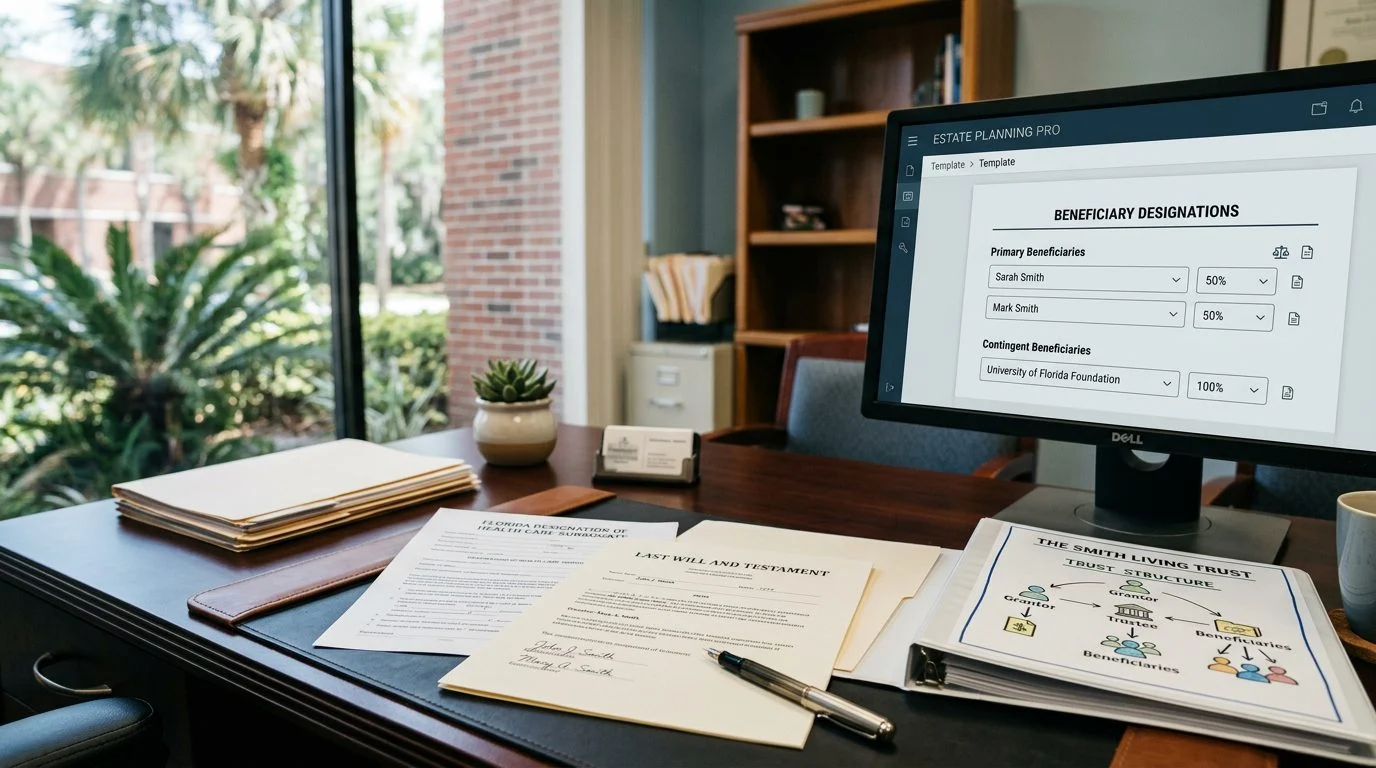
Understanding a Beneficiary's Role in Florida Wills, Trusts and Accounts
Learn what a beneficiary is, how beneficiary designations work and when to review them. Leslie V. Marenco and the Trust Counsel, PL team offer a free first discovery call, confidential and with no obligation to continue.
By Leslie V. Marenco · Published November 8, 2026
What does beneficiary mean in Florida? A beneficiary is a person or group entitled to receive property or a benefit under a will, trust, account or other arrangement. In Florida, that role comes from a written document or a form on file. This page explains where the term appears, what beneficiaries can do, and what happens when one dies first.
What Does Beneficiary Mean in Florida?
Beneficiary describes a role, not a title. A beneficiary is the person who receives property or a benefit that a document or account names. The role can come from a will, a trust, an insurance policy, a retirement account or a bank account.
Other people in an estate do different jobs. A personal representative (often called an executor) manages a probate estate. A trustee manages property held in a trust. One person can be a beneficiary and also hold one of these jobs, but the roles are different.
Trust Counsel’s attorneys can serve individually as trustee or personal representative. The firm advises and represents trustees, personal representatives and beneficiaries. This page uses the term personal representative, the Florida term.

Not sure what your next step is?
Talk it through with our team — the first discovery call is free, confidential, and carries no obligation.
Beneficiaries Named in a Will, a Trust or a Beneficiary Designation
Each document names beneficiaries in a different way. The difference changes what happens next.
A will names beneficiaries who take through probate. Probate is the court-supervised process for moving property that is in the decedent’s name alone. The will controls the property that passes through probate.
A trust names beneficiaries who take under the trust’s own terms. Trust property usually moves without a probate court process. The trust document is the main guide.
Life insurance policies, retirement accounts and some bank accounts use a beneficiary designation form. Beneficiary designations and the way an account is titled can affect who receives it, so they are worth reviewing alongside the will. An old form can name someone the owner no longer intends to receive the account. Comparing every form with the will can show whether the documents point to different people.
Can a Beneficiary Take Property Through a Beneficiary Deed in Florida?
A beneficiary deed is a separate instrument that works differently from a will or an account designation.
The owner keeps control of the property while living. The deed’s effect waits until the owner dies.
Because the form and recording steps matter, a beneficiary deed should be checked against the rest of the estate plan. A deed that conflicts with a will or trust can create questions later.
What Rights Does a Beneficiary Have?
A trust beneficiary has a right to information. The trust’s own terms, read together with the Florida statutes that govern it, determine what information a trustee owes qualified beneficiaries about the trust and how it is being administered.
A qualified beneficiary may ask the trustee for a copy of the trust instrument, and whether and how the trustee must provide it depends on the trust’s terms and applicable Florida law. Information about the trust’s assets, liabilities and administration may also matter to a beneficiary, and what a trustee must disclose depends on the trust document and applicable law. The trust’s terms and applicable Florida law decide whether the trustee of an irrevocable trust must provide a yearly accounting and whether a beneficiary can give up the right to receive it.
In a probate estate, the personal representative must promptly serve a notice of administration on known beneficiaries. Under the current text of Fla. Stat. § 733.212, amended in 2024, an interested person served with a notice of administration must file any objection to the will’s validity, venue or jurisdiction within 3 months after service of that notice.
A beneficiary can also ask a court to act when a fiduciary breaches a duty. Under Fla. Stat. § 733.609, a personal representative is liable to interested persons for damage or loss resulting from a breach of fiduciary duty, and in actions for breach of that duty the court shall award taxable costs, including attorney’s fees.
Keep two ideas apart. A right to information lets you see what is happening. A right to a distribution depends on the document and on what the estate owes.
Have questions about what happened?
Ask our team directly. The first conversation is free, confidential, and there is no obligation to continue.
What Happens If a Named Beneficiary Dies Before You?
The result depends on the document’s wording and on Florida’s default rules. A primary beneficiary is first in line.
Per stirpes describes a line of descent. Florida law says descent is per stirpes, whether to descendants or to collateral heirs. Under Fla. Stat. § 732.104, descent shall be per stirpes, whether to descendants or to collateral heirs.
Fla. Stat. § 732.603 Words such as “if he survives me” can show that contrary intent.
Trust gifts follow their own rule. Fla. Stat. § 736.1106 A residuary clause in a will does not, by itself, show a contrary intent.

Where Beneficiary Questions Fit in a Florida Probate or Trust Dispute
A beneficiary question becomes a dispute when people disagree about who is entitled, what they are owed, or whether a document was procured by pressure or deception. Under Fla. Stat. § 732.5165, a will is void if its execution was procured by fraud, duress, mistake or undue influence. Under Fla. Stat. § 736.0406, if the creation, amendment, or restatement of a trust is procured by fraud, duress, mistake, or undue influence, the trust or any part so procured is void.
Fla. Stat. § 733.107 Where the presumption of undue influence applies, it shifts the burden of proof.
These disputes can reach civil court. Some matters may be referred to another lawyer or firm.
If you are sorting out a beneficiary question after a family member’s death, Trust Counsel, PL offers a free, confidential first discovery call with no obligation to continue. Call (305) 707-7126 or schedule online at https://trustcounsel.com/contact/. Leslie V. Marenco is the responsible lawyer for this page. The firm’s only office is in Coral Gables, and we serve clients in Florida.
Frequently Asked Questions
What is a beneficiary in Florida?
A beneficiary is the person entitled to receive property or a benefit under a will, trust, account or policy.
Later objections are forever barred.
What is per stirpes?
Per stirpes means a share passes down a family line to a deceased person’s descendants.
Common Types of Beneficiary Designations
Will Beneficiaries
A will names the people or organizations that receive property through the probate estate. Questions about how a will is read and administered often reach the personal representative and the court.
Trust Beneficiaries
A trust sets out who receives income and principal and when. The trust document and the trustee's duties shape how a beneficiary's interest is administered.
Per Stirpes and Per Capita
These terms describe how a share passes when a named beneficiary has died. The wording used in the governing document matters, so the language should be reviewed carefully.
How Trust Counsel, PL Can Help
Coral Gables Office
Our office is in Coral Gables, Florida. We serve clients in Miami-Dade, Broward, Palm Beach and surrounding Florida communities.
Beneficiaries, Heirs and Fiduciaries
The firm advises and represents trustees, personal representatives and beneficiaries in trust and estate matters.
Trust and Probate Focus
Our practice concentrates in probate litigation, trust litigation, trust administration and estate planning.
Attorneys Who Can Serve Individually
Trust Counsel's attorneys can serve individually as trustee or personal representative.
Free First Discovery Call
Your first discovery call is free, confidential and carries no obligation to continue.
Review Your Designations Regularly
Life events such as marriage, divorce, a death in the family or a change in your assets are a good time to review who is named.
Have Questions About a Beneficiary Designation or Trust Interest?
Want to know where you stand?
Tell us what happened and our team will walk you through the options available to you, at no cost.