
Probate and Trust Litigation | Coral Gables, Florida
A Trust That Was Never Funded? Recovering Assets as a Florida Beneficiary
Trust Counsel, PL focuses on probate and trust disputes for beneficiaries, heirs and fiduciaries in Florida. If a trust did not receive the assets it was meant to hold, we can review the documents and discuss your options.
By Leslie V. Marenco · Published November 3, 2026
A trust that was never funded usually holds little or no property. A beneficiary may still have rights, but those rights turn on the trust document and on how each asset was titled. This guide walks through what to check first. It is written for adult children and heirs who are still gathering facts. Leslie V. Marenco is the responsible lawyer for this page. Our office is in Coral Gables.
What “Funded” Means and Why an Unfunded Trust Happens
A trust that has not been funded holds no property until assets are retitled or transferred into it. Someone signs the paperwork, pays for the document, and never changes the deed or the account. Years later the binder looks complete, but the property is still in the parent’s own name.
A signed trust with no assets still matters. The trustee must administer the trust in good faith, following its terms and the interests of the beneficiaries, under the Florida Trust Code § 736.0801. The document sets the trustee’s job, so read it closely.
A gap between the assets a trust holds and the assets the decedent owned can surface after a death. A trustee may have no statements in the trust’s name, or the bank may say the account belongs to the decedent alone. That moment is when the questions start.
If a family trust seems to hold little or nothing, you don't have to sort out your rights alone. Our Coral Gables office can talk it through with you. Talk it through with Trust Counsel, PL — the first consultation is free, confidential, and carries no obligation.

Where the Family’s Assets May Actually Be
Property left out of a trust usually passes under a different set of rules. The asset’s own paperwork and title often decide where it goes.
A pour-over will. A will can leave remaining property to the trust.
Joint ownership. Jointly owned property can pass to the surviving owner under how the title was written.
Property still in the decedent’s name. Anything still titled to the decedent may need a probate proceeding before anyone can move it.
Land trusts. Property held in a land trust has its own paperwork.
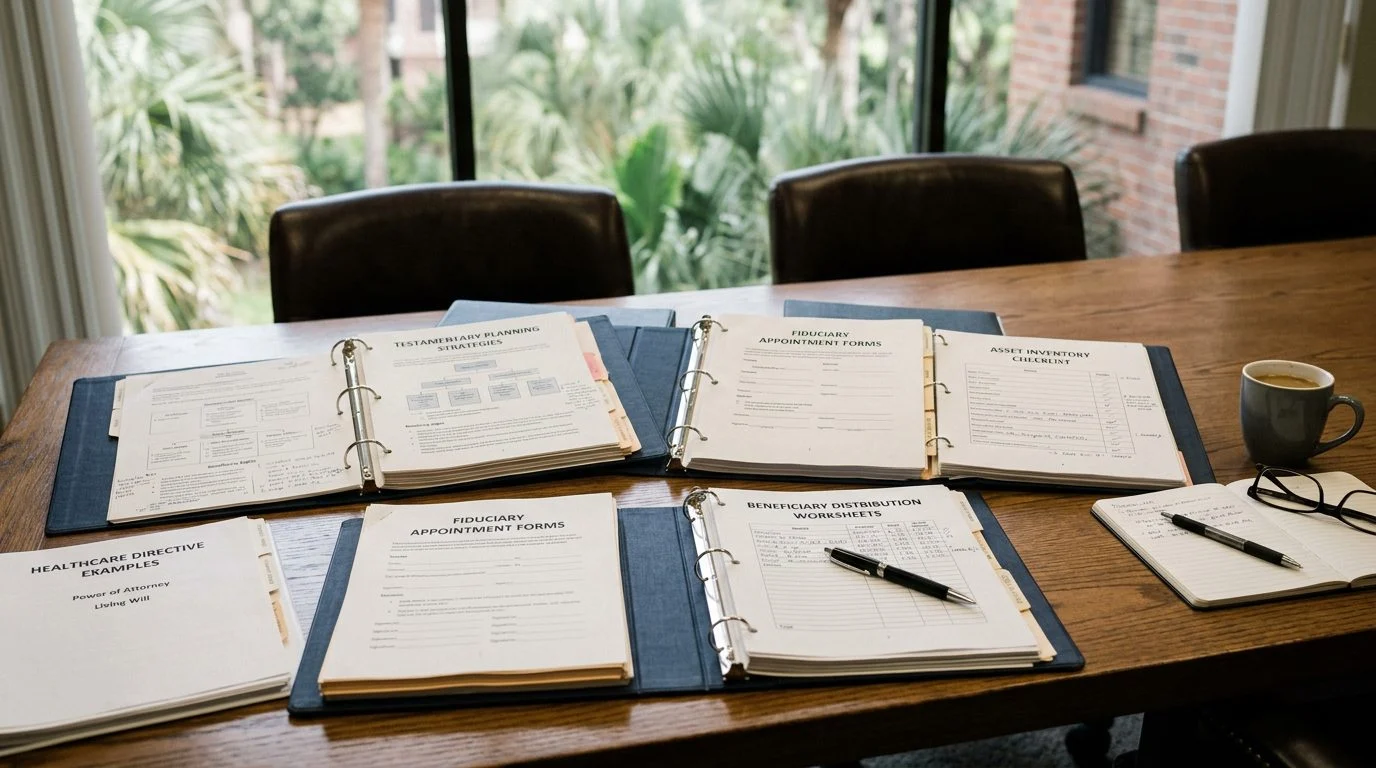
Gather deeds, account statements, beneficiary forms and the will before you judge any claim. A complete asset list is the first step.
Can a Beneficiary Still Recover Assets Under the Florida Trust Code?
A beneficiary may have claims under the Florida Trust Code. Whether one exists turns on the trust terms, the records and how the property was held. For an unfunded trust Florida beneficiary, records are often the key.
Upon reasonable request, a trustee must give a qualified beneficiary a complete copy of the trust instrument § 736.0813. The trustee must also share relevant information about the trust’s assets, liabilities and administration. For an irrevocable trust, the trustee must account to each qualified beneficiary at least annually and on termination of the trust or on change of the trustee. A family trust company acting as trustee may instead have trust terms that allow accounting only at termination; upon removal, resignation, or other event resulting in a trustee ceasing to serve; or upon demand of a qualified beneficiary or the representative of a qualified beneficiary. While a trust is still revocable, these duties run only to the settlor.
A trustee must keep clear, distinct, and accurate records of the administration of the trust § 736.0810. The trustee must also keep trust property separate from the trustee’s own property § 736.0810. A trustee must take reasonable steps to get trust property back from a former trustee or another person § 736.0812.
Under the statute, a trustee shall take reasonable steps to compel a former trustee or other person to deliver trust property to the trustee and, except as provided in s. 736.08125, to redress a breach of trust known to the trustee to have been committed by a former trustee § 736.0812. To remedy a breach of trust that has occurred or may occur, Fla. Stat. § 736.1001(2)(i) allows a court, subject to s. 736.1016, to void an act of the trustee, impose a lien or a constructive trust on trust property, or trace trust property wrongfully disposed of and recover the property or its proceeds § 736.1001. A trustee who commits a breach is liable for the greater of the amount needed to restore value or the profit made from the breach § 736.1002.
These are remedies a court may order. They are not promises about what any case will bring.
Trust Counsel’s attorneys can serve individually as trustee or personal representative, and the firm advises and represents trustees, personal representatives and beneficiaries.
Deadlines That Can Affect a Claim
Florida sets short time limits for many trust claims, and a trustee’s disclosure can start the clock. The date you received a report matters as much as the report itself.
For a matter a trust disclosure document adequately discloses, a beneficiary must start a proceeding within 6 months. That period runs from the later of receiving the document or receiving a limitation notice that applies to it § 736.1008. Under Fla. Stat. § 736.1008, unless sooner barred by adjudication, consent, or limitations, a beneficiary is barred from bringing an action against a trustee for breach of trust on a matter adequately disclosed in a trust disclosure document unless a proceeding is commenced within 6 months after receipt of that document or of a limitation notice that applies to it, whichever is received later. A trust disclosure document adequately discloses a matter if it provides sufficient information that a beneficiary knows of a claim or reasonably should have inquired into its existence.
If the trustee has issued a final trust accounting and given the beneficiary written notice that trust records are available for examination and that claims about matters not adequately disclosed may be barred unless an action is commenced within the applicable chapter 95 limitations period, the clock for those matters starts when the beneficiary receives that final accounting and notice (Fla. Stat. § 736.1008(1)(b)).
Probate has its own clock. Under Fla. Stat. § 733.702, if a claim is not already barred by s. 733.710, it generally must be filed in the probate proceeding on or before the later of the date that is 3 months after the time of the first publication of the notice to creditors or, for a creditor required to be served with a copy of the notice, 30 days after the date of service on that creditor. A claim not timely filed is barred unless the court extends the time, and an extension may be granted only on grounds of fraud, estoppel, or insufficient notice of the claims period § 733.702. Not every claim depends on that filing deadline. Under Fla. Stat. § 733.702, the section does not affect a proceeding to enforce a mortgage, security interest or other lien on the decedent’s property. It also does not affect, to the limits of casualty insurance protection only, a proceeding to establish liability that is protected by casualty insurance, or the filing of a cross-claim or counterclaim against the estate in an action instituted by the estate. Separately, the personal representative may settle a claim in full without the claim being filed when the interested persons approve the settlement. Otherwise, the deadline applies to the claims the statute covers. These include claims against the estate that arose before the decedent’s death (including claims of the state, even if unmatured, contingent or unliquidated), funeral or burial expenses, claims for personal property the personal representative holds, and damages claims such as those founded on fraud or another wrongful act or omission of the decedent. Do not assume one clock covers everything.
If a trust was revocable at the settlor’s death, a challenge to its validity has its own limit. It is barred if not started within the earlier of the chapter 95 period or six months after the trustee sent a copy of the trust and a notice of its existence § 736.0604.
Write down the date of death, every trust statement, and the date you first learned the trust was unfunded. Those dates shape every question that follows.
Property Moved Out of the Trust or Handled by Someone Acting for the Family
Property moved out of a trust may have been transferred properly. The records show which.
Some transfers are common. A parent may have retitled a house into a relative’s name, or an agent under a power of attorney may have moved bank accounts. Either one can change what the trust holds.
Ask for a written record of every transfer. Note the date, the recipient, and any payment the recipient made. Ask for account statements from before and after each move.
Keep an open mind. A transfer can be proper, improper or disputed. The documents and the trust terms decide which. Compare each transfer against the account records and the trust instrument.
Any property a trustee cannot locate is a reason to ask for a full accounting. A court may order a trustee to account when a breach is alleged § 736.1001.
Negotiation, Mediation, and Litigation Paths
Many trust disputes start with a written request and may settle before any lawsuit. Court is one option, not the first step for every family.
A written request can ask for the trust instrument, the accountings and the information the statute describes § 736.0813. Some trustees answer requests like this fully. Others leave questions open.
Mediation is a process in which a neutral third person helps the parties to a dispute talk through their differences to try to reach a settlement, and the mediator does not decide the outcome.
Litigation means a court proceeding. A lawsuit may become necessary when a trustee will not provide information or a dispute cannot be settled. Whether it is needed depends on the facts of your matter.
Your matter may be referred to another lawyer or firm if it is not the right fit. Our office is in Coral Gables.
Not sure what your next step is?
Talk it through with Trust Counsel, PL — the first consultation is free, confidential, and carries no obligation.

What to Gather Before You Talk With an Attorney
Before you talk with an attorney, an unfunded trust Florida beneficiary should gather the key papers. Collect the trust and any amendments, the will, deeds, account statements, beneficiary forms, trustee reports and any power of attorney. A short, dated file helps.
Wills, trusts, asset inventories and beneficiary forms are among the documents worth gathering. A trust’s own terms generally govern how it is administered, but certain Florida Trust Code duties, such as the duty of good faith in § 736.0801 and the duty to keep qualified beneficiaries reasonably informed in § 736.0813, still apply alongside those terms, even where the trust is silent; while a trust is revocable, the § 736.0813 duties extend only to the settlor.
Write down a few questions too. Who is the trustee? What was the trust supposed to hold? What were you told, and when? What have you already asked for in writing?
Our first consultation is free, confidential and carries no obligation to continue. If a parent’s trust appears to hold little or nothing, you don’t have to sort out your options alone. Call (305) 707-7126 or schedule online.
Frequently Asked Questions
Can a beneficiary get a copy of the trust?
Yes. On reasonable request, a qualified beneficiary can receive a complete copy of the trust instrument § 736.0813.
Do probate claims follow the trust clock?
No. Claims against a decedent’s estate have their own deadline under § 733.702.
How Trust Counsel, PL Can Help
Trust and Estate Document Review
We review the trust instrument, funding records and account statements to identify which assets, if any, were transferred into the trust.
Trust and Probate Litigation
Our trust litigation and probate litigation attorneys represent beneficiaries, heirs and fiduciaries in disputes over trust property and estate assets.
Representation for Beneficiaries and Fiduciaries
The firm advises and represents trustees, personal representatives and beneficiaries. Trust Counsel's attorneys can serve individually as trustee or personal representative.
Trust Administration Guidance
We advise on trust administration questions that often arise when assets were never placed into the trust as planned.
Bring Your Documents
A trust that was never funded may not hold the property you expected. Bring the trust document, any amendments, deeds, account statements and correspondence to your free first consultation so the attorneys can review your situation.
Common Questions Beneficiaries Ask
What does it mean that a trust is unfunded?
An unfunded trust is one that exists on paper but does not hold the assets its creator intended, such as real estate, bank accounts or investments that were never retitled to the trust.
Can a beneficiary request a copy of the trust?
Beneficiaries often ask for the trust instrument first. Our attorneys can explain what information is available and how to request it.
How do trust and probate claims differ?
Trust assets and estate assets can follow different procedures. Leslie V. Marenco, the responsible lawyer for this page, reviews which process fits the assets involved.
What should I do first?
Gather the documents you have and contact the firm for a free first consultation, which is confidential and carries no obligation to continue.