

Probate Litigation · Coral Gables, Florida
How a Neutral Personal Representative Works in Florida
A plain-language guide to the role of a neutral personal representative, the Florida rules on who can serve, and how Trust Counsel's Coral Gables attorneys advise families and fiduciaries.
By Leslie V. Marenco · Published October 20, 2026
A neutral personal representative in Florida is a person with no stake in a family fight who is appointed to manage a decedent’s estate. Florida law sets an order of preference for who may serve as personal representative. In a testate estate, the personal representative nominated by the will comes first, and a person selected by a majority in interest of the persons entitled to the estate ranks next. In an intestate estate, the surviving spouse comes first, and a person selected by a majority in interest of the heirs ranks next. In either case, the person selected must be qualified to serve under Florida’s personal representative qualification rules. This page explains the rules, the court steps and what to expect.
What a Neutral Personal Representative Is
A neutral personal representative is someone who administers the estate impartially, without a personal interest in how the family’s property is divided. “Neutral” is a plain-English description, not a legal category. Florida’s probate code uses the term personal representative for this office (often called an executor), and the code’s general definitions are collected in its definitions section. In everyday terms, the personal representative (often called an executor) collects estate property, pays valid debts and distributes what remains.
Trust Counsel, PL does not serve as personal representative. Trust Counsel’s attorneys can serve individually as trustee or personal representative. The firm advises and represents trustees, personal representatives and beneficiaries. This page covers the appointment of an individual to the role, not a firm acting as a fiduciary.
If no family member can serve, or the relatives who could serve are in conflict, you don't have to sort out the appointment rules alone. Reach out and we'll talk through your situation. Talk it through with Trust Counsel, PL — the first consultation is free, confidential, and carries no obligation.
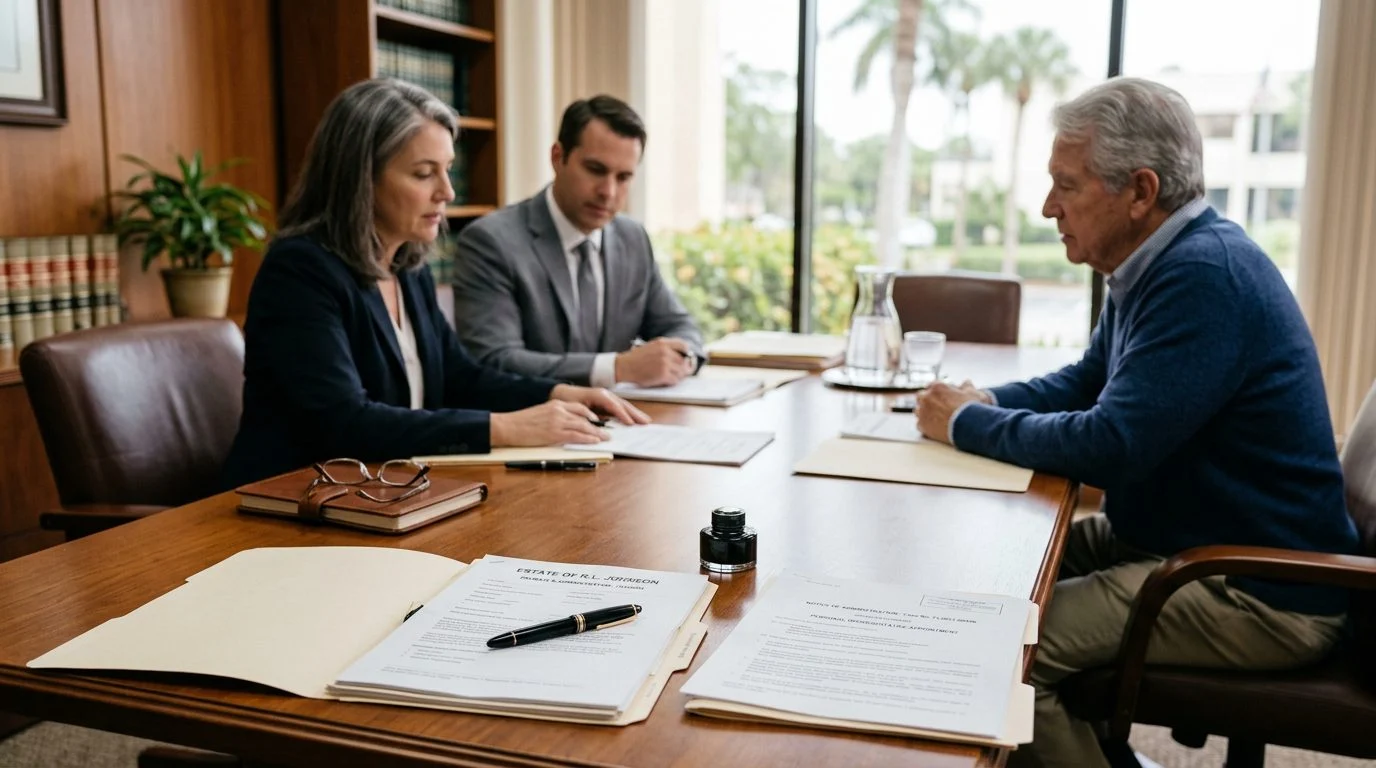
When No Family Member Can Serve or Should Serve
Florida law sets the order of preference first. In a testate estate (one with a will), the order starts with the personal representative nominated by the will. Next comes a person chosen by a majority of those entitled to the estate, then a devisee under the will. In an intestate estate (no valid will), the surviving spouse comes first, then a person chosen by a majority of heirs, then the heir nearest in degree. These rules appear in Fla. Stat. § 733.301.
If no one in that order applies, the court shall appoint a capable person. The court cannot appoint anyone who works for the court, holds public office under it, or is employed by or holds office under a probate judge.
Some people are disqualified. Fla. Stat. § 733.303 bars a person convicted of a felony, a person convicted in any state or foreign jurisdiction of abuse, neglect, or exploitation of an elderly person or disabled adult, a person who is mentally or physically unable to perform the duties, or a person under 18.
Distance matters too. A person not domiciled in Florida generally cannot qualify, unless they fall within a family relationship listed in Fla. Stat. § 733.304. A Florida resident who is sui juris (legally competent) at the time of the decedent’s death can qualify under Fla. Stat. § 733.302, subject to the limitations in that part.
Common problems include a nominee who declines, a relative who lives out of state, or a relative with a claim against the estate. That last point matters. Holding or acquiring conflicting or adverse interests against the estate that will or may interfere with the administration of the estate as a whole is a cause for removal, so conflicts are a real issue from the start. (This cause does not apply to a surviving spouse exercising the right to the elective share, family allowance, or exemptions.)
How the Court Makes the Appointment
An interested person starts the process by petitioning for administration. Fla. Stat. § 733.202 says any interested person may petition. Under § 731.201, an interested person is anyone who may reasonably be expected to be affected by the outcome, but the term does not include a beneficiary who has received complete distribution.
The personal representative, defined under § 731.201 as the fiduciary appointed by the court to administer the estate, must promptly serve a copy of the notice of administration on the following known persons under § 733.212, including the surviving spouse and persons who may be entitled to exempt property. These include the surviving spouse and beneficiaries, as described in Fla. Stat. § 733.212.
Deadlines matter here. A person served with that notice must object to the will’s validity, the venue, or the court’s jurisdiction within 3 months after service. Otherwise, those objections are forever barred. The 3-month period can be extended only for estoppel based on a misstatement by the personal representative about the deadline.
If someone with preference was not served with formal notice and later asks for appointment, letters already granted may be revoked after formal notice and hearing, under § 733.301.
Bond, Inventory, Oversight and Removal
A fiduciary must file a bond unless the will or the court waives it. Fla. Stat. § 733.402 says the bond must be joint and several. The court may waive, require, increase or decrease the bond on petition or on its own motion. Banks and trust companies authorized by law to act as personal representative are not subject to that bond requirement.
The personal representative must also file a verified inventory. Fla. Stat. § 733.604 requires reasonable detail and the estimated fair market value of each item on the date of death. Under Florida law, an estate inventory or accounting filed with the clerk of court is shielded from public records requests, but the clerk must still make it available for inspection or copying to the personal representative, the personal representative’s attorney, any interested person, and anyone who obtains a court order upon a showing of good cause. A beneficiary can ask in writing how an inventory value was determined. A residuary beneficiary or heir in an intestate estate may get this for all inventoried assets; any other beneficiary only for assets distributed or proposed to be distributed to them.
A personal representative can be removed for specific causes. Fla. Stat. § 733.504 lists them, including failure to obey a court order, failure to account, wasting or maladministration of the estate, and failure to give bond. When a personal representative is removed, the court appoints a successor or a curator, under § 733.5061.
Compensation Under Florida Law
A personal representative is entitled to a commission for ordinary services. Fla. Stat. § 733.617 says the commission is paid from estate assets without a court order. It is based on the compensable value of the estate, which is the inventory value of probate assets plus income earned during administration.
If the will sets compensation criteria, the personal representative is paid under those terms. Fla. Stat. § 733.617 reads: “However, except for references in the will to the personal representative’s regularly published schedule of fees in effect at the decedent’s date of death, or words of similar import, if there is no written contract with the decedent regarding compensation, a personal representative may renounce the provisions contained in the will and be entitled to compensation under this section.” The personal representative may also give up some or all of the compensation. On petition of an interested person, the court may increase or decrease compensation for ordinary services. The court may also, upon petition of any interested person, award compensation for extraordinary services if the facts and circumstances of the particular administration warrant.
The statute also limits attorney-nominees. An attorney who prepared or supervised the will naming them, or a person related to that attorney, is not entitled to compensation for that role unless the statutory disclosures were made to the testator before the will was signed or the attorney or nominee is related to the testator. Raise fee questions early, before anyone accepts the role.
What to Expect: Steps and Timeline
The process moves in a fixed order: gather records, confirm priority, file, serve notice, obtain letters, then inventory and account. Timing depends on the facts of the estate and on whether anyone files an objection.
- Gather the records. Collect the will (if one exists), the death certificate, a list of heirs and beneficiaries, and a list of estate assets.
- Confirm priority. Check the order in § 733.301 and any disqualification under § 733.303 or § 733.304.
- File the petition. Any interested person may file it, as § 733.202 allows.
- Serve notice and wait out objections. Serve notice under § 733.212 and track the 3-month window.
- Administer the estate. After letters are granted, file the verified inventory, manage assets, pay valid claims and account to beneficiaries.
Not sure what your next step is?
Talk it through with Trust Counsel, PL — the first consultation is free, confidential, and carries no obligation.
Matters Trust Counsel Handles
Trust Counsel, PL focuses its practice on probate litigation, trust litigation, trust administration and fiduciary advice. Our only office is in Coral Gables, Florida. We serve clients in Florida, including Fort Lauderdale, Boca Raton, West Palm Beach, Doral, Kendall, Pinecrest, Key Biscayne and Aventura.
Leslie V. Marenco is responsible for this page. Tanya Vega is also one of the firm’s lawyers. Trust Counsel’s attorneys can serve individually as trustee or personal representative, and the firm advises and represents trustees, personal representatives and beneficiaries.
Some matters may be referred to another lawyer or firm. If yours is, we will tell you. No lawyer can promise how a court will rule on a particular estate. The first consultation is free, confidential, and comes with no obligation to continue.

Frequently Asked Questions
Who can be a personal representative in Florida?
A Florida resident who is legally competent can qualify, unless a disqualification applies. The rules appear in § 733.302 and § 733.303.
Who can be my legal personal representative?
If there is a will, the person it nominates comes first. Without a will, the surviving spouse comes first, as § 733.301 sets out.
Can someone who lives outside Florida serve?
Usually not. A nonresident can qualify only if they fall within a relationship listed in § 733.304.
Can a personal representative be removed?
Yes, for the causes listed in § 733.504, such as wasting the estate or failing to account.
If you’re facing an estate where no family member can serve, or the people who could serve are in conflict, reach out through our contact page or call (305) 707-7126 to talk through your situation.
Key questions about a neutral personal representative
What is a neutral personal representative?
A neutral personal representative is an independent person appointed to administer an estate when the family cannot agree on who should handle it or how it should be handled.
Who can serve in Florida?
Florida law sets out who may serve as personal representative. Stat.
What does the role involve?
The personal representative manages estate assets, pays valid debts and expenses, and distributes property as the law and the will require, while keeping the interests of all beneficiaries in view.
When should you ask for guidance?
Families often seek advice when a will is contested, heirs disagree about administration, or a fiduciary's duties are unclear. Early questions help clarify the path forward.
How Trust Counsel can help
Probate and estate guidance
Our attorneys focus on probate litigation and estate administration matters, including questions about appointing a personal representative.
Advice for every side
The firm advises and represents trustees, personal representatives and beneficiaries, so each party understands its role and obligations.
Attorneys who can serve individually
Trust Counsel's attorneys can serve individually as trustee or personal representative. The firm itself does not serve in either role.
Coral Gables office
Our office is in Coral Gables, Florida. We serve clients in Miami-Dade, Broward and Palm Beach counties.
Clear, direct communication
We explain options in plain language so you can make informed decisions about your estate.
Important: the firm does not serve as personal representative
Trust Counsel, PL does not serve as personal representative, trustee or any other fiduciary. Trust Counsel's attorneys can serve individually as trustee or personal representative, and the firm advises and represents trustees, personal representatives and beneficiaries.