
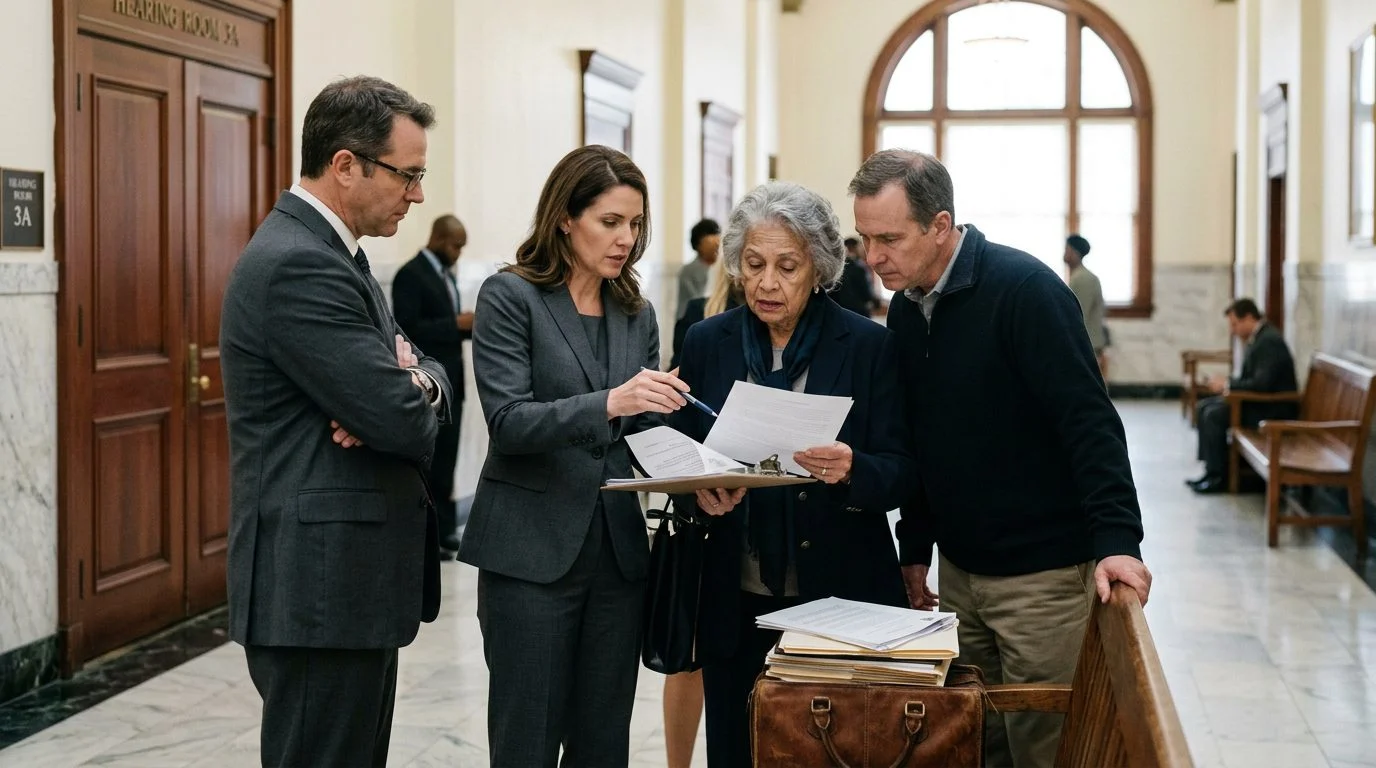
Trust and Estate Litigation | Coral Gables, Florida
A New Spouse Changed the Trust? Understand the Questions Before You Act
A plain-English guide for adult children, beneficiaries and fiduciaries in Florida who are asking whether a late trust change was influenced by someone else. Trust Counsel, PL focuses on probate and trust litigation from its Coral Gables office.
By Leslie V. Marenco · Published November 4, 2026
When a New Spouse Benefits From a Late Trust Change
The usual ground is undue influence. Raising a challenge is not the same as winning one. The court decides based on the facts.
Many families learn about the change after a parent dies. Others learn about it when a trustee sends a copy of the trust. Either way, the same questions come up. When was the change made? Who was in the room? Did the parent truly want it?
Undue influence means someone pressures or controls a person so that the person’s own wishes are replaced by the influencer’s. The question is not whether a parent loved a new spouse. The question is whether the parent’s choice was the parent’s own.
If you are just starting to look into this, our trust litigation overview covers trust disputes in Florida. This page focuses on one question: how undue influence is examined when a trust change favors a new spouse.

What Undue Influence Means in a Florida Trust
Undue influence is pressure or control that overrides a person’s free choice. In Florida, if the creation, amendment, or restatement of a trust is procured by undue influence, the trust or any part so procured is void, and the remainder not procured by such means is valid if it is not invalid for other reasons. Fla. Stat. § 736.0406 says that if the creation, amendment, or restatement of a trust is procured by undue influence, the trust or any part so procured is void.
The same idea applies to wills. Fla. Stat. § 732.5165 says a will is void if its execution is procured by undue influence.
For trusts, late amendments are often the target. The parent who made the trust is called the settlor. Under Fla. Stat. § 736.0602, a settlor may revoke or amend a trust unless its terms expressly provide that it is irrevocable; this does not apply to a trust created under an instrument executed before the effective date of this code.
Warning signs often include isolation from family and friends, control of money or communications, and pressure during illness or dependence. The problem lies in how the choice was made.
Under Fla. Stat. § 736.0602, a settlor may revoke or amend a revocable trust; the capacity needed to do so is set by Fla. Stat. § 736.0601 and is the same as that required to make a will. See Fla. Stat. § 736.0601.
How a Court Looks at the Relationship
A court looks at whether one person held a position of trust over the parent. A new spouse who pays bills, drives the parent to doctor visits, or makes daily decisions may have that kind of influence. Opportunity to influence is a key fact.
Courts ask practical questions. Who controlled the parent’s daily life? Who handled the money, medications, and calendar? Who was the main contact with the lawyer and the bank? Who made decisions when something needed to be decided?
Those answers often matter more than the marriage date. A long marriage and a close bond do not establish undue influence on their own. The focus is on control and dependence, not affection alone.
Each family is different. A spouse who helped with errands has a very different role from one who controlled every account. The same basic story can look quite different once the day-to-day facts come out.
How the Change Itself Is Examined
Timing is one of the first things a court notices. A change made soon after a marriage, or close to a decline in health, draws closer review than a gradual change made over many years.
Next, the change is compared with the parent’s earlier plan. Who was included before, and who is included now? Were children who were once named removed or reduced? Was a share changed sharply?
The court also asks whether the change fits what the parent said and did over time. Earlier statements to family, friends, or advisers can show what the parent wanted. A change that matches a long record of stated wishes looks different from one that breaks that pattern.
An unusual change is not proof of undue influence by itself. Many parents make choices their children do not expect. The real question is why the change was made and how it came about.
The Circumstances of Signing
Who arranged the meeting with the drafting attorney? Who chose that attorney? Who drove the parent there, and who was in the room when the papers were signed? These questions often matter as much as the document.
A court also looks at whether the parent met with the attorney alone. It asks whether the attorney knew the parent’s earlier plan and whether the parent had any independent advice. A parent who explained the reasons privately to a lawyer presents a different picture from one whose spouse did most of the talking.
Health at signing is reviewed through medical records, medication lists, and accounts from people who saw the parent that week.
Records help. Calendars, emails, texts, drafts, and billing entries can show who started the change and when. Drafts can show whether specific terms came from the parent or from someone else.
The Presumption and Who Must Prove What
Florida law can shift the burden of proof when a presumption of undue influence applies. Under Fla. Stat. § 733.107(2), the presumption implements public policy against abuse of fiduciary or confidential relationships. It is a presumption that shifts the burden of proof. That section is not limited to will contests: it covers any transaction or event to which the presumption of undue influence applies.
The Florida Courts undue influence memorandum addresses the burden-shifting rule that applies once suspicious circumstances are shown.
The starting point in a trust contest is different. Under Fla. Stat. § 736.0207(1), the contestant has the burden of establishing the grounds for invalidity.
A new spouse’s own rights are a separate issue. Florida law provides that a surviving spouse who is found to have procured the marriage to the decedent by fraud, duress, or undue influence loses rights or benefits under the decedent’s will or trust unless that spouse is provided for by name in the document, subject to the statute’s exceptions for voluntary cohabitation with full knowledge of the facts or later ratification of the marriage by both spouses. The contestant must prove that by a preponderance of the evidence, under § 732.805(4). No outcome can be predicted from the presumption alone.
Evidence Adult Children Often Need to Gather
The most useful evidence shows three things: the parent’s earlier plan, the change, and the signing. Start with earlier trust and will versions, the amended trust, and any drafts you can find.
Other records include signing records, medical and cognitive records, bank and transfer records, and emails or texts about the change. A timeline helps. List the marriage date, health events, meetings with the drafting attorney, and the date of the change.
Some records sit with the trustee, the drafting attorney, or a bank. Your access to other records turns on your role in the trust and the procedure used.
Where a parent’s money also moved, see transfers of a parent’s money.
Related Problems: Unsigned Amendments and Witness Questions
Whether an amendment was properly signed or witnessed is a separate question from undue influence. A signing defect asks whether the document met the formal requirements. Undue influence asks whether the parent’s choice was free.
If the question is whether the amendment was validly signed, read about unsigned trust amendments in Florida. For witness and execution questions in will disputes, see witness questions in Florida wills.
One family can raise several grounds at once. A challenge may combine undue influence, a signing defect, and a capacity argument. Each ground has its own facts and its own proof, so keep your notes on each one separate.
Deadlines and Next Steps for an Adult Child
Florida sets time limits for trust contests, and a trustee’s notice can start one. Under Fla. Stat. § 736.0604, a contest of a trust that was revocable at the settlor’s death is barred if not started within the earlier of the time in chapter 95 or six months after the trustee sends a copy of the trust instrument and a notice informing the person of the trust’s existence, of the trustee’s name and address, and of the time allowed for commencing a proceeding.
Under Fla. Stat. § 736.0207(2), a contest of a revocable trust cannot begin until the trust becomes irrevocable by its terms or by the settlor’s death. The statute does not bar a guardian of an incapacitated settlor’s property from bringing that action.
Once a formerly revocable trust has become irrevocable, whether by the settlor’s death or otherwise, trustees and qualified beneficiaries often have questions about what information the trustee should share and when.
Practical first steps include preserving records, writing a timeline, and not signing anything from the trustee or the new spouse before reviewing it.
Talking With a Trust Litigation Attorney About Your Parent’s Trust
Picture this. Your father has remarried, and you learn he signed a trust change that gives most of his estate to his new wife. The change came shortly before his health declined. You have questions about timing, who arranged the signing, and what he really wanted.
Call Trust Counsel, PL at (305) 707-7126 or schedule online to talk through those facts. The first consultation is free, confidential, and carries no obligation to continue.
Trust Counsel, PL advises and represents trustees, personal representatives and beneficiaries. Trust Counsel’s attorneys can serve individually as trustee or personal representative. Leslie V. Marenco is the responsible lawyer for this page. The firm’s only office is in Coral Gables, Florida.
Quick Answers
Can an adult child challenge a trust change that benefits a new spouse in Florida?
Yes, an adult child may raise an undue influence challenge to a late trust change. Whether it succeeds is a separate question decided on the facts.
Does remarriage alone prove undue influence?
No. A marriage alone does not establish undue influence. Courts look at control, dependence, timing, and how the change was made.
Who has the burden of proof in a Florida trust contest?
The person contesting the trust starts with the burden of establishing the grounds for invalidity.
What to Bring to a Confidential Consultation
The trust and every amendment
Gather the original trust, each amendment or restatement, and any related will or beneficiary designations. Together they show what changed and when.
Correspondence and notes
Emails, letters and messages about the change can help explain the circumstances around it.
A timeline of events
Write down key dates, such as the illness, the marriage, meetings with advisors and the signing of each document.
The people involved
Note who was present, who recommended the change and who handled the paperwork.
Do Not Wait to Collect Records
Records can be harder to obtain over time. Keep copies of the trust, every amendment and all correspondence about the change, and avoid discarding anything until you have discussed your situation with an attorney.
Common Questions Families Ask
Can an adult child raise a concern?
An adult child may raise a question about a late trust change. Whether the concern leads anywhere depends on the facts of each family's situation.
Does a new marriage answer the question?
A new marriage is one fact among many. The full set of circumstances, including who was involved in the decisions, is what an attorney reviews.
Who handles these disputes?
Trust Counsel's attorneys focus on probate and trust litigation, including matters for beneficiaries, heirs and fiduciaries. Trust Counsel's attorneys can serve individually as trustee or personal representative, and the firm advises and represents trustees, personal representatives and beneficiaries.
Where does the firm serve?
Our only office is in Coral Gables. We serve clients in Fort Lauderdale, Boca Raton, West Palm Beach, Doral, Kendall, Pinecrest, Key Biscayne and Aventura.