
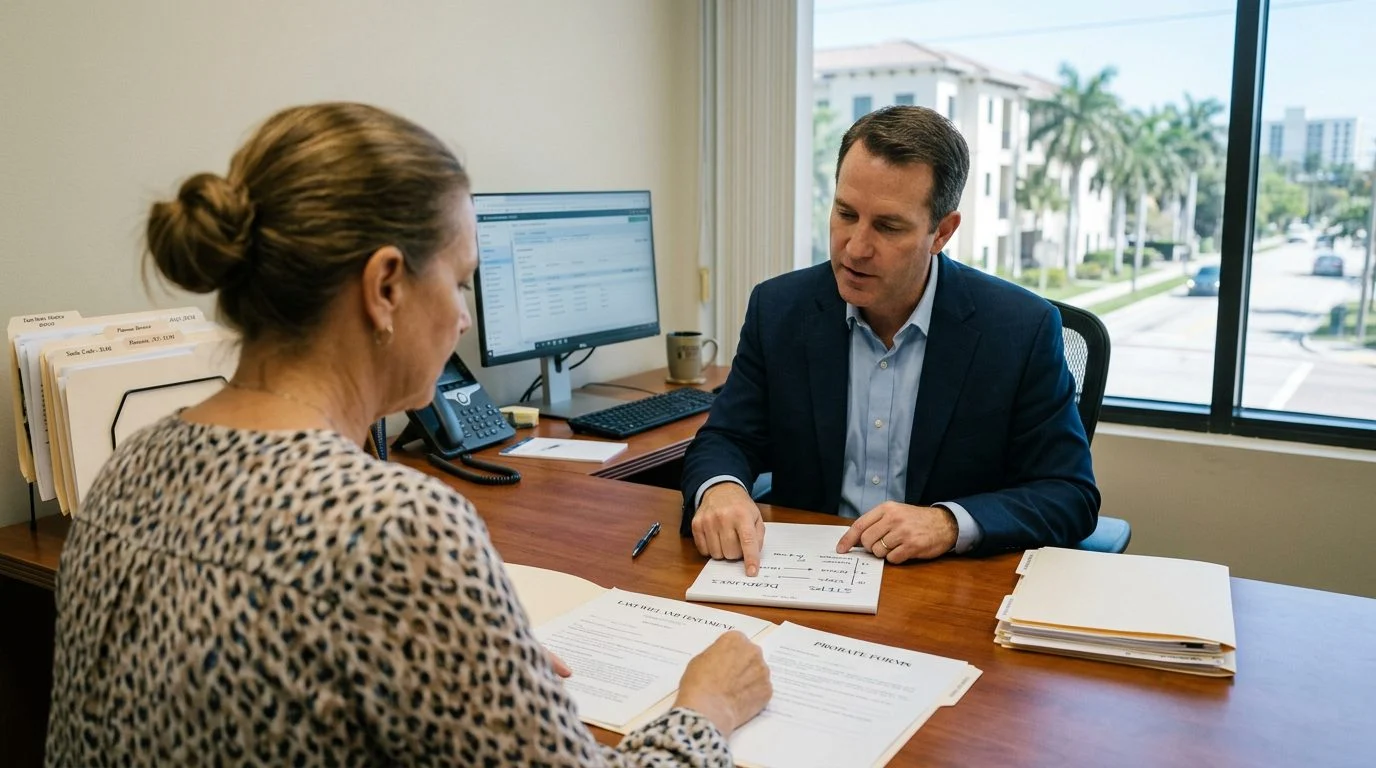
Probate litigation | Coral Gables, Florida
Suspect a Forged Will? Know Your Options Before the Estate Moves Forward
Trust Counsel, PL helps heirs and beneficiaries understand how a challenge to a will works in Florida probate court and what to gather first.
By Leslie V. Marenco · Published November 16, 2026
If you think a will in your family was forged, you probably want to know what to do first. Keep the original untouched, gather proof, and file an objection in probate court before Florida’s deadline runs out.
This guide covers how to report a forged will in Florida, in the order the steps usually matter.
What Counts as a Forged Will in Florida
A forged will is one that someone other than the testator signed or altered after it was signed. The key question is whether the person who made it really signed and had it witnessed.
Florida treats wills procured by fraud, duress, mistake, or undue influence as a separate problem. A will is void when those things procure its execution, and if only part of a will is so procured, only that part is void and the rest can remain valid, under Fla. Stat. § 732.5165.
Florida also sets execution rules. Under Fla. Stat. § 732.502, a will must be in writing, the testator must sign it at the end (or have another person subscribe the testator’s name at the end, in the testator’s presence and by the testator’s direction), the testator’s signing or acknowledgment must be in the presence of at least two attesting witnesses, and the attesting witnesses must sign the will in the presence of the testator and of each other.
The person named as personal representative may believe the will is genuine. A beneficiary or heir can still challenge it.
Not sure what your next step is?
Talk it through with our team — the first discovery call is free, confidential, and carries no obligation.
Warning Signs That a Will May Be Forged
The clearest warning signs are a signature that doesn’t match known samples and witnesses who don’t remember signing. Signs point to a problem, but they don’t prove one.
Watch for these:
- A signature that differs from the person’s signatures on checks, deeds, or earlier estate papers.
- Witnesses who say they never saw the person sign, or whose names appear on a will they don’t remember witnessing.
- A will that surfaces long after the signing date, or a new will that sharply favors whoever controlled the person’s affairs.
- A notary or witness tied to the beneficiary who gains most.
- Dates, initials, or pages that look added later, or a copy produced while the original is missing.
Handwriting comparison has limits. NIST’s forensic handwriting examination program notes that general forensic standards and limitations apply when an examiner judges whether a signature is genuine.
Preserve the Evidence Before You Act
Keep the original will exactly as you found it, and gather proof of how the person really signed. Evidence that gets lost or altered can weaken a challenge.
Do these things:
- Keep the original will and every copy. Don’t write on it, staple it, or alter it.
- Gather earlier wills, trust papers, beneficiary forms, and signed checks or deeds from the same period.
- Write down the dates, the names of anyone present when the will was supposedly signed, and where the person lived and who cared for them.
- Save emails, texts, and financial records that show changes in relationships, money, or access to advisors.
A forensic document examiner can compare the disputed signature with known samples. The American Academy of Forensic Sciences describes how forged-signature detection involves examining natural handwriting variation. Samples from the same period matter because a person’s signature naturally varies over time.
Where a Suspected Forgery Is Raised in Probate Court
You raise a suspected forgery by filing a timely objection in probate court, on or before the date that is 3 months after you are served notice of administration, or the objection is forever barred. Missing that window can bar the objection.
Under Fla. Stat. § 733.212, an interested person served with a notice of administration must object to the will’s validity, venue, or jurisdiction on or before the date that is 3 months after service of the notice, or the objection is forever barred. The period can be extended only for estoppel based on a personal representative’s misstatement about the deadline. Misconduct or failure to disclose information does not extend it.
The petition must state your interest and the facts behind your grounds, under Fla. Prob. R. 5.270. While it is pending, the estate keeps being administered, but no distribution may defeat the rights of those who would take without the will.
On burden of proof, Fla. Stat. § 733.107 says the proponent must first establish prima facie the will’s formal execution and attestation. After that, the person contesting it must prove the grounds.
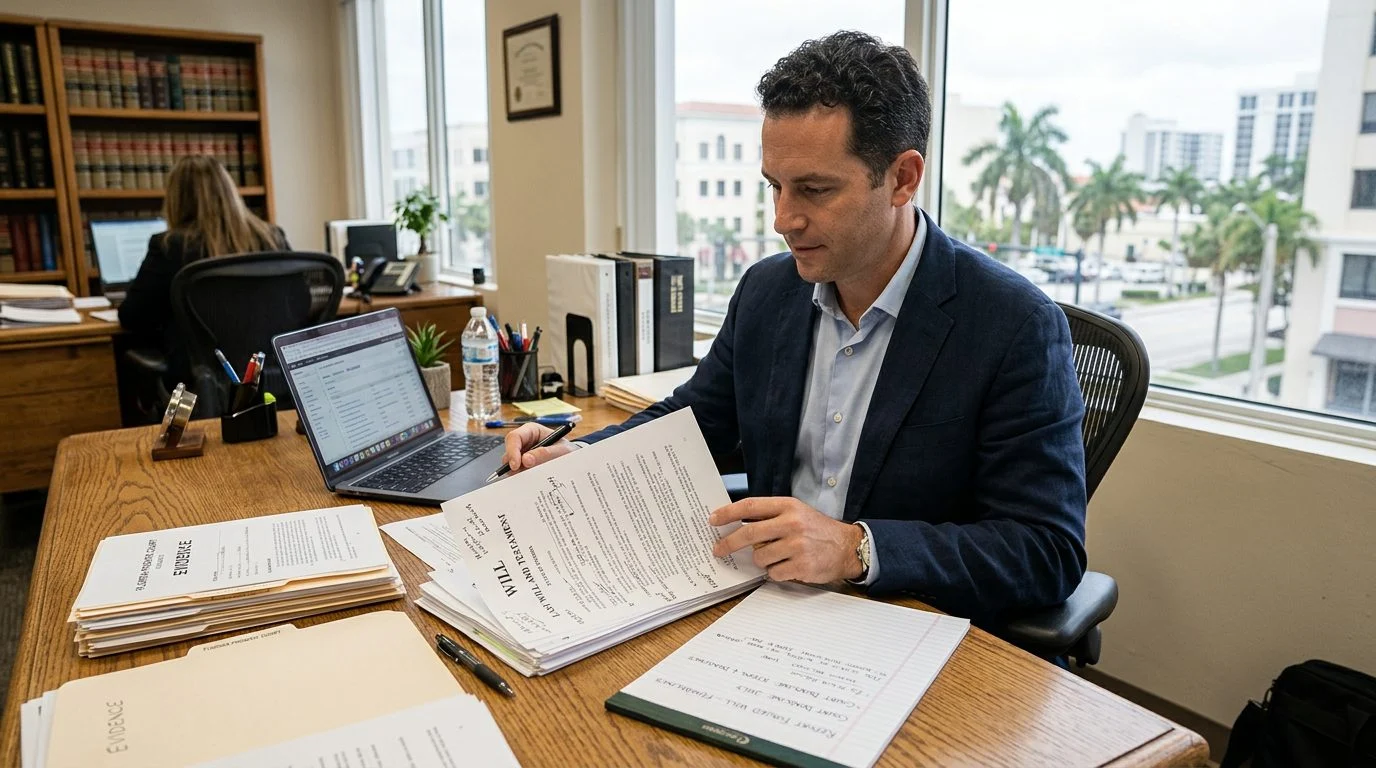
Have questions about what happened?
Ask our team directly. The first conversation is free, confidential, and there is no obligation to continue.
Reporting Forgery to Law Enforcement and Adult Protective Services
A criminal report runs on its own track, separate from the probate case.
Criminal and probate matters can move at the same time, and the result of one does not decide the other.
Write down when and to whom you made each report, and keep any case or report numbers you receive.
Breach of Duty by a Personal Representative
A personal representative (often called an executor) who mishandles estate property can be liable to interested persons for the loss. Under Fla. Stat. § 733.609, that fiduciary duty is the same as a trustee’s duty under an express trust.
Conduct raised in these disputes includes refusing to share the will or estate records, hiding assets, or distributing property while a challenge is pending. How these duties apply depends on the facts of each estate.
Two tools help a beneficiary see the numbers.
Talking With Leslie V. Marenco About Your Situation
If a will you believe is forged is already in probate, Leslie V. Marenco is the responsible lawyer for this page. Finding a document you think is false, while grieving, is stressful.
Trust Counsel, PL focuses its practice on trust and estate litigation, estate planning, and related fiduciary matters. Its only office is in Coral Gables, Florida. Trust Counsel’s attorneys can serve individually as trustee or personal representative, and the firm advises and represents trustees, personal representatives and beneficiaries.
The free discovery call is confidential and carries no obligation to continue.
Quick Answers
How do I report a forged will in Florida?
File an objection in probate court within 3 months after you’re served notice of administration. A criminal report is a separate step.
Who has to prove a will is forged?
The proponent first shows formal execution. The person challenging the will must then prove the grounds, under Fla. Stat. § 733.107.
If a will you think was forged is already in probate, you don’t have to take the next step alone. Call (305) 707-7126 or book a free discovery call with Trust Counsel, PL.
Want to know where you stand?
Tell us what happened and our team will walk you through the options available to you, at no cost.
How Trust Counsel, PL Approaches a Will Challenge
Focused probate litigation practice
Trust Counsel, PL focuses on probate litigation and trust litigation, including disputes over whether a will was validly signed and witnessed.
Attention to the signing evidence
Our review focuses on the original will, the witnesses, the circumstances of signing and any records that bear on authenticity.
Coral Gables office
Responsible attorney: Leslie V. We serve clients in Coral Gables, Miami, Doral, Kendall, Pinecrest, Key Biscayne, Aventura, Fort Lauderdale, Boca Raton and West Palm Beach.
Act Promptly
Steps to Take When You Suspect a Forged Will
Secure the original will
Ask where the original document is kept and whether it has been altered, copied or moved. Do not write on or handle the document more than necessary.
Review the probate filing
Read the petition, the notice of administration and the list of heirs. Note who is named, who signed as a witness and what property is described.
Record what you know
Write down when you last saw the decedent, who was present at any signing, and any statements or medical records that bear on capacity or pressure.
Raise the challenge with counsel
Trust Counsel, PL can explain how each route applies to your facts.