
Probate Attorney | Coral Gables, Florida
Does a Will Avoid Probate in Florida?
Many families assume a will keeps an estate out of court. Learn how probate works, when a will still goes through the court, and which planning tools may help.
By Leslie V. Marenco · Published October 29, 2026
In Florida, a will does not automatically avoid probate. The will generally has to be admitted through the probate court before it controls property the decedent owned alone. Some assets pass outside probate, but they follow a different legal route. This page explains which assets are which and what the process looks like for the person handling the estate.
The short answer: a will does not automatically avoid probate in Florida
No, a will alone does not avoid probate in Florida. Until a will is admitted to probate in Florida, or in the state where the decedent lived, it cannot prove title to the decedent’s property or the right to possess it (Fla. Stat. § 733.103). Many people assume the will works on its own. It doesn’t. The court has to act first.
Some assets are handled differently from others when a person dies, so the way each asset is held can matter. Other assets, such as jointly owned property or an account with a named beneficiary, pass under their own title or designation.
The will still matters a great deal. It names the personal representative and states who receives the probate estate. Reading it early helps the family know what the decedent wanted and what steps come next.
If you're sorting through a parent's will or were named personal representative, you don't have to work out the probate steps alone. Talk with Trust Counsel's attorneys in Coral Gables. Talk it through with Trust Counsel, PL — the first consultation is free, confidential, and carries no obligation.

What probate is and why a will goes through it
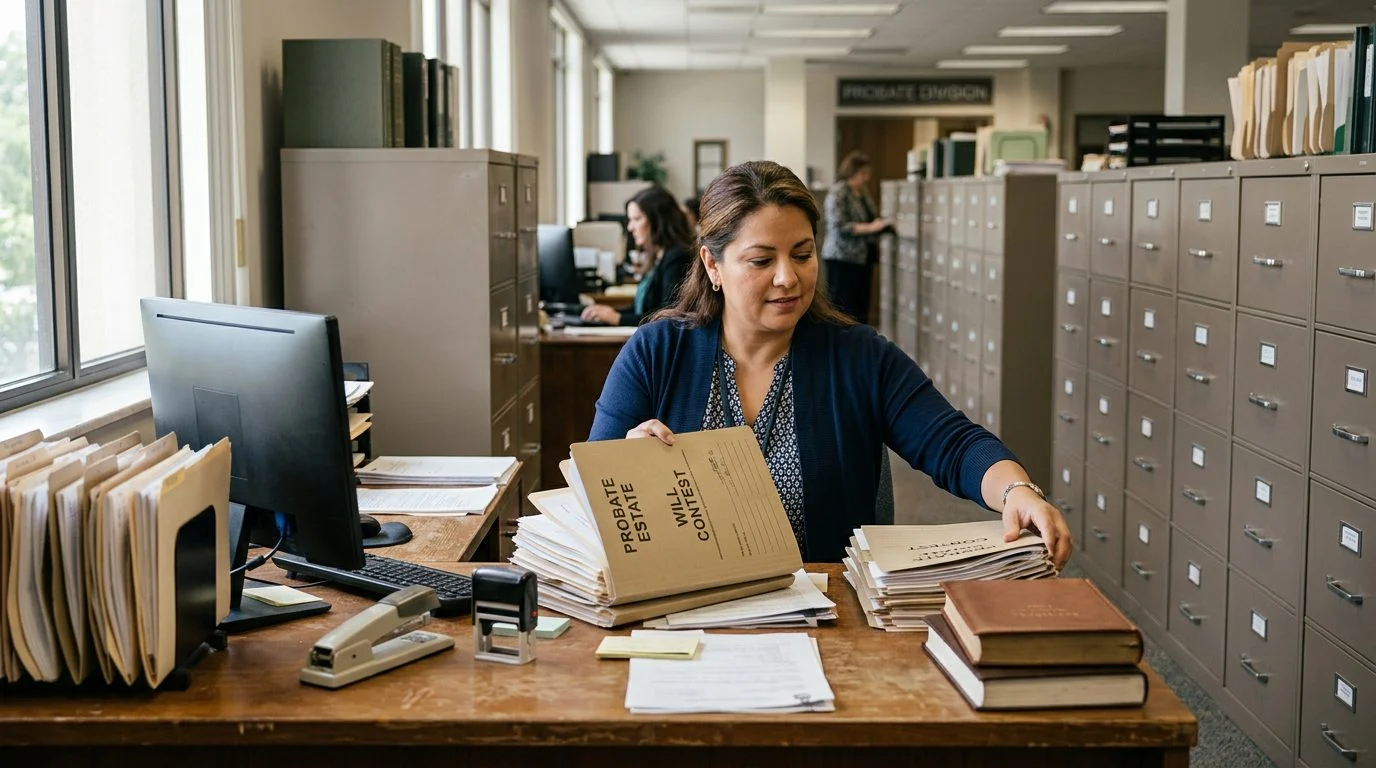
Probate is the court-supervised process for collecting the decedent’s assets, paying valid debts, and distributing what remains. The court oversees each step, so the estate is handled under clear rules.
Florida uses the term personal representative for the person who runs this process. Many readers know this role as an executor, and that word appears in many wills. The Florida term is personal representative.
The will must be placed before the court. The Miami-Dade Clerk’s probate court page notes a deadline for depositing a decedent’s will. It also says heirs, interested parties or creditors may file a caveat, which raises concerns before the will is admitted.
The court then decides whether the will can be admitted. Only after that can the personal representative act under it.
Does a will in Florida have to go through probate?
Generally yes, when the will covers assets held in the decedent’s sole name. Those assets need the court’s process before title passes to the heirs or devisees.
Florida sets signing rules first. The witnesses must sign in the testator’s presence and in each other’s presence (Fla. Stat. § 732.502).
A will can also be made self-proved. The testator acknowledges it, and the witnesses sign affidavits before an officer authorized to give oaths (Fla. Stat. § 732.503). The Florida Department of State notes that this self-proving procedure can simplify probate.
The witness oath is the other route. If the witnesses cannot be found, have become incapacitated since the will was signed, or cannot testify in a reasonable time, the court may accept the oath of the nominated personal representative, or the oath of a person with no interest in the estate under the will stating that the person believes the writing is the decedent’s true last will (Fla. Stat. § 733.201).
Even a properly signed, self-proved will still needs the court’s admission before anyone can act on it.
Assets that can pass outside probate
Some assets are held in ways that can affect how they are handled at death, so the account and title documents are worth reviewing.
Common examples include:
- Jointly owned property with right of survivorship
- Accounts with payable-on-death or transfer-on-death designations
- Retirement accounts and life insurance with named beneficiaries
- Assets titled in a funded revocable trust
Check these designations carefully. That mismatch can lead to a dispute among family members.
For the broader framework of trust and probate disputes, see the trust litigation attorney page.
Ways families try to reduce probate in Florida and their limits
Some planning tools can keep assets out of probate, but each has limits. Families often compare a revocable trust to a will, so start there.
The settlor may revoke or amend it (Fla. Stat. § 736.0602). If the trust states no method, the settlor may amend it by a later will or codicil that expressly refers to the trust or specifically devises property that would otherwise have passed under the trust, or by any other method showing clear and convincing evidence of the settlor’s intent (Fla. Stat. § 736.0602). Amendments can be challenged, as discussed in this forged trust amendment guide.
It also carries risks. The asset can become exposed to a co-owner’s debts, and the other owner loses control over it during life.
Florida offers summary administration for some smaller estates. It is available when the will does not direct administration as required by chapter 733, and when the value of the entire estate subject to administration in Florida, less the value of property exempt from the claims of creditors, does not exceed $150,000 or the decedent has been dead for more than 2 years (Fla. Stat. § 735.201). Whether an estate qualifies also turns on its contents, but the decedent’s residence does not matter: summary administration may be had for either a resident or nonresident decedent’s estate.
A Florida homestead can’t always pass by will. If the owner is survived by a spouse or a minor child, the homestead is not subject to devise. The exception is a devise to a surviving spouse when no minor child survives (Fla. Stat. § 732.4015). The home’s designation needs careful review.
Who owns the home during probate, and why probate takes months
The personal representative manages estate property under court supervision.
Homestead rules matter here. If the homestead is not devised as authorized by law and the constitution, and the decedent is survived by a spouse and one or more descendants, the spouse takes a life estate, with a vested remainder to the descendants in being at the time of the decedent’s death per stirpes. The spouse may instead elect an undivided one-half interest, but the election must be made within 6 months after the decedent’s death and during the surviving spouse’s lifetime (Fla. Stat. § 732.401). That section does not apply to property held as tenants by the entirety or in joint tenancy with survivorship rights.
Probate often takes months because each step has its own timing. Unless creditors’ claims are otherwise barred by s. 733.710, a personal representative is required to promptly publish a notice to creditors. Publication runs once a week for 2 consecutive weeks in a newspaper published in the county where the estate is administered or, if there is no newspaper published in the county, in a newspaper of general circulation in that county (Fla. Stat. § 733.2121). The notice tells creditors they must file claims within the statutory periods or be forever barred.
The removal of a personal representative page covers that situation.
Not sure what your next step is?
Talk it through with Trust Counsel, PL — the first consultation is free, confidential, and carries no obligation.
Talking through your situation with Trust Counsel
If you’re handling a parent’s or spouse’s estate, or you were named personal representative, these decisions can feel heavy. You may be reading a will you didn’t write, with deadlines already running.
You can call (305) 707-7126 or use the online scheduling page. Leslie V. Marenco is the responsible lawyer for this page. Trust Counsel, PL is in Coral Gables, Florida.
The firm advises and represents trustees, personal representatives and beneficiaries. Trust Counsel’s attorneys can serve individually as trustee or personal representative. The first consultation is free, confidential, and carries no obligation to continue.
If you still wonder whether a will automatically avoids probate in Florida, reach out. Talking through the will, the assets and any trust or titling issues is a sensible first step.
Frequently Asked Questions
Does a will automatically avoid probate in Florida?
No. A will does not avoid probate in Florida, and most wills must be admitted to a court-supervised probate process before property passes to the heirs or beneficiaries.
Why does a will usually go through probate in Florida?
A will generally does not transfer property on its own.
Which assets can pass outside probate in Florida without a will?
Some assets pass outside probate, such as accounts with a payable-on-death or beneficiary designation, property held jointly with right of survivorship, and property titled in a funded revocable trust. Whether a specific asset avoids probate depends on how it is titled, and Trust Counsel’s attorneys can review that with you.
Can a small estate in Florida skip probate?
Florida offers a shorter court process for certain smaller estates, called summary administration, but it is still a court proceeding. Whether an estate qualifies depends on its value and how its assets are held, and Trust Counsel’s attorneys can help you determine that.
Common questions about wills and probate
A will alone is often not enough
A will states your wishes, but it usually has to be admitted to a court-supervised probate process before property passes to heirs or beneficiaries.
Some assets may pass outside probate
Property held in a properly funded trust, or assets with beneficiary designations or certain joint ownership, may be handled differently. Whether they apply to your situation depends on how each asset is titled.
Heirs and beneficiaries have questions
Family members often need clear answers about the personal representative, creditor claims, and how assets will be distributed.
Planning can be reviewed early
Reviewing your will, trust, and asset titles before a death can help your family understand the likely path for your estate.
Do not assume your will handles everything
Assets titled in your name alone often go through probate even when you have a valid will. Reviewing how each asset is owned can prevent surprises for your family.
Planning tools to review with an attorney
Beneficiary designations
Accounts such as life insurance and retirement plans typically pass to the named beneficiary. Outdated designations can conflict with your will, so they should be reviewed regularly.
Joint ownership and titling
How a home or bank account is titled affects who receives it at death. Changing titles without advice can create tax, creditor, or family consequences.
Business succession planning
Owners of companies and family businesses often need a plan for ownership transfer, management continuity, and the estate tax impact of their interests.