
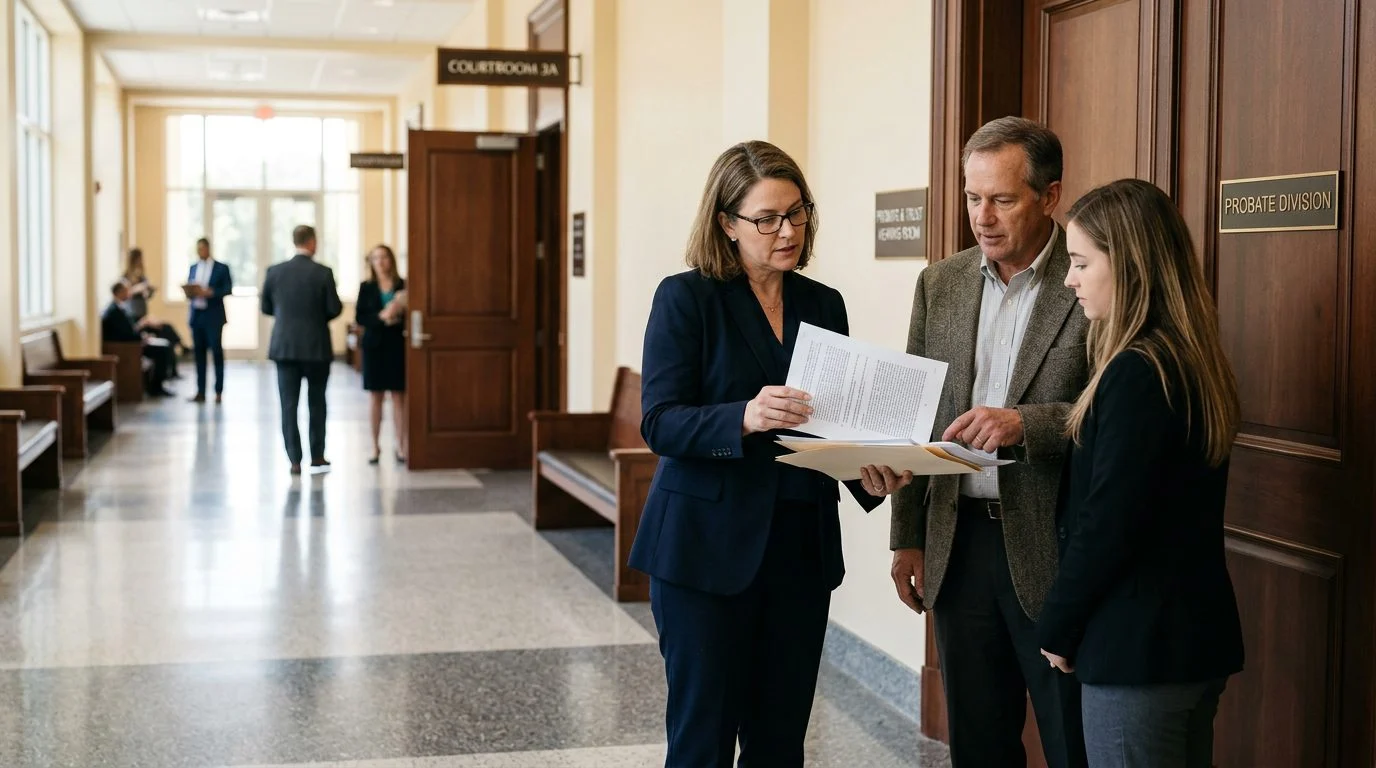
Probate & Trust Matters | Coral Gables, Florida
Need a Copy of a Will in Florida? Start With the Right Steps
Leslie V. Marenco of Trust Counsel, PL explains where a will is filed, how to request a copy, and when a probate lawyer can help. Free first consultation, confidential and with no obligation to continue.
How to Request a Copy of a Will
1. Confirm the will was filed
Start by confirming that filing has taken place.
2. Contact the clerk's office
Ask the clerk how to request a copy of a filed will. Procedures and fees vary by county, so confirm the details before you submit a request.
3. Gather the basic information
Have the decedent's full legal name, date of death and case number, if you have one. Clear details make the request easier to process.
4. Get legal help if the request is contested
If a copy is refused, delayed or disputed, or if questions arise about the estate, a probate lawyer can explain your options.
By Leslie V. Marenco · Published October 21, 2026
To get a copy of a will in Florida, you can ask the clerk of court in the county where the person lived, or ask whoever holds the original. Which route works depends on where the original is right now. This guide walks through each step, from finding the original to asking the court for a copy.
If you are reading this after a death you did not expect, take it one step at a time. You don’t need to know the legal terms yet.
Why a Copy of the Will Often Comes First
A copy of the will is often the first document family members need to read. It shows who the person chose to receive property and who they named to handle the estate. Those two answers shape what you do next.
Many people reading this are handling a loss they did not choose. You may be arranging services, paying bills, and making phone calls while also trying to find papers. A copy gives you something solid to work from.
A copy shows what the document says. It does not tell you whether the will is valid. Validity is a separate question for the court, and it can depend on more than how the will was signed and witnessed, including the testator’s capacity and whether undue influence is claimed.
Families often rush and split up papers in the first few days. Write down where the original is and who has handled it. Keep the copy and the original together, and don’t write on either one.
Not sure what your next step is?
Talk it through with Trust Counsel, PL — the first consultation is free, confidential, and carries no obligation.
Where a Florida Will Is Usually Kept
An original will may be kept in several places, such as with the person who wrote it, with a family member, with the attorney who drafted it, or in a home safe or safe deposit box. Start with the papers at home. Check desks, file cabinets, and fireproof boxes. Then ask relatives and the drafting attorney who might have it.
Florida law puts a duty on the person who holds the will. Fla. Stat. § 732.901 says the custodian must deposit the will with the clerk of the court within 10 days after learning that the person has died. The custodian must also give the clerk the date of death or the last four digits of the Social Security number.
A will in a safe deposit box follows a set process. Fla. Stat. § 733.6065 says that, subject to s. 655.936(2), the first opening of a box leased or coleased by the decedent must happen in the presence of any two of these people: an employee of the institution, the personal representative (often called an executor), or the personal representative’s attorney of record. A separate right to open and examine a box under s. 655.935 is not covered by this rule. Each person present signs the inventory of the box’s contents.
Requesting a Copy From the Clerk of Court
Once a will is filed, the clerk keeps the original in the court file. Probate must be opened in the Florida county where the person was domiciled, a legal term for the place they regarded as their permanent home. Fla. Stat. § 733.101 sets this venue rule. If the person had no Florida domicile, venue may lie in a county where their property is located.
Under Fla. Prob. R. 5.043, notwithstanding any rule to the contrary and unless the court orders otherwise, an original executed will or codicil deposited with the court, including an electronic will, must be retained by the clerk in its original form and may not be destroyed or disposed of for 20 years after submission, whether or not it has been permanently recorded. That long retention period means the original stays on file, not just a copy.
Before you call, have these details ready:
- The person’s full legal name
- The date of death
- The last known county of residence
- A case number, if you know one
Call or visit the clerk’s office to ask three things. How do you request a copy? What does the copy cost? What proof of identity or connection to the estate do they require?
Getting a Copy From the Person Who Holds the Original
If the original is still with the drafting attorney or another custodian, ask that person for a copy. They may want to know how you are connected to the estate before they release anything. Bring the death certificate if you have it.
Ask what kind of copy you’re getting. A plain photocopy shows the words, but it is not the original. Florida allows an authenticated copy of a will to be admitted to probate if the original could be admitted. Fla. Prob. R. 5.215 states that rule. Ask whether the custodian can provide an authenticated copy, not just a photocopy.
Handle the original with care. Don’t write on it, staple it, or remove pages. If it is handed over, ask for a written receipt that lists the date and who gave it to whom. That record helps the family keep track of the document as the estate moves forward.
If No Will Can Be Found
If no will turns up after a careful search, Florida law still provides a path forward. Fla. Stat. § 733.202 says any interested person may petition for administration. Under Fla. Prob. R. 5.200, the petitioner must verify the petition for administration. Among other items, the petition must contain a statement of the interest of the petitioner, the petitioner’s name and address, the name and office address of the petitioner’s attorney, and the name and last known address of the decedent, last 4 digits of the decedent’s social security number, date and place of death of the decedent, and state and county of the decedent’s domicile. Fla. Prob. R. 5.200 sets out those requirements.
When no will is found, the petition must state that, after reasonable diligence, the petitioner is unaware of any unrevoked will. Under Fla. Stat. § 733.301, the surviving spouse has the first preference for appointment as personal representative when there is no will.
A will found later changes the picture. Under the same statute, if a will is admitted to probate after letters have been granted, the letters are revoked and new letters are granted. Keep searching for the original, and tell the court or your attorney as soon as you find it.
Timing and Questions About a Will’s Validity
Questions about signing and witnesses usually come after you have a copy.
Disputes can add court steps. Disputes among beneficiaries, family members, or creditors can lead to court involvement during estate administration.
Can I get a copy of a will from the clerk?
Often, yes. Once the will is filed, ask the clerk’s office how to request a copy.
How long does the clerk keep the original?
Under Fla. Prob. R. 5.043, that retention period is 20 years after submission unless the court orders otherwise.
Who can open a probate case?
Any interested person may petition for administration, under Fla. Stat. § 733.202.
Deadlines in probate can be strict. Review your timing with a lawyer rather than rely on general information.
Not sure what your next step is?
Talk it through with Trust Counsel, PL — the first consultation is free, confidential, and carries no obligation.

Talk With a Coral Gables Trusts and Estates Lawyer
If a parent has just died, the original will has not surfaced, and you don’t know what to request next, you don’t have to sort it out alone. Trust Counsel, PL is a Florida trusts and estates law firm with its only office in Coral Gables. Leslie V. Marenco is the responsible lawyer for this page.
Trust Counsel offers a free first consultation — confidential, with no obligation to continue.
To talk through your situation, call (305) 707-7126 or schedule a conversation online. For related probate work, see the trust litigation attorney page.
Important: Do Not Assume Access Is Automatic
Obtaining a copy of a will can involve filing procedures, fees and questions about who is entitled to the estate records. Ask the clerk's office about the current process in the county where the case is filed.
How Trust Counsel, PL Can Help
Probate Litigation
Trust Counsel focuses on probate litigation, representing beneficiaries, heirs and fiduciaries in disputes over wills and estates.
Trust Litigation and Administration
The firm advises and represents trustees, personal representatives and beneficiaries in trust disputes and trust administration matters.
Fiduciary Services
Trust Counsel's attorneys can serve individually as trustee or personal representative. The firm itself does not serve as a fiduciary.
Coral Gables Office
Trust Counsel, PL is located in Coral Gables, Florida. We serve clients in Miami-Dade, Broward and Palm Beach counties.