
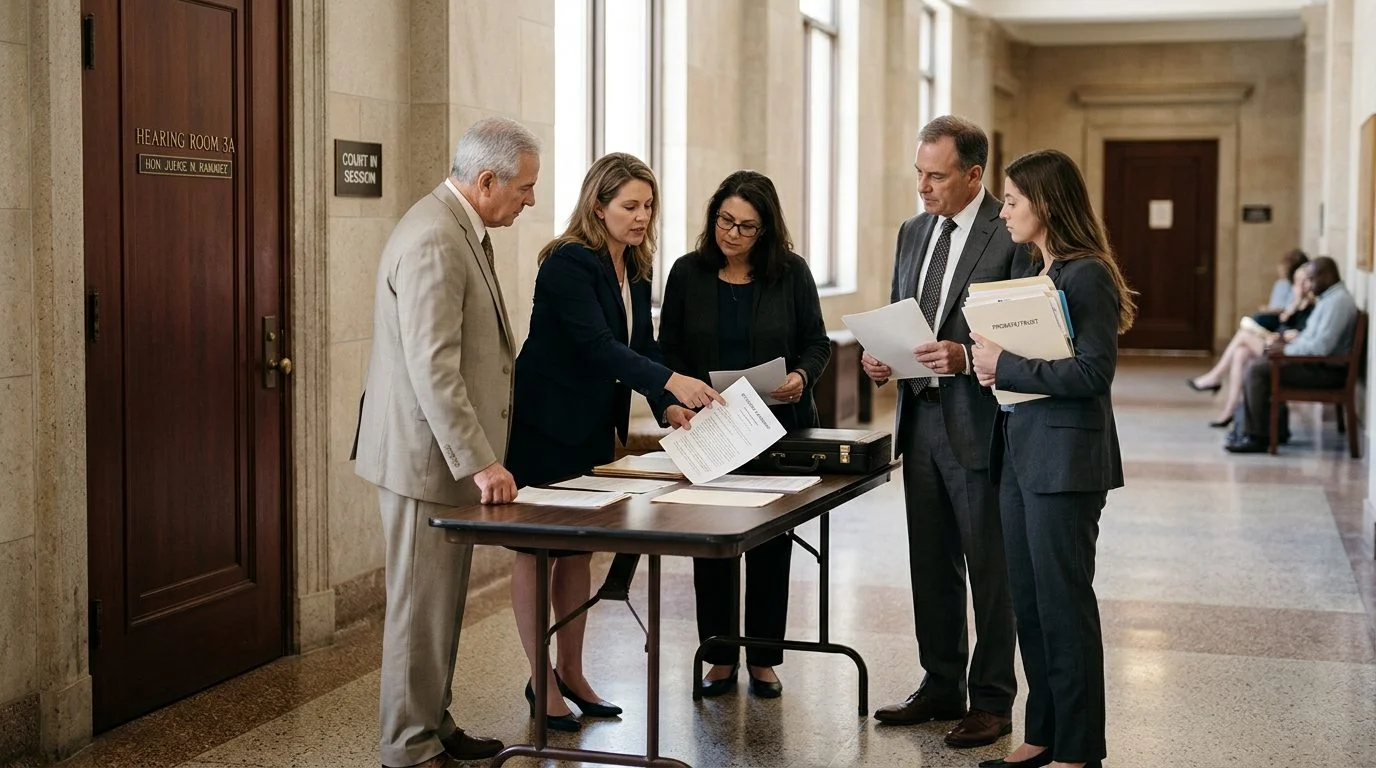
Probate Litigation | Coral Gables, Florida
Disputes Among Heirs When There Is No Will in Florida
Trust Counsel, PL focuses on probate litigation for heirs and beneficiaries when a loved one dies without a will. Leslie V. Marenco and our team can help you understand your position and your options. Free first consultation: confidential, with no obligation to continue.
By Leslie V. Marenco · Published October 24, 2026
What Happens When Someone Dies Without a Will in Florida
When someone dies without a valid will, Florida law decides who inherits. Lawyers call this dying intestate. The rules sit in the Florida Probate Code and apply to any property the will does not effectively dispose of.
Under Fla. Stat. § 732.101, the decedent’s death is the event that vests the heirs’ right to that property. Heirs don’t need a will to have a claim. Their claim starts with the death itself.
A court still supervises the process. Property held only in the decedent’s name usually goes through probate. The court-supervised process collects those assets, pays debts and hands the rest to the heirs.
Many families first learn these rules during a stressful time. A missing will often leads to competing claims. Relatives may disagree about who counts as an heir, who should serve, or what belongs in the estate. Early questions matter most.
If a parent or sibling died without a will and relatives now disagree about the estate, we can talk through your family's situation with you. Talk it through with Trust Counsel, PL — the first consultation is free, confidential, and carries no obligation.

Who Inherits Under Florida Intestacy Law
The surviving spouse’s share depends on whether the decedent left descendants, such as children, and whether those children are also the spouse’s. Under Fla. Stat. § 732.102:
- No surviving descendant: the spouse takes the entire intestate estate.
- All descendants are also the spouse’s, and the spouse has no other descendants: the spouse takes the entire estate.
- Some descendants are not the spouse’s: the spouse takes one-half.
- All descendants are shared with the spouse, but the spouse has descendants who are not the decedent’s: the spouse takes one-half.
The rest passes under Fla. Stat. § 732.103. It goes first to the decedent’s descendants. If there are none, it goes to the parents equally, or to the surviving parent. Then come brothers, sisters and their descendants, then grandparents and other kindred in the order the statute sets.
If your daughter dies without a will, her husband may take a share of her intestate estate as surviving spouse under Fla. Stat. § 732.102.
Adopted persons and persons born out of wedlock have separate rules for intestate succession under Fla. Stat. § 732.108. An adoption by a natural parent’s spouse does not cut off the child’s tie to that parent.
Which Property Goes Through Probate and Which Passes Outside It
Intestacy rules control property that goes through probate.
Typical probate assets include:
- Real estate titled only in the decedent’s name
- Bank accounts with no named survivor or beneficiary
- Vehicles and personal property
- Money the decedent was owed
Heirs should list every asset early. Disputes often start with one item. One heir may believe an account or home belongs to the estate, while another believes it passed by its own terms.
Families with trust-owned assets may also need a trust litigation attorney to review them.
Who Serves as Personal Representative When There Is No Will
Florida sets a priority order for who may serve. Under Fla. Stat. § 733.301, in an intestate estate the surviving spouse comes first. Next is a person chosen by a majority in interest of the heirs, then the heir nearest in degree; if more than one heir applies, the court may select the one best qualified.
The personal representative (often called an executor) opens the estate, collects its assets, pays valid debts and distributes what remains. Under Fla. Stat. § 733.609, a personal representative owes the same fiduciary duty a trustee of an express trust owes. The personal representative is liable to interested persons for losses from a breach of that duty.
Under Fla. Stat. § 733.302, a person who is sui juris (legally competent) and was a Florida resident when the decedent died is qualified to serve. Under Fla. Stat. § 733.302, subject to the limitations in this part, a person who is sui juris and a resident of Florida at the time of the death of the person whose estate is to be administered is qualified to act as personal representative in Florida.
Heirs who are not first in line still have options. They can ask the court to hear their concerns about who should serve. They can also raise objections, but filing deadlines apply.
Trust Counsel’s attorneys can serve individually as trustee or personal representative. The firm advises and represents trustees, personal representatives and beneficiaries. The firm itself does not serve as a fiduciary.
Common Reasons Heirs Disagree
Most heir disputes start with a question about family facts or control of the estate. Common triggers include:
- Who is an heir. Questions about paternity, adoption, or a family tie nobody wrote down. The proof rules in § 732.108 above often decide these questions.
- Competing petitions. Two relatives each ask the court to appoint them.
- How the estate is handled. Heirs may question how assets are collected, valued or distributed. The causes listed in Fla. Stat. § 733.504 for which a personal representative may be removed and the letters revoked include wasting or maladministration of the estate, and failure to account for the sale of property or to produce and exhibit the assets of the estate when so required.
- Unknown relatives. A person who surfaces with a claim can slow the case and cloud the record.
- A document found after death. Someone may find a paper and call it a will. Under Fla. Stat. § 732.518, a will contest cannot begin before the person who made the will dies.
- Old family conflict. Tensions that were never settled often come out when property must be divided.
How an Heir Dispute Is Handled in Court
An heir dispute usually moves through probate court in a few steps. Each case is different, but the steps are similar.
- Gather records: family tree, birth, marriage, adoption and death records.
- List every possible heir and every asset.
- Review the filings in the probate case, including the notice of administration.
- Decide whether to object, petition the court, or negotiate.
The main proceedings include:
- Under Fla. Stat. § 733.105, when property passes by intestate succession or the will is unclear, and there is doubt about who is entitled to property or how much each person receives, any interested person may ask the court to decide.
- Objections. Under Fla. Stat. § 733.212, a person served with notice of administration must object to a will’s validity, venue or jurisdiction within 3 months after service. Otherwise, the objection is forever barred. Objections are also barred after 1 year, or earlier if a final discharge order is entered.
- Requests to remove a personal representative. These rest on the causes listed in the removal statute above.
According to the Miami-Dade Clerk’s probate court page, heirs, interested parties, or creditors may file a caveat. Florida also offers simpler routes for smaller estates, such as summary administration, subject to value and asset limits, as the Flagler County Clerk’s probate questions explains.
The timeline depends on the court’s calendar, the number of parties, and whether the heirs agree. Heirs can resolve some disagreements through a negotiated agreement. When they cannot agree, the court decides.
Not sure what your next step is?
Talk it through with Trust Counsel, PL — the first consultation is free, confidential, and carries no obligation.
Why Heirs and Beneficiaries Work With Trust Counsel
Trust Counsel, PL is a trusts and estates law firm in Coral Gables, Florida. Its only office is in Coral Gables. The firm serves clients across Florida:
- We serve clients in Fort Lauderdale.
- We serve clients in Boca Raton.
- We serve clients in West Palm Beach.
- We serve clients in Doral.
- We serve clients in Kendall.
- We serve clients in Pinecrest.
- We serve clients in Key Biscayne.
- We serve clients in Aventura.
The firm concentrates in trusts and estates matters. These include probate litigation, trust litigation, trust administration, guardianship and estate planning. Leslie V. Marenco is the responsible lawyer for this page. Tanya Vega is another of the firm’s lawyers.
The firm represents heirs, beneficiaries and fiduciaries. It advises each of them on the rights and duties that apply to their role. Some matters may be referred to another lawyer or firm where that fits the facts.
Frequently Asked Questions
How hard is it to contest a will in Florida?
A will contest cannot begin until the person who made the will has died, under Fla. Stat. § 732.518. The outcome depends on the facts and evidence in each case.
Can a relative who is not an heir claim part of the estate?
Only people who qualify under the intestacy sections take as heirs.
Do I need a lawyer to open an intestate estate?
A lawyer can advise whether a full administration or a simpler procedure fits the estate. Florida offers summary administration for smaller estates, subject to value and asset limits.
Can I serve as personal representative if I am an heir?
Being an heir can give you a place in the priority order. The court still decides who is appointed, and under Fla. Stat. § 733.302, subject to the limitations in that part, a person who is sui juris and a Florida resident when the decedent died is qualified to act as personal representative.
What if the family cannot agree on who should serve?
Heirs can agree on one person. Fla. Stat. § 732.518 does not address majority agreement among heirs; it provides that an action to contest the validity of all or part of a will may not be commenced before the testator’s death. If property passes by intestate succession or the will is unclear, and there is doubt about who is entitled to property or how much each person receives, any interested person can ask the court to determine beneficiaries or their shares.
Talk With Trust Counsel About Your Situation
If a parent or sibling died without a will, and relatives now disagree about who inherits or who should serve, you may face decisions you never expected. Call (305) 707-7126 or schedule online to talk through your family’s facts with a lawyer. The first consultation is free, confidential and carries no obligation to continue.
How Trust Counsel Approaches Heir Disputes
Review the Estate Records
We look closely at the decedent's records, family history and the property involved to understand what is in dispute.
Advise Heirs and Beneficiaries
The firm advises and represents heirs, beneficiaries and fiduciaries on competing claims arising from an estate.
Protect Your Position
We focus on identifying the steps that help protect your interests while the question of who is entitled to the estate is addressed.
Clear, Direct Communication
We explain the process in plain language so you can make informed decisions at every stage.
Do Not Handle an Estate Dispute Alone
Heir disputes can involve court filings, property records and family relationships that are hard to untangle without guidance. Speaking with an attorney early can help you understand the facts that matter in your situation.
Common Heir Dispute Questions
Who Inherits Without a Will?
When there is no will, Florida's intestacy statutes determine who qualifies as an heir. Our attorneys review family relationships and the facts of your case to explain how those rules may apply.
Competing Heir Claims
Family members sometimes disagree about who should receive property or serve as personal representative. We help heirs evaluate those claims and present their position.
Administering the Estate
Trust Counsel's attorneys can serve individually as trustee or personal representative, and the firm advises and represents trustees, personal representatives and beneficiaries through the administration process.
Protecting Property During a Dispute
Disagreements can put estate assets at risk. We focus on practical steps to protect property while the dispute is resolved.