
Probate Litigation · Responsible attorney: Leslie V. Marenco · Coral Gables, Florida
Suspect a Forged Signature on a Will? Start with the Evidence
Trust Counsel, PL focuses on probate and trust litigation in Florida. Here is how a forensic document examiner compares a questioned signature with genuine signatures, and how that evidence fits into a will contest. We serve clients in Coral Gables, Fort Lauderdale, Boca Raton, West Palm Beach and throughout South Florida.
By Leslie V. Marenco · Published October 28, 2026
A handwriting examiner compares a questioned signature with genuine signatures of the same person. The result can be one piece of evidence in a Florida will challenge. This page explains how that comparison works, what evidence it needs, and which deadlines matter most.
When a Signature on a Florida Will Is Questioned
A signature is central to whether a Florida will is valid. Florida requires a will to be in writing and signed at the end by the testator, or by another person in the testator’s presence and at the testator’s direction, and the testator’s signing or acknowledgment must be made in the presence of at least two attesting witnesses who sign the will in the testator’s presence and in each other’s presence (Fla. Stat. § 732.502).
Doubts often come up in situations like these:
- A new will suddenly favors one person.
- The signature looks different from the decedent’s usual writing.
- A document appears after a caregiver or relative had access to the decedent’s papers.
A forgery claim is only one ground. Florida law says a will is void if its execution was procured by fraud, duress, mistake, or undue influence (Fla. Stat. § 732.5165). A handwriting question often sits alongside those issues.
Trust Counsel, PL focuses on probate litigation and trust litigation, including will and trust disputes for beneficiaries and heirs.
If you doubt a signature on a loved one's will, you don't have to sort out the evidence and deadlines alone. Our team can review your situation in a free first consultation, confidential and with no obligation to continue. Talk it through with Trust Counsel, PL — the first consultation is free, confidential, and carries no obligation.
What a Forensic Handwriting Examination Is
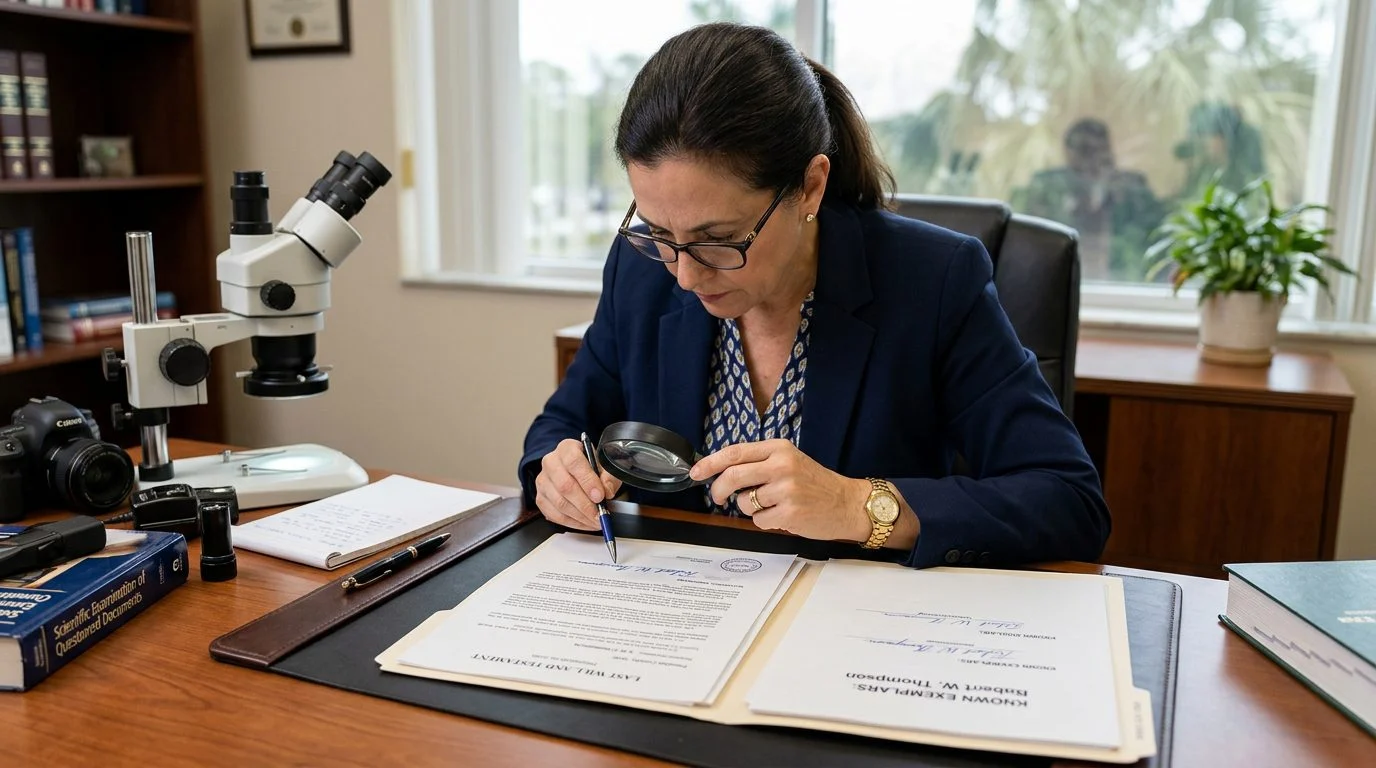
A forensic handwriting examination is a side-by-side review. The examiner compares a questioned signature against known, genuine samples. The examiner reports what the writing shows. The court decides what it means, together with all the other evidence.
An examiner looks at letter formation, proportions, slant, spacing, pen pressure, line quality, and pen lifts. The examiner also checks whether the writing shows the natural variation you’d expect from that person.
These include looking at natural variation and at signatures that are unusually identical or appear traced (AAFS).
Examiners can also check whether a document was changed after it was first made. This works best when the original paper and writing instruments are available.
Evidence an Examiner Needs and Why Originals Matter
The examiner needs the original will and genuine samples of the decedent’s handwriting. Copies help with a first look, but they limit a detailed comparison.
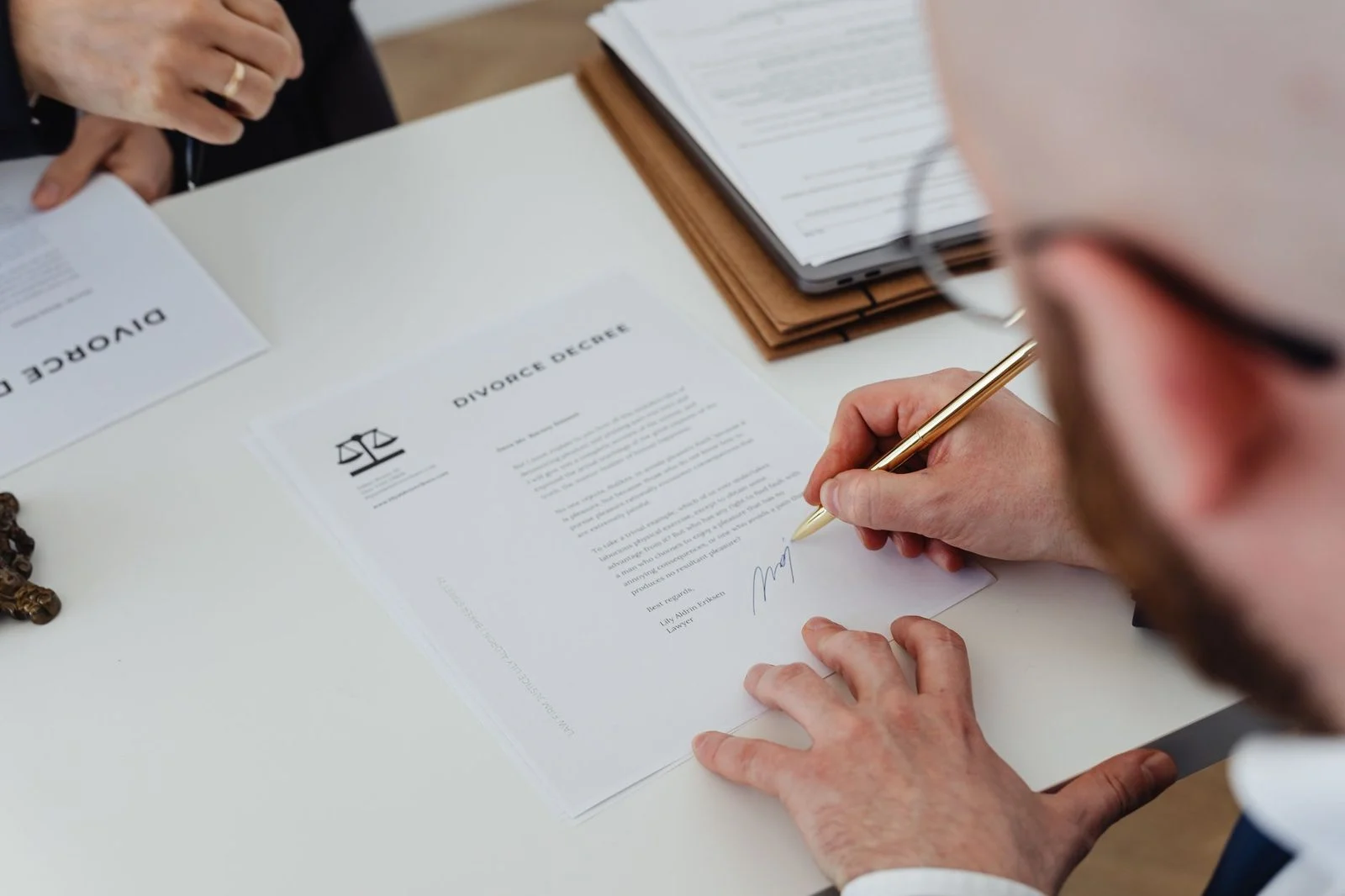
Good known samples include checks, deeds, letters, medical or financial forms, and earlier estate documents. Signatures change with age, illness, and medication. Samples from the same period as the will matter more than old ones. A few signatures are often not enough to show the person’s natural range.
Protect the evidence from the start:
- Don’t handle, mark, or fold the original will.
- Keep the envelope, attachments, and any cover papers.
- Write down who had access to the papers, and when.
- Save any drafts, notes, or messages about the will.
How the Process Works, Step by Step
The process usually moves through a clear sequence. Each step depends on the one before it.
- Review. Start with a consultation to go over the will, the probate status, and your concern.
- Preserve. Secure the original will and gather known samples through counsel.
- Examine. Retain a handwriting examiner, with the scope and questions set in advance. The examiner then compares the signatures and writes a report.
- Object or contest. Raise the issue in the probate or trust case. A will contest cannot start before the testator dies (Fla. Stat. § 732.518).
- Discovery and hearing. Discovery may include depositions of the examiner and the will’s witnesses. The examiner may testify at a hearing or trial.
Timing is the hardest part. Under Fla. Stat. § 733.212, an interested person on whom a copy of the notice of administration is served must file an objection to the will’s validity on or before the date that is 3 months after the date of service of that notice on that person. Otherwise, those objections are forever barred. The period may be extended only for estoppel based on a personal representative’s misstatement about the deadline. Under Fla. Stat. § 733.212, unless sooner barred by this subsection, all objections to the validity of a will, venue, or the jurisdiction of the court must be filed no later than the earlier of the entry of an order of final discharge of the personal representative or 1 year after service of the notice of administration. A caveat filed before death expires 2 years after filing (Fla. Stat. § 731.110). Assess timing early.
What an Examination Can and Cannot Establish
An examination can document a comparison that a court weighs with other evidence. It cannot decide a case on its own.
The burden starts with the will’s proponent. That party must first establish prima facie the will’s formal execution and attestation. After that, the contestant must establish the grounds for opposing probate (Fla. Stat. § 733.107).
Results depend on the quality and number of genuine samples. They also depend on the condition of the original. The other side may hire its own examiner, and both reports are tested in court. Reports take time, and the court’s schedule affects when testimony happens.
No outcome can be promised. The examination supports the legal argument. It does not decide the case.
Costs and What Drives Them
Examiner fees depend on the number of documents, the number of known samples, whether originals must be examined in person, and whether the examiner testifies. The examiner’s written scope and fee estimate should be in place before work starts. Ask what extra charges may apply, such as travel or testimony time.
The first consultation is free, confidential and carries no obligation to continue.
A free first consultation, confidential and with no obligation to continue, lets you review the cost picture before you commit.
Not sure what your next step is?
Talk it through with Trust Counsel, PL — the first consultation is free, confidential, and carries no obligation.
Why Trust Counsel for a Forged Will Matter
Trust Counsel, PL advises and represents trustees, personal representatives, and beneficiaries. Trust Counsel’s attorneys can serve individually as trustee or personal representative. The firm itself does not serve in that role.
Leslie V. Marenco is the responsible attorney for this page. The firm’s lawyers also include Tanya Vega.
The firm’s only office is in Coral Gables, Florida. We serve clients in Fort Lauderdale, Boca Raton, and West Palm Beach.
Trust Counsel coordinates the examiner, evidence preservation, the probate filing, and trust litigation strategy within one matter. If a matter may be referred to another lawyer or firm, we say so at the outset.
Frequently Asked Questions
How much does a handwriting examiner charge?
Fees depend on the scope, the number of documents, and whether testimony is needed. Request a written estimate before work begins.
What is a forensic handwriting examination?
It is a side-by-side comparison of a questioned signature with genuine signatures of the same person.
Can an examiner tell if a will was altered after it was made?
An examiner may check ink, sequence, and paper on the original, when it is available.
Can a signature be challenged after probate starts?
Yes, within Florida’s deadlines. Those deadlines run from service of the notice of administration, so review them promptly.
Do I need the original will?
The original is strongly preferred for a detailed comparison.
If someone you love left a will you doubt, you don’t have to work through the evidence and deadlines by yourself. Contact Trust Counsel, PL or call (305) 707-7126 to talk through your situation.
What a Forged Signature Challenge Involves
Preserve the original will
The original document, and any copies, should be kept in their current condition. Handling or marking the paper can complicate later testing.
Gather genuine signatures
An examiner compares the questioned signature against verified samples of the same person's writing, such as checks, letters or prior signed documents.
Work with a forensic document examiner
A forensic document examiner, often called a handwriting examiner, reviews the signatures side by side and reports observed similarities and differences.
Connect the findings to the case
Examiner findings are one part of a will contest. An attorney evaluates them alongside the testimony, the circumstances of signing and the rest of the estate record.
Avoid Altering the Evidence
Do not sign, initial or write on the will, and do not attempt your own comparison on the original paper. Keep the document in a safe place and let counsel direct the next steps.
How Trust Counsel Can Help
Probate litigation
Trust Counsel's probate litigation attorneys represent heirs, beneficiaries and personal representatives in disputes over whether a will is valid, including claims of forgery.
Trust litigation
When a forged signature appears on a trust amendment or related document, the firm advises and represents trustees and beneficiaries in trust disputes.
Guidance on evidence
The firm helps clients organize signed records, identify genuine signature samples and coordinate with a forensic document examiner before any filing decisions are made.