
Trusts & Estates Law | Coral Gables, Florida
Finding the Right Florida Attorney for Your Will or Trust
Wills, trusts, probate disputes and fiduciary duties each call for different legal work. Here is how to match your situation to the right lawyer at Trust Counsel, PL.
By Leslie V. Marenco · Published November 18, 2026
You may be asking this because a parent is declining, a relative has died, or you’re finally putting your own papers in order. Whatever brought you here, it’s a fair question.
An estate planning attorney drafts wills and trusts, along with related documents such as powers of attorney and advance directives for health care. Other trusts and estates attorneys handle what comes after: administration, disputes, tax planning and guardianship.
The short answer: estate planning attorneys draft wills and trusts
An estate planning attorney drafts wills and trusts and reviews them against your assets and your family. Florida sets formal rules for a will. The person making the will must sign at the end, or have another person subscribe the testator’s name at the end in the testator’s presence and by the testator’s direction, and at least two attesting witnesses must be present for the testator’s signing or acknowledgment. The witnesses then sign in the presence of the testator and of each other (Fla. Stat. § 732.502). The maker must be of sound mind and either 18 or older or an emancipated minor (Fla. Stat. § 732.501).
Wills and trusts often belong together. A lawyer who reviews both can check that the will doesn’t undo what the trust is meant to do. Documents that conflict are a common source of problems later.
The question can come up at different points in a family’s planning. It might be a parent’s decline in health or judgment, a death, a new property, or the sale of a business. That moment usually points to the right kind of lawyer.
Not sure what your next step is?
Talk it through with our team — the first discovery call is free, confidential, and carries no obligation.
Estate planning attorney vs. general practice attorney
An estate planning attorney focuses on wills, trusts, incapacity documents and transfers at death. A general practice attorney may write a simple will as one of many matters.
Trusts require more drafting decisions than a simple will. You choose who serves as trustee, when and how beneficiaries receive money or property, and how each asset is titled. Those choices benefit from focused trusts and estates work.
Trust Counsel, PL focuses on trusts and estates law from its only office, in Coral Gables, Florida.
The terms overlap. “Estate planning attorney,” “trust attorney,” “will lawyer” and “planning lawyer” often describe the same core work. Florida calls the person who settles an estate the personal representative (often called an executor). You’ll see that term in court papers, so it helps to know it.
Who drafts the documents and who funds the trust
A trust attorney drafts the trust and the will. Then the attorney helps move assets into the trust so it actually controls them. Drafting is only half the job.
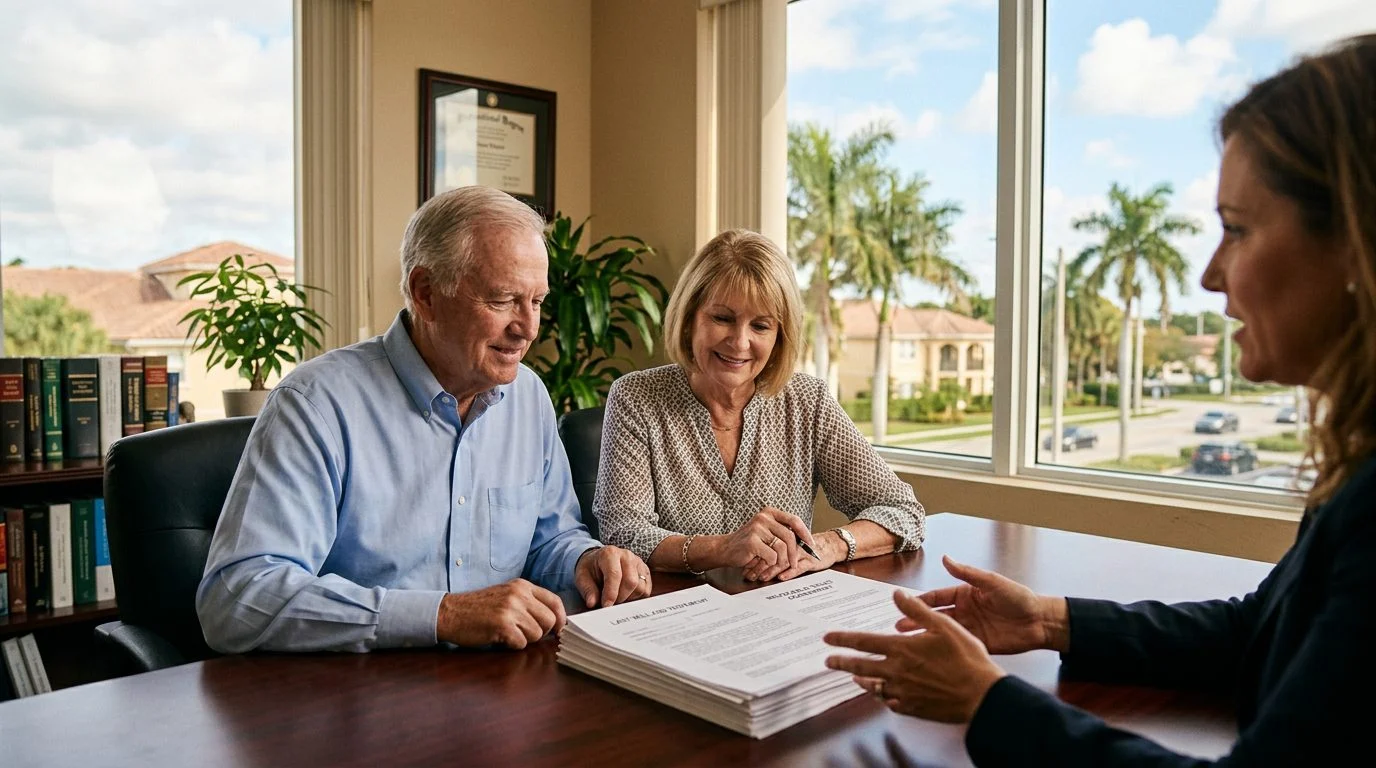
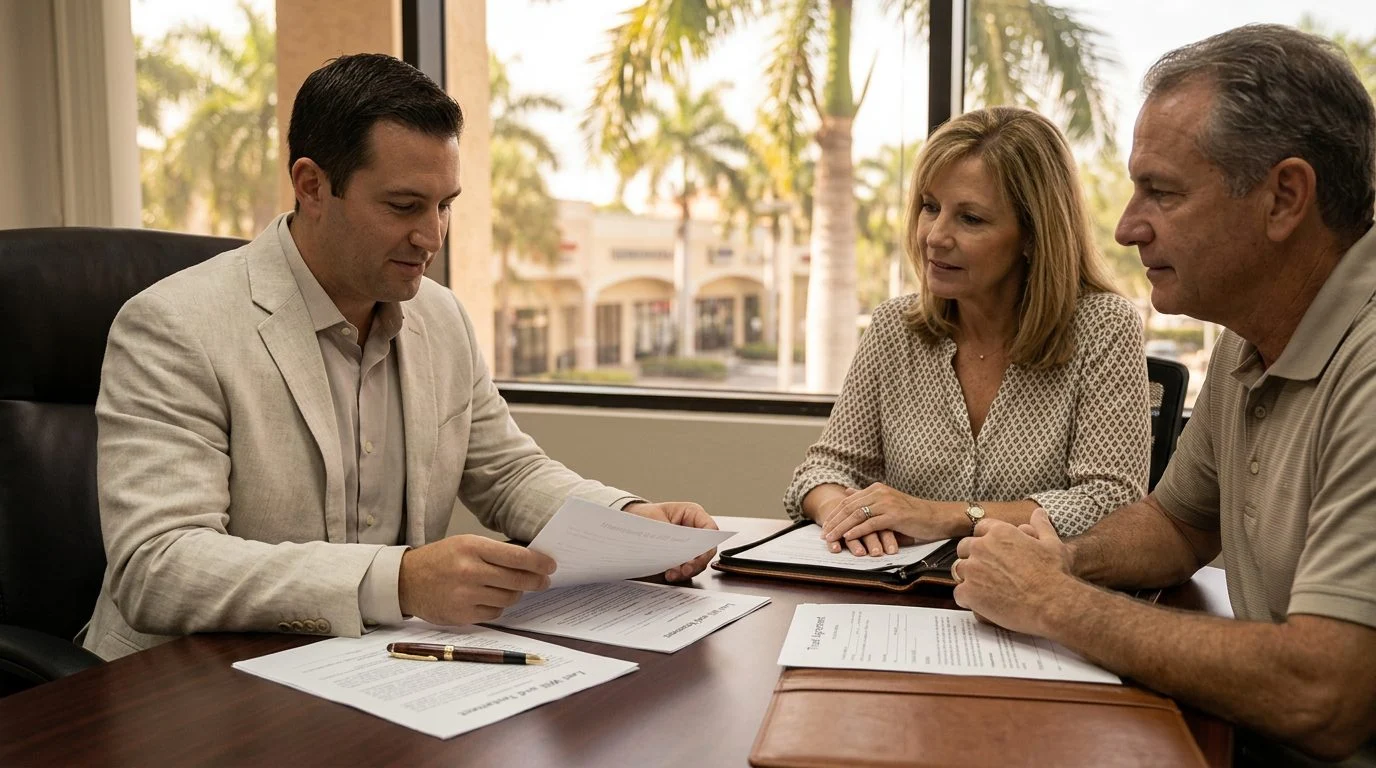
In a typical estate planning matter, the work may begin with an intake conversation about family, assets and goals. The lawyer then drafts the documents and arranges a signing that meets Florida’s formal rules. Keep the signed originals somewhere safe that the right people can find.
Funding is the step people most often miss. Florida law lets a person create a trust by transferring property to a trustee during life or by will or other disposition taking effect on death, by declaring that they hold identifiable property as trustee, or by exercising a power of appointment in favor of a trustee (Fla. Stat. § 736.0401). Even so, signing a trust doesn’t move assets into it. A trust controls only what is properly retitled to it or named to pass to it.
Funding means checking deeds, bank and brokerage account titles, and beneficiary designations on retirement accounts and life insurance. A signed trust with few funded assets may control very little. Checking these details is part of the attorney’s work.
Trust administration and probate: attorneys who work after a death or incapacity
A trust administration attorney advises the trustee once the trust is in effect. A probate attorney advises the personal representative of an estate.
A trustee must keep qualified beneficiaries reasonably informed, but while a trust is revocable, the trustee’s duties under this section extend only to the settlor. Within 60 days after accepting the trust, the trustee must notify the qualified beneficiaries of the acceptance, the trustee’s full name and address, and that the fiduciary lawyer-client privilege applies to the trustee and any attorney the trustee employs (Fla. Stat. § 736.0813). For an irrevocable trust, the trustee generally must provide an accounting at least once a year, subject to limited exceptions in the statute.
A personal representative must settle and distribute the estate under the will and the probate code. The personal representative must settle and distribute the estate as expeditiously and efficiently as is consistent with the best interests of the estate (Fla. Stat. § 733.602). A personal representative may also receive a commission for ordinary services, based on the estate’s compensable value as the statute defines it (Fla. Stat. § 733.617).
Trust Counsel’s attorneys can serve individually as trustee or personal representative. The firm advises and represents trustees, personal representatives and beneficiaries. The firm itself does not serve as trustee or personal representative.
Have questions about what happened?
Ask our team directly. The first conversation is free, confidential, and there is no obligation to continue.
When a litigation attorney is needed: probate and trust disputes
A probate litigation attorney handles disputes over wills and estate assets. A trust litigation attorney handles disputes over trusts. These matters differ from drafting. Drafting is planning ahead. Litigation starts when someone disagrees with what a document says or how it is being run.
Timing rules matter. A will contest cannot be brought before the testator dies (Fla. Stat. § 732.518). A challenge to a revocable trust cannot start until the trust becomes irrevocable by its terms or the settlor dies, although a guardian of the property of an incapacitated settlor may bring such an action earlier (Fla. Stat. § 736.0207). In a trust contest, the person challenging the trust carries the burden of proving the grounds for invalidity.
Trust disputes often involve accountings, distributions or a trustee’s conduct. Once a trust is no longer revocable, a qualified beneficiary can make a reasonable request for relevant information about the trust’s assets and liabilities and how it is administered; while a trust is revocable, the trustee’s duties under the statute extend only to the settlor (Fla. Stat. § 736.0813). That request often comes before any lawsuit.
Outcomes depend on the facts, and no lawyer can promise a result.
Tax, succession, asset protection and guardianship: related trusts and estates work
Estate tax, business succession, asset protection and guardianship work usually builds on the same will and trust documents. Each one adds a layer to the core plan.
Federal legislation enacted in 2025 amends § 2010(c)(3) by increasing the basic exclusion amount to $15,000,000 for calendar year 2026 (IRS figures). Estate tax planning attorneys look at how trusts and gifts are structured against those limits.
A business succession planning attorney plans how ownership of a closely held business passes at death or retirement. That plan should be coordinated with the will or trust.
Asset protection work reviews how assets are held.
Guardianship matters arise when a family member can no longer make decisions. A petition to determine incapacity may be signed by an adult and must be verified (Fla. Stat. § 744.3201). In each proceeding in which a guardian is appointed, the court must also determine whether the person signed a valid advance directive before incapacity (Fla. Stat. § 744.3115). Under Fla. Stat. § 709.2104, except as otherwise provided in that part of chapter 709, a power of attorney qualifies as durable when it includes the statutory language, or comparable language, showing the principal’s intent that the authority remain exercisable notwithstanding the principal’s later incapacity. Fla. Stat. § 709.2104 reads: “Except as otherwise provided under this part, a power of attorney is durable if it contains the words: “This durable power of attorney is not terminated by subsequent incapacity of the principal except as provided in chapter 709, Florida Statutes,” or similar words that show the principal’s intent that the authority conferred is exercisable notwithstanding the principal’s subsequent incapacity.”
We serve clients in Fort Lauderdale, Boca Raton, West Palm Beach, Doral, Kendall, Pinecrest, Key Biscayne and Aventura. Our office is in Coral Gables.
Frequently asked questions
Who legally owns the property in a trust?
Under Florida trust law, the trustee holds legal title to the trust property, and beneficiaries hold equitable interests in it.
What should I bring to the first meeting with an attorney?
Bring the existing will or trust, a list of assets and debts, deeds, account statements and beneficiary designations. Complete and accurate facts help the lawyer advise you.
What are common estate planning mistakes?
Common problems include an outdated will after a major life change, a trust that was never funded, and beneficiary designations that conflict with the will.
What type of lawyer deals with wills?
An estate planning attorney drafts and reviews wills. A probate litigation attorney handles a will that is challenged.
Talking through your situation with a Coral Gables trusts and estates attorney
Many people reading this are planning for someone else. A parent may need a trust reviewed, or a family may be facing an estate after a death. You may not be ready to hire anyone yet, and that’s a normal place to start.
This page is the responsibility of Leslie V. Marenco, a lawyer at Trust Counsel, PL in Coral Gables, Florida. Some matters may be referred to another lawyer or firm.
If a will, trust or administration question is weighing on you, describe it on a free discovery call. The free discovery call is confidential and carries no obligation to continue. Call (305) 707-7126 or schedule online.
Want to know where you stand?
Tell us what happened and our team will walk you through the options available to you, at no cost.
How Trust Counsel, PL Approaches These Matters
Planning before problems
Estate planning, business succession and asset protection work is handled with the documents, beneficiary designations and ownership records that will matter later.
Advice for every side
The firm advises and represents trustees, personal representatives and beneficiaries, so each client understands the duties and rights that apply to their role.
Attorneys who can serve individually
Trust Counsel's attorneys can serve individually as trustee or personal representative. The firm itself does not serve in that role.
Coral Gables office
The firm's only office is in Coral Gables. We serve clients in Fort Lauderdale, Boca Raton, West Palm Beach, Doral, Kendall, Pinecrest, Key Biscayne and Aventura.
Match the attorney to the matter
Drafting a will is different from defending a trust contract or handling a dispute in probate court. Before you sign anything or file anything, describe your situation so the right attorney can review it.
Areas of Practice at Trust Counsel, PL
Estate planning attorney
Wills, revocable trusts, powers of attorney and planning for families and business owners in Florida and abroad.
Trust administration attorney
Guidance for trustees and personal representatives through the steps of administering a trust or estate.
Probate and trust litigation attorney
Representation of beneficiaries, heirs and fiduciaries in disputes over wills, trusts and estate assets.
Guardianship attorney
Legal help for families seeking to protect a minor or incapacitated adult through the Florida guardianship process.