
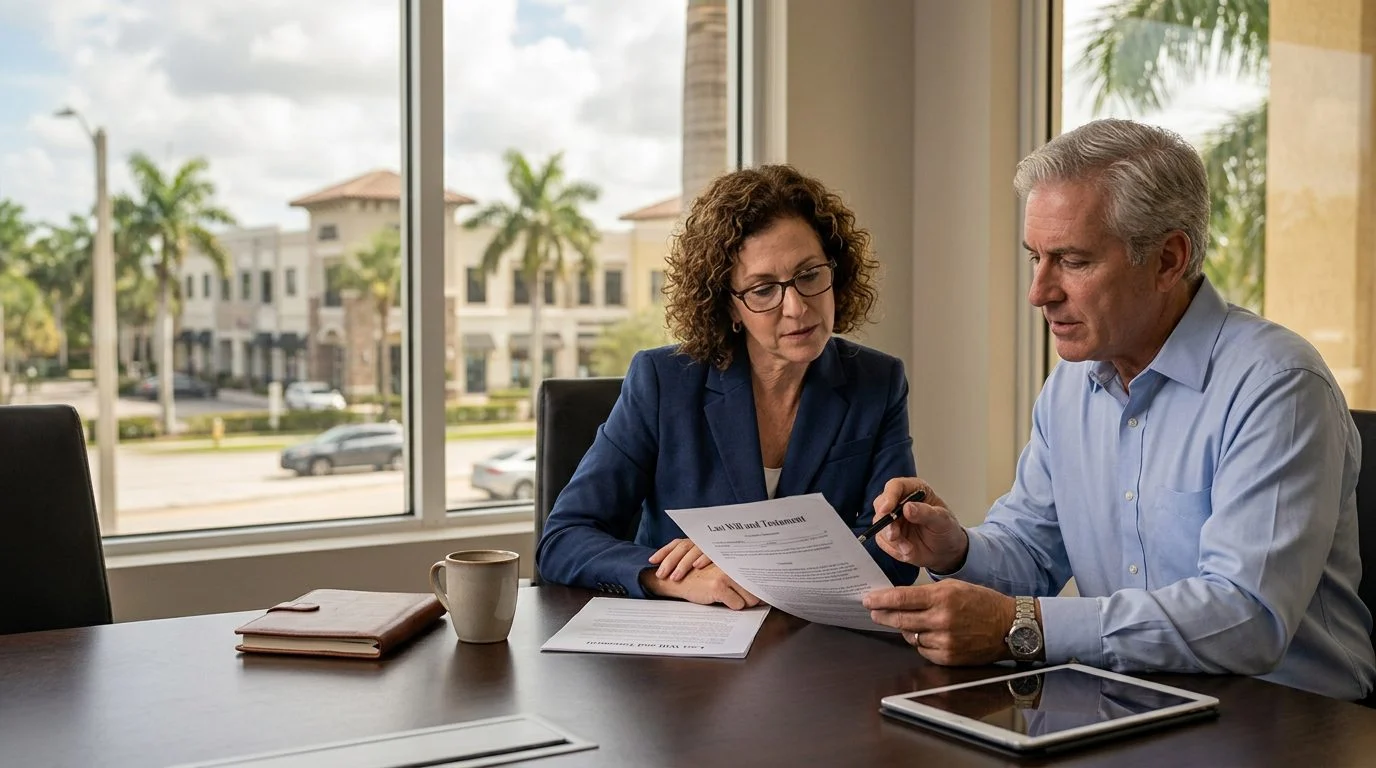
Probate and Trust Litigation | Coral Gables, Florida
When Does a Florida Will Lose Its Effect?
A plain-language guide from Leslie V. Marenco of Trust Counsel, PL in Coral Gables, to the situations that can leave a will invalid or unenforceable.
By Leslie V. Marenco · Published November 17, 2026
Finding a will that seems wrong after a death is unsettling. You may be asking whether that document still controls the estate at all.
Short answer: void versus revoked
A will is revoked when something that happened later ends its effect. The difference matters because each situation follows its own rules and asks different questions. Void-will rules come from the statutes on signing, capacity, and fraud or undue influence. Revocation rules come from the statutes on later writings, physical acts, and changes in marriage. Everyday speech and some courts use “null and void” and “invalid” loosely. So focus on the specific ground that applies to your document, not the label. The ground tells you what evidence to look for and where the dispute will be decided.
Not sure what your next step is?
Talk it through with our team — the first discovery call is free, confidential, and carries no obligation.
Improper execution: signing and witness rules
A will that misses Florida’s signing or witness steps can be challenged as invalid. Fla. Stat. § 732.502 says every will must be in writing. The testator must sign at the end, or another person may sign the testator’s name at the end, in the testator’s presence and at the testator’s direction.
The testator’s signing, or acknowledgment of a signature, must happen in the presence of at least two attesting witnesses. The witnesses must then sign in the testator’s presence and in each other’s presence.
Common challenge points include a missing signature, a witness who did not sign in the testator’s presence, and witnesses who did not sign in front of each other. Handwriting does not replace these steps. A will written entirely in the testator’s own hand still needs the same signing and witness steps. The same statute recognizes a narrow exception for certain military testamentary instruments. A codicil, which is an amendment to a will, must be executed with the same formalities as a will.
Lack of capacity: age and sound mind
To make a will in Florida, a person must be of sound mind and either 18 or older or an emancipated minor.
Evidence often includes medical records, the timing of the signing, and what the people present observed. A diagnosis, such as dementia, is one fact among others. It does not settle the question by itself. An illness can be serious and still not answer whether the person had a clear mind on the day the will was signed.
If you are reviewing a will signed during an illness, gather the dates, the doctor’s notes, and the names of everyone who was present. Those details often shape the conversation that follows.
Undue influence, fraud, duress, and mistake
A will is void if fraud, duress, mistake, or undue influence procured its execution. Fla. Stat. § 732.5165 says any part procured that way is void. The rest of the will stays valid if it is not invalid for other reasons.
Challengers often look at the relationship and the circumstances. Warning signs include a caregiver who helped arrange the signing, isolation from family or friends, and a beneficiary who gained unusually.
Burden of proof matters. Fla. Stat. § 733.107 says the person offering the will must first establish its formal execution and attestation. After that, the person contesting it must prove the grounds. The statute also says that in any transaction or event to which the presumption of undue influence applies, the presumption shifts the burden of proof under ss. 90.301-90.304. These claims need real evidence to succeed.
Revocation by a later will or codicil
An older will is revoked when a later will or codicil conflicts with it or says so. Fla. Stat. § 732.505 provides that a will or codicil is revoked by a subsequent inconsistent will or codicil. That revocation reaches only as far as the inconsistency. A later writing signed with the same formalities as a will also revokes the earlier one if it declares the revocation.
A later will does not need to say “I revoke all prior wills.” It still removes the earlier terms that conflict with it. A codicil that changes one gift leaves the rest of the will in effect, unless the codicil conflicts with those parts too.
Look for every signed version, and read each one against the others. Dates and page-by-page comparisons often show which terms still stand.
Revocation by a physical act: tearing, burning, or deleting
A paper will is revoked when the testator, or another person in the testator’s presence and at the testator’s direction, burns, tears, cancels, defaces, or destroys it. Fla. Stat. § 732.506 requires that the act be done with intent, and for the purpose, of revocation.
Intent is the key. The statute requires both intent and purpose to revoke. Damage alone is not enough. A torn or stained will found in a drawer does not, by itself, prove the person meant to revoke it.
The same statute covers electronic wills. An electronic will is revoked when the testator, or another person in the testator’s presence and at the testator’s direction, deletes, cancels, renders it unreadable, or obliterates it with the intent, and for the purpose, of revocation. That must be proved by clear and convincing evidence. Revocation procured by fraud, duress, mistake, or undue influence is also void under § 732.5165. A copy is not the original, so who holds the original often becomes a question in a dispute.
Have questions about what happened?
Ask our team directly. The first conversation is free, confidential, and there is no obligation to continue.
Revocation by divorce or annulment
A divorce, or a marriage declared invalid by court order, can void parts of a will that favor the former spouse. Fla. Stat. § 732.507 says any provision affecting the testator’s spouse is void upon dissolution. The will is then read as if the spouse died at the time of dissolution.
The statute has exceptions. The rule does not apply to a provision made after the dissolution. It does not apply if the will states a specific intention to the contrary. It also does not apply if the dissolution judgment expressly provides otherwise. The rule applies to wills of decedents who die on or after June 29, 2021.
Divorce usually does not erase the whole will. The statute targets provisions that affect the spouse. Other gifts can keep operating.
Ambiguity and missing gifts: interpretation or invalidity?
A vague description of a beneficiary, an unclear gift, or a missing clause raises a question of meaning.
Whether a left-out child can take is its own issue. Our guide on how a parent can exclude a child from a will covers that topic in more detail.
Ambiguity is a common cause of family disputes, because each side reads the same words differently. Careful review of the full document, and of any earlier versions, usually comes first.
Who can challenge a will, and how the deadline works
Anyone served with a notice of administration has a short, fixed time to object. Fla. Stat. § 733.212 requires an interested person to file any objection to the will’s validity, venue, or jurisdiction within 3 months after service. The clock runs from service of the notice. The statute, as amended in 2024, also sets an outer limit. Unless sooner barred by the 3-month deadline, objections to the will’s validity, venue, or the court’s jurisdiction must be filed no later than the earlier of the final discharge of the personal representative or 1 year after service.
The statute says objections not filed in time are forever barred. The 3-month period can be extended only for estoppel based on a misstatement by the personal representative about that period.
If a will is set aside and no other valid will disposes of the property, the estate passes under the Florida Probate Code. Fla. Stat. § 732.101 provides that property not effectively disposed of by will passes to the decedent’s heirs.
The firm focuses on probate litigation and trust litigation. It advises and represents trustees, personal representatives and beneficiaries. Trust Counsel’s attorneys can serve individually as trustee or personal representative.
Related guides on wills and trusts
If a will is in dispute, related guides can help you with the next steps. Start with the Florida trust administration guide for the broader picture of how trusts and estates are settled. If fiduciaries disagree, the co-trustee deadlock guide explains one common path. If a business interest is part of the estate, the professional trustee and family business guide covers that issue.
Each of these topics can overlap with a will challenge. A will dispute can affect who serves, what property is in play, and how quickly objections must be filed. Reading the related guides first can help you frame your questions before any call.
Want to know where you stand?
Tell us what happened and our team will walk you through the options available to you, at no cost.
Talking through a will you are worried about
If you’re worried about a will, a conversation is a sensible place to start. Readers who land on this question are often in the middle of a family situation they did not choose. A parent’s will may have been signed during a long illness. A document may have turned up after a death that conflicts with an earlier version.
Does a divorce cancel a will in Florida?
Not entirely. A divorce can void provisions that affect the former spouse, unless a statutory exception applies.
Is a handwritten will valid without witnesses?
Florida generally requires the signing and witness steps for a will, though the statute recognizes certain exceptions, such as out-of-state wills and military testamentary instruments. Handwriting alone does not satisfy those steps.
Does tearing up a will revoke it?
It can, but only if the act was done with intent to revoke the will.
Leslie V. Marenco is responsible for this page, and the firm’s only office is in Coral Gables, Florida. The first call is free, confidential, and carries no obligation to continue. To book a free discovery call, call (305) 707-7126 or schedule online.
How Trust Counsel, PL Can Help
Probate litigation
The firm focuses on probate litigation, including disputes over whether a will should be admitted and enforced.
Trust litigation
The firm represents beneficiaries, heirs and fiduciaries in trust disputes and related challenges.
Fiduciary representation
The firm advises and represents trustees, personal representatives and beneficiaries. Trust Counsel's attorneys can serve individually as trustee or personal representative.
Estate planning
The firm helps families and business owners review existing documents and plan for what comes next.
Do Not Assume a Will Is Valid
A document that looks complete can still be challenged. Reviewing how a will was signed and whether it has been changed since then is worth doing early, before a dispute arises.
Questions to Bring to Your Discovery Call
The original document
Bring the original will, any codicils, and any later documents you have. Where the original is kept matters.
Changes in family or property
Marriage, divorce, or major changes in assets may affect how a will is read. Share the timeline.
Concerns about how it was made
Tell the attorney who was present, who helped prepare the document, and whether anyone raised concerns.
Your role in the estate
Explain whether you are a beneficiary, heir, personal representative or trustee, because your options depend on your role.