
Estate Planning | Coral Gables, Florida
Estate Planning in Florida: Wills, Trusts and Succession Planning
Decide now who manages your assets, who receives them, and who acts for you if you cannot decide for yourself.
By Leslie V. Marenco · Published November 19, 2026
You want your property to go where you intend. You also want someone you trust to decide for you if you can’t. An estate planning attorney in Florida drafts the documents that make both happen.
Trust Counsel, PL concentrates in trusts and estates law. Its estate planning work covers wills, revocable trusts, powers of attorney, guardianship and business succession for Florida residents, business owners and families with ties abroad.
What an estate planning attorney does in Florida
An estate planning attorney arranges who receives your assets, who acts for you if you cannot, and how your property passes when you die.
The work starts with facts. Your attorney gathers family details and a list of property and business interests, then matches documents to your goals. ACTEC guidance on initial meetings describes this first step and says the information is treated as confidential.
Leslie V. Marenco is the responsible lawyer for this page, and Tanya Vega is also a lawyer at the firm. The firm’s only office is in Coral Gables, Florida.
We serve clients in Fort Lauderdale, Boca Raton, West Palm Beach, Doral, Kendall, Pinecrest, Key Biscayne and Aventura. This page is for individuals, married couples, business owners and families with Florida property or ties to other countries.

Not sure what your next step is?
Talk it through with our team — the first discovery call is free, confidential, and carries no obligation.
What estate planning covers
Estate planning covers your will, your revocable trust, your powers of attorney and the forms that decide where your assets go.
Wills
Under Fla. Stat. § 732.502, a will must be in writing and signed at its end by the testator, or the testator’s name must be signed at the end by another person in the testator’s presence and at the testator’s direction. The testator’s signing or acknowledgment must be in the presence of at least two attesting witnesses, and the attesting witnesses must sign the will in the presence of the testator and in the presence of each other (Fla. Stat. § 732.502). Fla. Stat. § 732.503 A properly executed will may be made self-proved at the time of its execution or at any later date by the acknowledgment of it by the testator and the affidavits of the witnesses, made before an officer authorized to administer oaths. Fla. Stat. § 732.503
Revocable trusts
A settlor, the person who creates the trust, may revoke or amend it unless the trust says it is irrevocable.
Powers of attorney and health care
Florida treats a power of attorney as durable, meaning it survives later incapacity, when it contains specific words or similar words showing that intent. In a guardianship case, the court must determine whether the ward, before becoming incapacitated, has executed any valid advance directive for health care. Fla. Stat. § 744.3115
Guardians and personal representatives
Florida lets a resident who is 18 or older and legally competent serve as guardian. It also bars some people from the role. Fla. Stat. § 744.309 Any resident of this state who is sui juris and is 18 years of age or older is qualified to act as guardian of a ward. The probate code defines its terms in Fla. Stat. § 731.201. The personal representative is the fiduciary appointed by the court to administer the estate, a role that has been known as an administrator, administrator cum testamento annexo, administrator de bonis non, ancillary administrator, ancillary executor, or executor.
How the process works, step by step
The process runs from a free discovery call through fact review, drafting, signing and funding.
- Free discovery call. The initial free discovery call is free, confidential and carries no obligation to continue.
- Fact review. You share family details, real estate, business interests and any property outside Florida or abroad. For a couple with a Florida home and a rental in another state, the review covers how each property is titled.
- Drafting. Documents are drafted for the facts you share, not taken from a generic form.
- Signing. Witnessing and notary steps follow Florida’s rules for the will and any self-proof.
- Funding and updates. Assets are retitled into the trust, and documents are updated after marriage, divorce, a new business or a move.
Timing is shaped by how many assets and documents are involved and how quickly information comes back.
Estate tax, business succession and asset protection planning
These three areas sit inside one plan, built around how your property and business interests are owned.
Federal estate tax applies only above a set threshold. According to an IRS revenue procedure, the law amends § 2010(c)(3) by increasing the basic exclusion amount to $15,000,000 for calendar year 2026. Property you can still change or revoke at death can count toward your gross estate.
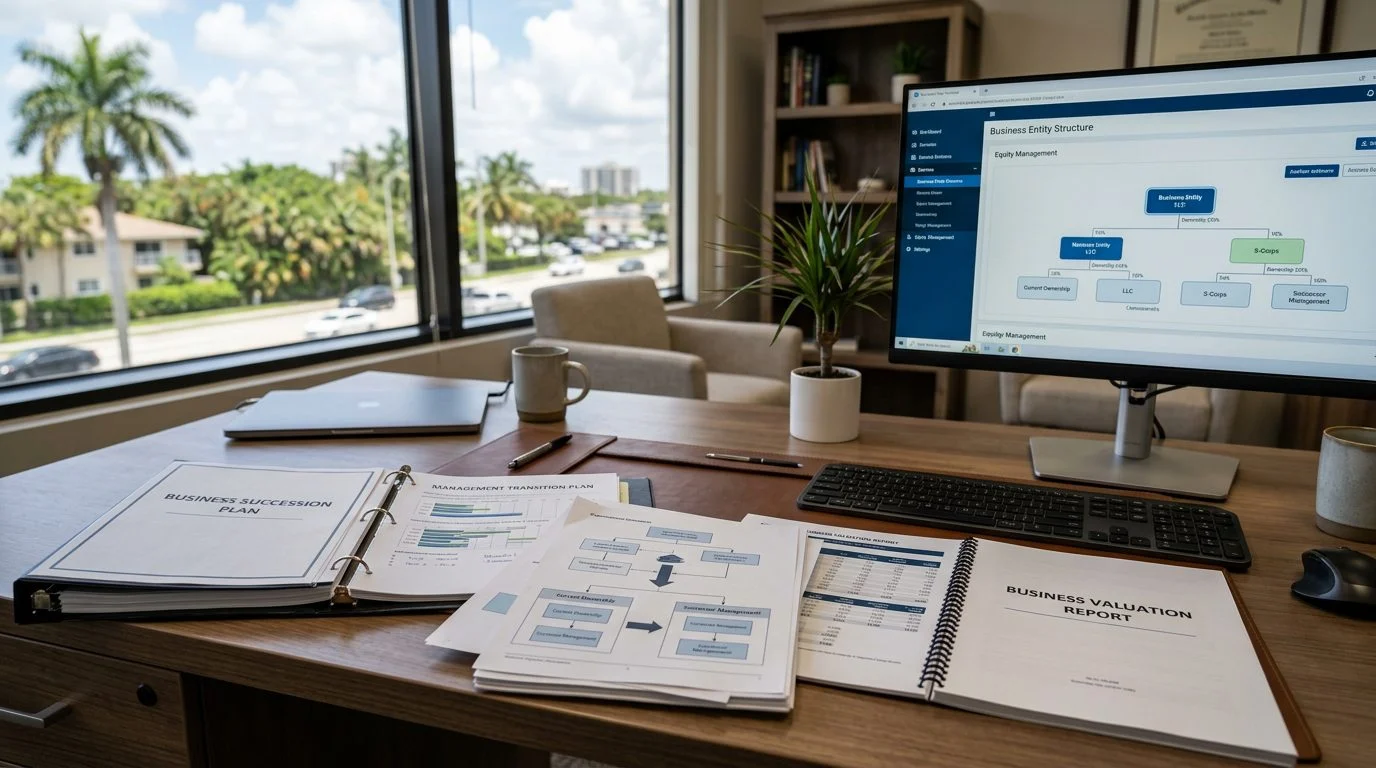
For business owners, succession planning answers who manages the company if you cannot, how ownership changes hands, and how those terms fit your personal plan. Business documents and personal documents should match, or the plan can conflict.
Asset protection planning is most useful when it is set up before a claim arises. No plan can promise a result. Property held as tenants by the entirety, a form of joint ownership for married couples, can be reached only by creditors of both spouses jointly. Beal Bank v. Almand opinion
Property in another country or foreign family ties can change how the plan is built, so those facts come first in the review.
Have questions about what happened?
Ask our team directly. The first conversation is free, confidential, and there is no obligation to continue.
Common estate planning mistakes
The most common mistakes are outdated beneficiary forms, unfunded trusts and missing powers of attorney.
- A trust is signed, but its assets are never retitled into it.
- No durable power of attorney or health care surrogate, which can leave family asking a court for help.
- A guardian is named for minor children without a backup.
- No will at all, so property passes to heirs under Florida’s intestacy rules. Fla. Stat. § 732.101
- Plans are not updated after marriage, divorce, a new business or a move to Florida.
- Business interests are left out, with no succession instructions.
Many people sign a will first and delay the power of attorney. That gap is where families often run into trouble.
Why Trust Counsel, PL
The firm’s trusts and estates work runs from planning through disputes.
The firm’s practice areas include estate planning, probate litigation, trust litigation, trust administration, guardianship and business succession. The firm advises and represents trustees, personal representatives and beneficiaries. Clear documents answer questions before they become disputes.
Trust Counsel’s attorneys can serve individually as trustee or personal representative. The firm itself does not serve as trustee, personal representative or any other fiduciary.
Florida law keeps corporations out of the personal representative role, with narrow exceptions. Fla. Stat. § 660.41 Some trust companies and banks are entitled to act as personal representatives under Fla. Stat. § 733.305.
Why this matters: the people named in your plan need to know which roles a law firm can and cannot fill.
Frequently asked questions
Most questions come down to whether a will alone is enough and who acts if you cannot.
How much does an estate planning attorney cost in Florida?
Fees depend on the facts of your plan. Ask about them on your free discovery call.
Is a will enough?
A will takes effect at death. Powers of attorney cover the time when you cannot decide for yourself.
What is a health care surrogate?
A health care surrogate is someone you name to make medical decisions for you if you cannot. It works alongside a durable power of attorney.
Is a will or a revocable trust better?
Each does a different job. A will generally goes through probate, while a funded revocable trust holds assets under its own terms.
Can an attorney serve as trustee or personal representative?
Trust Counsel’s attorneys can serve individually as trustee or personal representative. The firm itself does not serve in those roles.
Do you serve clients outside Coral Gables?
Yes. We serve clients in the cities listed above, and our only office is in Coral Gables, Florida.

Want to know where you stand?
Tell us what happened and our team will walk you through the options available to you, at no cost.
Book your free discovery call
If a parent needs a durable power of attorney, or a business owner is planning a transfer, book your free discovery call today. Call (305) 707-7126 or schedule online.
Responsible lawyer: Leslie V. Marenco, Trust Counsel, PL, Coral Gables, Florida.
How the firm approaches estate planning
Documents that work together
Wills, revocable trusts, powers of attorney and health care documents are reviewed as one plan, so each one supports the others.
Planning for business owners and families
The firm advises owners of closely held businesses and families with property in more than one place on succession and estate tax questions.
Fiduciary roles addressed up front
Trust Counsel's attorneys can serve individually as trustee or personal representative, and the firm advises and represents trustees, personal representatives and beneficiaries.
Plans reviewed as life changes
Marriage, a new business, a move or a change in health are good reasons to revisit the documents that guide your family.
A will alone may not cover every situation
A will takes effect only at death. If you become unable to manage your finances or make medical decisions, other documents are needed. Raise this question at your free discovery call.
Estate planning services
Wills
Directions for your property, guardianship of minor children and the appointment of a personal representative.
Revocable trusts
Trust planning to manage property during life and transfer it after death, coordinated with your beneficiary designations.
Business succession planning
Planning for the ownership and management of a business if an owner dies, becomes disabled or wants to retire.
Asset protection
Planning to organize and protect family property using lawful structures suited to your goals.
Guardianship
Guidance on guardianship planning for a family member and on guardianship proceedings in Florida courts.