
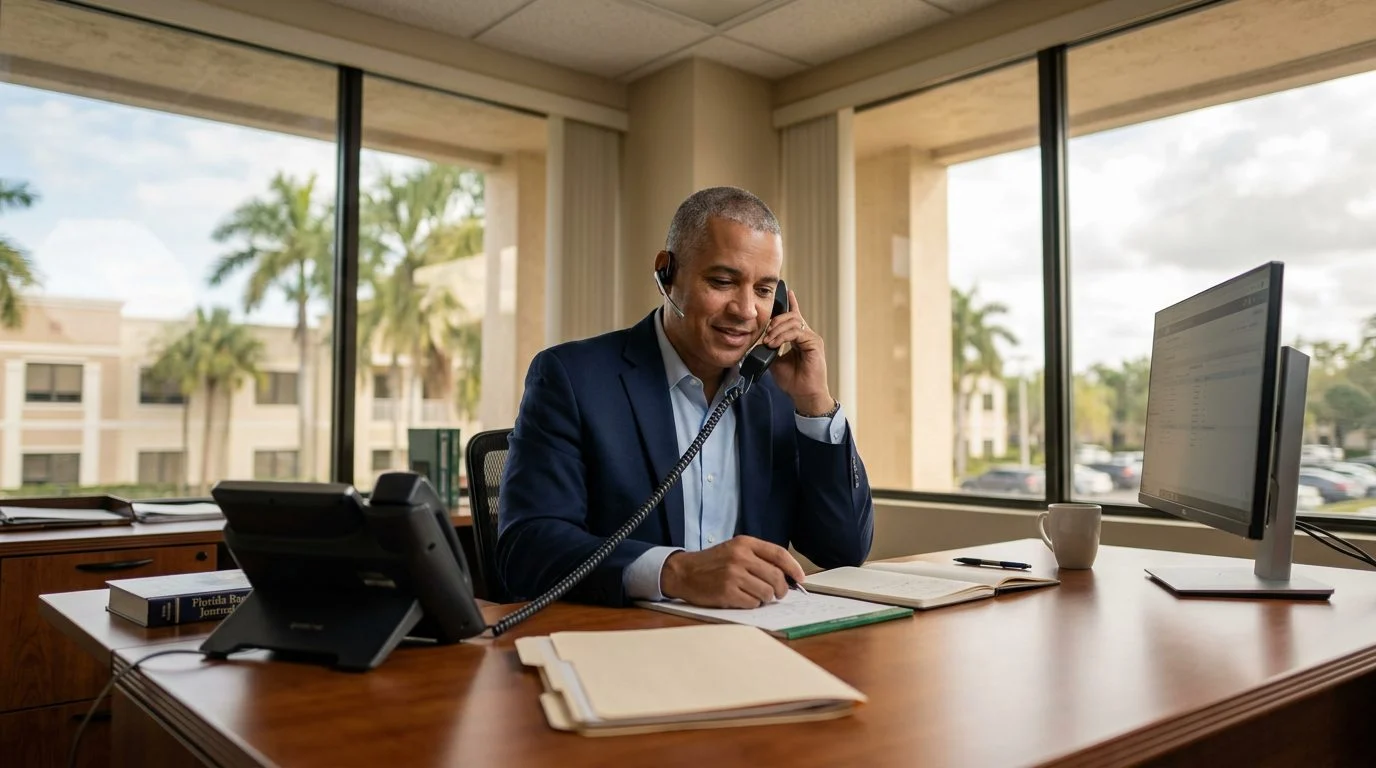
Coral Gables, Florida | Trusts and Estates
Have a Trust or Estate Question? Start with a Free Discovery Call
Talk through your situation with Trust Counsel, PL before you decide on any next step.
By Leslie V. Marenco · Published November 17, 2026
A letter from a court, a trust document you didn’t expect, or a guardianship notice can leave you with one urgent question. You want an answer before you commit to anything.
Often, you can get that answer on a short first call. Trust Counsel, PL offers a free discovery call, a first conversation to see whether your question fits the firm’s practice areas. It is not a promise to hire anyone.
Can you call a lawyer to ask a question for free?
Yes, many people start with a short first conversation before they decide anything else.
The people who call often face a hard moment. A parent has died. A trust turned up with terms nobody explained. A family member has been named in a guardianship petition. A sibling questions how property is being handled. Each one comes with deadlines, and each can feel urgent before you know what the law requires.
Many questions are simpler than they feel. Some turn on one date or one signed page. Others involve several people and several documents. A first call helps you tell which kind you have. Getting the facts in order early makes every later step easier.
A first call also lets you describe the situation in your own words. It helps you decide whether your question belongs with a lawyer who handles these matters in Florida. You can ask first, then decide whether to go further.
If you're holding a trust document, a court notice or a guardianship petition you didn't expect, you don't have to work out the next step alone. Talk it through with our team — the first discovery call is free, confidential, and carries no obligation.
What the free discovery call at Trust Counsel, PL covers
The free discovery call is free, confidential and carries no obligation to continue.
The call can address questions in these practice areas: probate litigation, trust litigation, trust administration, estate planning, estate tax planning, business succession planning, asset protection and guardianship.
For example, you might ask whether a notice you received starts a deadline, or how a trustee’s duties differ from a personal representative’s. Bring your questions in order of urgency, so the call starts with the time-sensitive ones.
The firm advises and represents trustees, personal representatives and beneficiaries. A personal representative (often called an executor) is a fiduciary who must settle and distribute the estate under the will and the code, as § 733.602 provides.
Trust Counsel’s attorneys can serve individually as trustee or personal representative. The firm itself does not take on that role.
If your matter falls outside these areas, it may be referred to another lawyer or law firm.
What a first call can and cannot settle
A first call usually settles the basic facts, the people involved and the dates that matter. Probate deadlines and trust notice rules run on their own clocks. Missing one can bar an objection for good.
Some Florida deadlines are short. Under § 733.212, a person served with a notice of administration must object to the will’s validity, the venue or the court’s jurisdiction within 3 months after service. Otherwise, those objections are forever barred. The statute allows that period to be extended only for estoppel based on a misstatement by the personal representative about the deadline; it may not be extended for any other reason.
A short call usually cannot give a complete answer. The answer can turn on the exact words of a will or trust, the dates on each notice and the family’s history. The answer depends on the facts, and a final opinion requires review of the papers.
General information about how Florida probate, trust and guardianship matters are organized can be discussed on the call. That helps you know what to bring to a fuller review.
How to prepare your question before you call
Write your question in one sentence, then gather the papers and dates behind it. A clear sentence keeps the call focused. For example: “Does this trust control the house my father transferred into it?”
Gather these items:
- The will, the trust, the death certificate and any court papers.
- Account statements or property records tied to the question.
- Every notice you received, with the date you received it.
Write down names: the person who died or the person needing protection, the trustee, the personal representative, the beneficiaries and anyone else involved. Say whether you are calling for someone else.
Check for dates. Under § 736.0813, within 60 days after a trust is accepted, the trustee must give qualified beneficiaries notice of the trustee’s full name and address, among other things. Paragraph (a) does not apply to a trustee who accepts a trusteeship before the effective date of this code. Note when any trust notice arrived.
Under § 90.502, a person who consults a lawyer to get legal services is a client, and confidential communications with that client can be privileged. Share the facts plainly, even the awkward ones.
Write down anything you have already done, such as sending a letter or filing a form, since that history can matter. A common mistake is setting a notice aside until its date has passed.
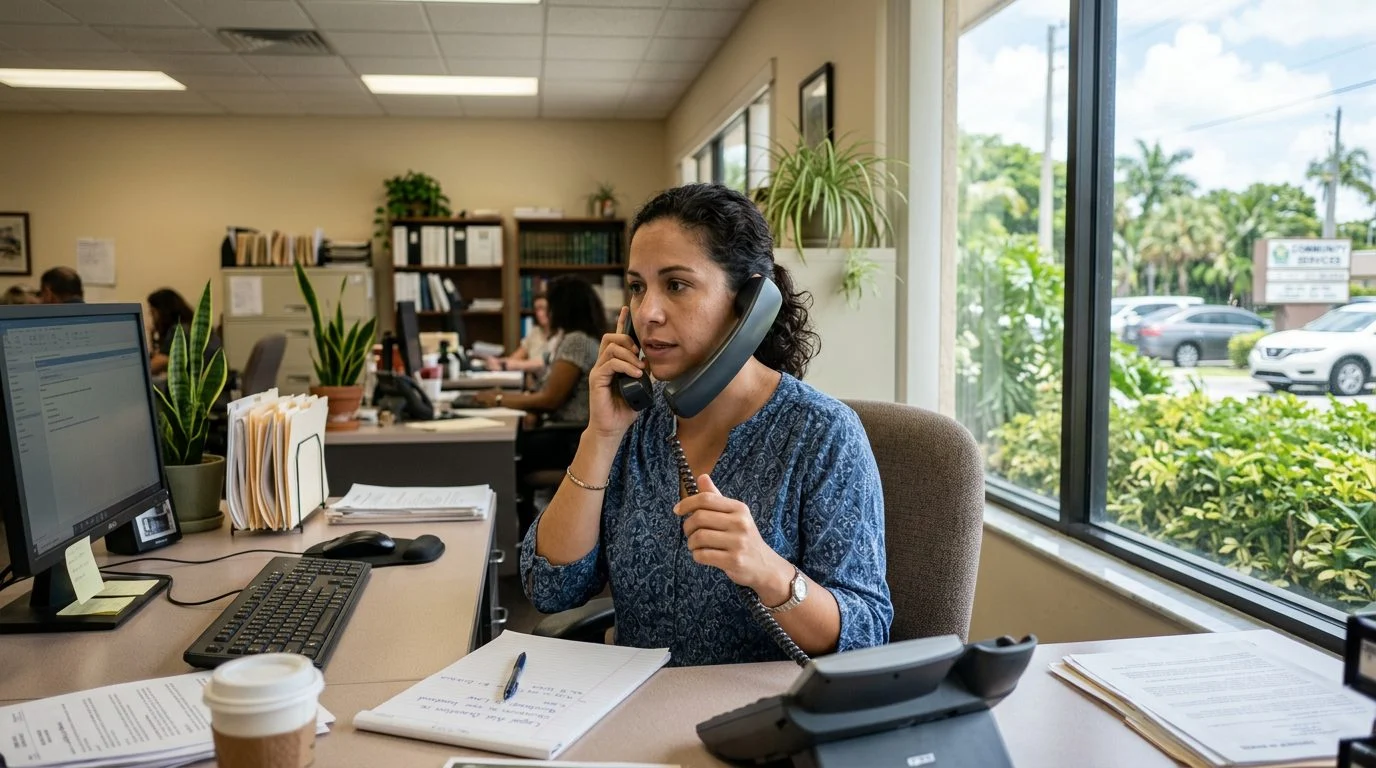
Not sure what your next step is?
Talk it through with our team — the first discovery call is free, confidential, and carries no obligation.
Lawyer or attorney: what the words mean
In everyday use, “lawyer” and “attorney” refer to the same professional: a person licensed to practice law.
Florida’s evidence code defines a lawyer as a person authorized, or reasonably believed by the client to be authorized, to practice law in any state or nation. That definition appears in § 90.502, the section that sets the lawyer-client privilege.
Before you rely on what someone tells you, ask whether they are licensed to practice law. Ask whether the matter falls within their practice areas. A title on a card or website does not answer either question.
Keep a written summary of what you were told. A short note with the date, the person’s name and the advice helps you remember exactly what was said. If you don’t understand a term, ask for its plain meaning before you act on it.
Who is responsible for this page and where the firm serves clients
Leslie V. Marenco is the lawyer responsible for this page. The firm’s only office is in Coral Gables, Florida.
Tanya Vega is also a lawyer at Trust Counsel, PL. The firm has support staff, including assistants and office staff.
We serve clients in Florida, including Fort Lauderdale.
For a broader overview, read the asset protection guide for Florida. You can also review the Florida page and the Fort Lauderdale page.
Florida Bar rules require lawyer advertising to name at least one lawyer or the law firm responsible for the content, and the city, town, or county of at least one bona fide office location of the lawyer who will perform the services advertised, as Rule 4-7.12 sets out. Each page on this site is written to meet that standard.
Ask your question on a free discovery call
If you’re holding a trust document, a court notice or a guardianship petition you didn’t expect, you don’t have to work out the next step alone. Start with the dates you already have, even if the papers are incomplete.
If you’re calling for a parent, a sibling or a friend, say so at the start. Bring the dates and papers from the checklist above. A free discovery call gives you a chance to explain what you know and ask whether your question fits our practice areas.
You can book a free discovery call online or call (305) 707-7126.
Have questions about what happened?
Ask our team directly. The first conversation is free, confidential, and there is no obligation to continue.
Frequently Asked Questions
Can I call a lawyer in Coral Gables to ask a question for free?
Yes. Trust Counsel, PL, whose office is in Coral Gables, offers a free discovery call. The call is free, confidential, and carries no obligation to continue; you can call (305) 707-7126 or schedule online.
What kinds of trust and estate questions can I ask on a free discovery call?
You can ask about probate litigation, trust disputes, trust administration, guardianship, estate planning, estate tax, business succession, or asset protection. The attorney can explain general options and how the process typically works in Florida.
Can a lawyer give me legal advice during a free discovery call?
An attorney can discuss general legal principles and the steps that may apply to your situation. Specific advice depends on the facts and documents reviewed, and no attorney can predict how a particular matter will turn out.
What should I have ready for a free discovery call?
Have the basic facts ready, such as the name of the person who died or created the trust, approximate dates, and any wills, trust documents, or court papers you already have. Having these on hand helps make the call more useful.
What to expect on your free discovery call
Free and confidential
Your first call with Trust Counsel, PL is free, confidential, and carries no obligation to continue.
Bring your question
Describe the trust, estate, guardianship or business matter on your mind, and ask what you need to know.
Share the key papers
If you have a will, trust, court filing or account summary, having it at hand helps the conversation stay focused.
Clear next steps
At the end of the call, you will know whether it makes sense to continue, and you will decide that yourself.
Our role in your matter
Trust Counsel's attorneys can serve individually as trustee or personal representative. The firm advises and represents trustees, personal representatives and beneficiaries.
Trust and estate matters we can discuss
Probate litigation
Disputes arising from the administration of an estate, for beneficiaries, heirs and fiduciaries.
Trust litigation
Questions and disputes involving the terms, administration or ownership of a trust.
Trust administration
Legal guidance for trustees and beneficiaries as a trust is managed and settled.
Estate planning
Wills, trusts and planning that reflects your family and your goals.
Estate tax planning
Planning around estate tax questions for families and business owners.
Business succession planning
Preparing ownership of a business to pass smoothly to the next generation.
Asset protection and guardianship
Planning to protect assets, and legal guidance on guardianship for a family member who needs one.
Have a question you would like to ask?
Schedule your free discovery call with Trust Counsel, PL in Coral Gables.