
Estate Planning | Coral Gables, Florida
Is It Worth Paying a Lawyer for a Will in Florida?
A plain-language guide from Leslie V. Marenco, responsible attorney at Trust Counsel, PL in Coral Gables, on when a will is simple, when it is not, and what a lawyer can add.
By Leslie V. Marenco · Published October 26, 2026
Is it worth paying a lawyer for a will?
For many simple estates, a properly signed will can do the basic job. Whether a lawyer is worth paying depends on the facts. The real value of counsel is getting the document to do what you intend, in a form the people who carry it out can follow without guessing.
Most people who search this question are still deciding. Some are planning for themselves. Others are helping a parent, a sibling, or an adult child who has not signed anything yet. Some started looking after a diagnosis, a death, a remarriage, or a business question they did not expect.
This guide answers four questions. Is a will legal in Florida without a lawyer? What happens when someone dies with no will? When does a lawyer add the most value? And what does a will engagement involve? Each answer uses Florida law, in plain language.
If you are sorting this out after a diagnosis, a remarriage, or a death in the family, you do not have to work through the rules alone. Call Trust Counsel, PL to talk through your situation. Talk it through with Trust Counsel, PL — the first consultation is free, confidential, and carries no obligation.
Can you legally write a will in Florida without a lawyer?
Yes. Under Fla. Stat. § 732.501, any person of sound mind who is 18 or older, or an emancipated minor, may make a will.
The formal steps appear in Fla. Stat. § 732.502. The testator must sign the will at the end. Or another person may sign the testator’s name at the end, in the testator’s presence and by the testator’s direction. The signing, or the testator’s acknowledgment of an earlier signature, must happen in front of at least two attesting witnesses. Those witnesses must then sign in the presence of the testator and of each other.
The statute does not require special wording. No particular form of words is needed if the will is executed with the required formalities. So the focus is the signing process, not fancy language.
A correctly signed will can also be made self-proved under Fla. Stat. § 732.503. That process uses the witnesses’ affidavits, which can make later proof easier.
Mistakes can cause trouble later. Under Fla. Stat. § 732.5165, a will is void if its execution was procured by fraud, duress, mistake, or undue influence.
What happens if someone dies without a will in Florida?
When there is no valid will, state law decides who inherits. Under Fla. Stat. § 732.101, any part of an estate not effectively disposed of by will passes to the decedent’s heirs under the Florida Probate Code.
The order follows family relationships, not wishes. Under Fla. Stat. § 732.103, the part of the intestate estate not passing to the surviving spouse under § 732.102 (or the entire intestate estate if there is no surviving spouse) goes first to the decedent’s descendants. A surviving spouse’s share depends on family facts under Fla. Stat. § 732.102.
Stepchildren are not on it either. A close friend or stepchild may receive nothing, even when the person who died wanted them to. A will is the document that carries those choices.
A court-supervised process still handles the estate. A personal representative (often called an executor) administers it.
Timing matters too.
When is a lawyer-drafted will usually worth the cost?
A lawyer often adds the most value when the family picture is complicated. A simple will for one adult with one home may need less help. These are the situations where counsel tends to matter most.
Blended families. Under Fla. Stat. § 732.507, a later marriage, birth, or adoption does not revoke a prior will. A child or spouse left out of an earlier will may still inherit. A will provision that affects a spouse becomes void when the marriage is dissolved, with stated exceptions. These rules apply to decedents who die on or after June 29, 2021.
Minor children. A will is where a parent names who should care for minor children. A lawyer can help you think through that choice and how it fits the rest of the plan.
Property in more than one place. Real estate, bank accounts, or business interests in different states or countries can raise extra questions about how each asset passes.
A closely held business. Ownership, buy-sell terms, and who runs the company after a death often need careful planning. A business succession planning attorney reviews those pieces, not just a sentence in a will.
A beneficiary with a disability or government benefits. Gifts to someone who receives government benefits need careful wording.
Beneficiary designations and joint ownership. Retirement accounts and jointly owned property often pass outside the will. A lawyer can check how those pieces fit together. Estate tax planning is a separate question that depends on the size and makeup of the estate.
Where do do-it-yourself wills tend to create problems?
Most problems come from unclear words and missed details. The form itself is rarely the whole story.
One common example is a gift of “my house” when the person owns two homes. Another is a missing alternate beneficiary, which leaves no clear next recipient if the first one dies first. An outdated will after a marriage, divorce, or birth can also cause trouble. Witnesses who do not sign in each other’s presence create another problem.
Unclear wording leads to disputes. When heirs read a sentence differently, the matter can end up in probate court. Trust Counsel, PL focuses on probate and trust litigation. The firm advises and represents trustees, personal representatives and beneficiaries in those disputes.
A will can also be challenged after death. Under Fla. Stat. § 732.518, an action to contest a will may not begin before the testator dies. Grounds can include the problems in Fla. Stat. § 732.5165. Facts from signing day matter.
What does a lawyer do during a will engagement?
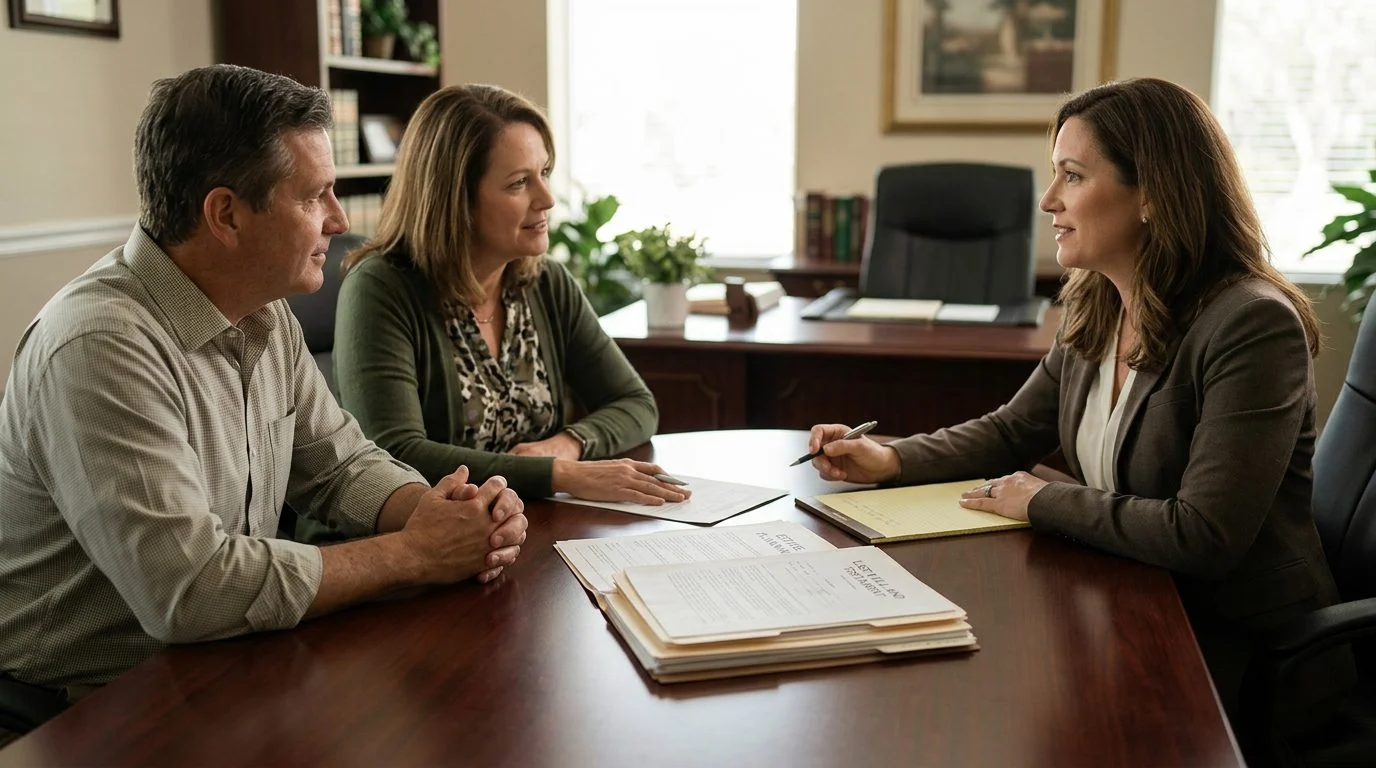
A typical engagement starts with a conversation about family, assets, and goals. According to ACTEC’s initial meeting guidance, an estate planning attorney helps clients gather and assess family and financial information and treats that information as confidential.
Next, the lawyer reviews property, how accounts are titled, and beneficiary designations. Those pieces can change who receives what, even when the will is clear.
Then comes the choice of who carries out the plan. Trust Counsel’s attorneys can serve individually as trustee or personal representative, and the firm advises and represents trustees, personal representatives and beneficiaries.
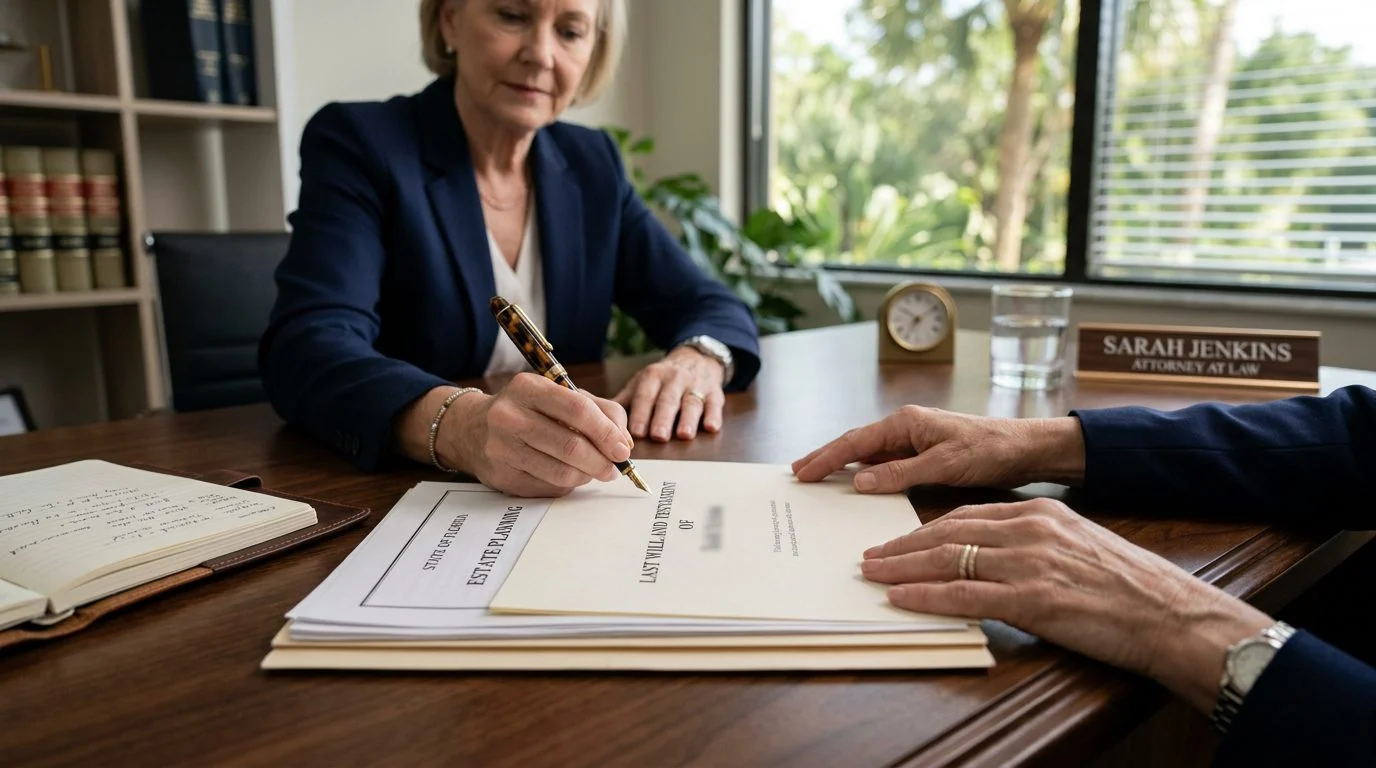
Drafting follows, then a review with you. The final step is a supervised signing with proper witnesses under Fla. Stat. § 732.502.
Candor matters. Under Fla. Stat. § 90.502, a client has a privilege to keep confidential communications made to obtain legal services from being disclosed. That privilege has limits. It does not apply to communications relevant to an issue between parties who claim through the same deceased client. Be open about family, debts, and earlier plans, and ask about the limits.
Not sure what your next step is?
Talk it through with Trust Counsel, PL — the first consultation is free, confidential, and carries no obligation.
How is the cost of a will discussed with a lawyer?
The cost of a will depends on the scope of the work. The number of assets, locations, business interests, blended-family questions, and whether trust planning belongs with the will all change the scope.
Fee terms are discussed directly with the attorney. You can ask about the full scope of work before you decide.
Cost matters in disputes too. According to Price v. Tyler, each party generally bears its own attorneys’ fees unless a contract or statute provides otherwise. Clear drafting can help reduce the chance of a later fight, which is a cost question too.
Quick answers to common questions
Do I need a lawyer to write a simple will in Florida?
Florida’s will formalities are set by Fla. Stat. § 732.502. Under that statute, every will must be in writing. The testator must sign the will at the end, or another person must subscribe the testator’s name at the end in the testator’s presence and by the testator’s direction. The testator’s signing or acknowledgment must take place in the presence of at least two attesting witnesses, and the attesting witnesses must sign the will in the presence of the testator and in the presence of each other.
How many witnesses does a Florida will need?
At least two attesting witnesses must see the signing, and they must sign in each other’s presence.
Who inherits in Florida if there is no will?
Heirs named by statute inherit, based on family relationship.
Is what I tell my attorney confidential?
Generally yes, under the lawyer-client privilege, which has stated exceptions.

Talk with Trust Counsel about your situation
If you are sorting this out after a recent diagnosis, a remarriage, or a death in the family, you may be carrying this for someone you love. You don’t have to work through the rules alone.
Leslie V. Marenco, a lawyer at Trust Counsel, PL, is responsible for this page. Call (305) 707-7126 or schedule online for a free first consultation. It is confidential and carries no obligation to continue.
Trust Counsel, PL is located in Coral Gables. We serve clients in Fort Lauderdale and Boca Raton. You can also read about the probate litigation attorney pillar page, the Florida page, the Fort Lauderdale page, and the Boca Raton page.
What a lawyer adds to a will
Formalities checked
A will has to meet Florida's signing and witnessing requirements. An attorney can review the execution steps so the document is prepared and signed correctly.
Planning beyond the will
A will is one piece of an estate plan.
Complex family situations
Blended families, minor children, and stepchildren often call for specific language to say exactly who receives what and who is named to serve.
Business and property protection
Business interests, out-of-state real estate, and assets held abroad can require coordinated drafting to reduce confusion for the people left behind.
Keep this in mind
A do-it-yourself will can look finished and still leave gaps. Small errors in signing, witnessing, or wording can create questions later, when the people you named are least able to resolve them.
Situations where legal guidance often matters
Blended families
Clear drafting can address children from different relationships and a current spouse, so intentions are stated plainly.
Business owners
Succession goals for a company can be coordinated with personal estate documents, including who steps in and when.
Families with property in more than one place
Real estate or accounts in other states or countries can raise additional questions that a single generic form does not address.
Parents of minor children
Guardianship nominations and trust arrangements for young beneficiaries are areas where careful wording makes a practical difference.