

Estate Planning | Coral Gables, Florida
Florida Will Attorney Fees: Understanding What Shapes the Cost
A plain-language guide to the choices that influence what a will engagement costs, and how to ask the right questions before you commit.
By Leslie V. Marenco · Published November 9, 2026
Many people who search how much does an attorney charge for a will are in the middle of something. You might be helping a parent with paperwork, or you may have just lost a relative and found no will. Attorneys usually charge a flat fee for a defined set of documents, or bill hourly for the time the work takes. Which approach fits depends on how much your plan needs to do.
Why the Question Usually Comes Up Now
Cost questions tend to surface at a turning point. A parent’s health changes, a relative dies, or a new child arrives, and the family realizes nothing is in writing. Those moments make the price feel urgent, even when the drafting itself is straightforward.
A will’s price depends on what the document has to do, not just on the fact that it exists. This page explains how fees are usually structured and what drives the work. That way you can understand the work in front of you before you decide how to proceed.
Not sure what your next step is?
Talk it through with our team — the first discovery call is free, confidential, and carries no obligation.
How Attorneys Typically Structure Will Fees
Attorneys usually price a will by a flat fee or hourly billing, though these may not be the only bases for computing fees.
Before you agree, confirm in writing what it includes, how many meetings and revisions are covered, and what would be billed separately.
Hourly billing makes the total depend on how long the work takes. That is why a clear description of your goals matters before the work starts. Ask how the attorney tracks time and what happens if revisions run long.
The same rule says a lawyer must not charge a clearly excessive fee or cost. It also says that, when the lawyer has not regularly represented the client, the basis or rate of the fee and costs must be communicated to the client, preferably in writing, before or within a reasonable time after commencing the representation (Rule 4-1.5).
General overhead belongs in the lawyer’s fee, whether the lawyer charges hourly or flat. So ask about any costs beyond attorney time, such as copies or storage.
What Changes the Scope and Cost of a Will
A simple will for one person with one set of beneficiaries takes less drafting time than a plan with more moving parts. Several facts change the work.
A blended family needs careful distribution language. A business owner has to explain what happens to company interests at death. A family with property in more than one state or country raises extra questions to answer before drafting.
Guardianship nominations for minor children add their own questions. A pour-over will, which sends assets into a trust at death, means the trust terms need review too. A guardian is appointed by a court, while a durable power of attorney may help you plan for incapacity. The Florida Elder Affairs guardianship guide explains that difference.
How much work your plan needs depends on the facts. Attorneys often gather family and financial details at the first meeting. This information is treated as confidential.
Florida Formalities That Shape the Work
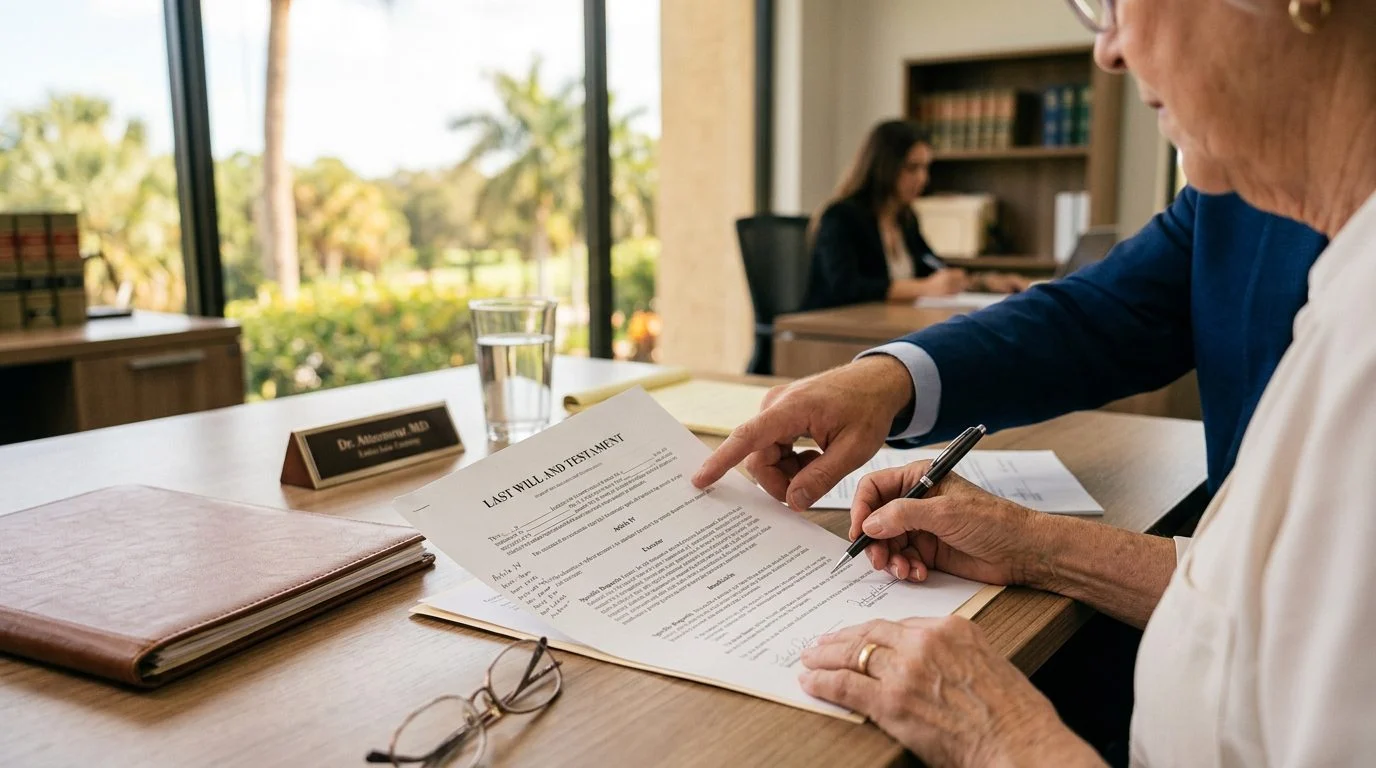
Florida requires every will to be in writing and signed at the end by the testator. The testator’s signature, or acknowledgment of it, must be made in the presence of at least two attesting witnesses. Those witnesses must sign in the testator’s presence and in each other’s presence (Fla. Stat. 732.502).
No particular form of words is needed if those formalities are followed. A will can also be made self-proved, using the testator’s acknowledgment and the witnesses’ affidavits before an officer authorized to administer oaths (Fla. Stat. 732.503). Attorneys often include one because it records how the will was signed.
Correct signing is part of the work a fee covers. A document signed without the required steps may not work the way you intend.
Your will may name a personal representative (often called an executor). Florida law says a personal representative is a fiduciary who must observe the standards of care that apply to trustees (Fla. Stat. 733.602). A personal representative is entitled to a commission payable from the estate assets without court order as compensation for ordinary services. The commission is based on the compensable value of the estate, which is the inventory value of the probate estate assets and the income earned by the estate during administration. If the will provides specific compensation criteria, other than a general reference to commissions allowed by law, the personal representative is entitled to compensation under that provision. A personal representative may renounce the will’s compensation provisions only if there is no written contract with the decedent regarding compensation, except for references to the regularly published schedule of fees in effect at the decedent’s date of death. A personal representative may also renounce the right to all or any part of the compensation (Fla. Stat. § 733.617).
Under Fla. Stat. § 733.617, an attorney serving as personal representative, or a person related to the attorney, is not entitled to compensation for serving as personal representative if the attorney prepared or supervised the execution of the will that nominated the attorney or that related person, unless the attorney or person nominated is related to the testator, or the attorney makes the required disclosures to the testator before the will is executed. Section 733.617(8) covers nominations under a will that a Florida resident executed on or after October 1, 2020. It also covers a will a Florida resident republished on or after that date, if the republished will nominates the attorney who prepared or supervised the execution of the republishing instrument, or a person related to that attorney, as personal representative (Fla. Stat. 733.617).
Have questions about what happened?
Ask our team directly. The first conversation is free, confidential, and there is no obligation to continue.
How the Way a Will Is Drafted Affects Later Disputes
The way a will is written and signed can shape what questions come up after death.
Florida law says a will is void if its execution was procured by fraud, duress, mistake, or undue influence. If only part was procured that way, that part is void. The rest may stay valid if it is not invalid for other reasons (Fla. Stat. 732.5165).
These questions turn on the circumstances. Whether pressure, mistake, or a flawed signing occurred is a factual question, not a label. Clear drafting and careful signing help show what the testator intended.
If you worry about pressure from others during drafting, read about tortious interference in inheritance in Florida. If your concern is how assets are managed after death, see the guide on trustee spending of trust funds.
Questions to Ask Before You Agree to a Fee
Ask whether the fee is flat or hourly, and what it covers, before you sign anything. Bring this short list to your free discovery call with Trust Counsel, PL:
- Is the fee flat or hourly, and what does it cover?
- Which documents are included?
- How many meetings and revisions are covered?
- Who signs the will, and who witnesses it?
- Do storage or copies cost extra?
Get the fee and every cost you may owe in writing. Ask who the client is. The attorney represents the person whose will is being drafted. If you are a beneficiary or may later serve as a fiduciary, you may need advice about your own role.
For broader guidance on trust and estate matters, see the trust litigation attorney overview. If you are already handling an estate, read what to do when someone dies in Florida.
Do I need a lawyer to write a will in Florida?
Florida sets signing rules for every will. A lawyer can help make sure each required step is met.
How many witnesses does a will need in Florida?
A Florida will needs at least two attesting witnesses who are present when the testator signs or acknowledges the will.
Can a lawyer who drafts my will also be my personal representative?
Talking Through Your Situation With Trust Counsel
If you’re drafting a will for yourself or a parent, or helping with a relative’s estate, a short conversation can clarify what your situation needs. The firm offers a free discovery call that is confidential and comes with no obligation to continue. It’s a good time to ask about fees and scope.
Call (305) 707-7126 or schedule online.
Leslie V. Marenco is the responsible lawyer for this page. Trust Counsel, PL has its only office in Coral Gables, Florida, and we serve clients in Florida. Tanya Vega is also a lawyer at the firm.
Want to know where you stand?
Tell us what happened and our team will walk you through the options available to you, at no cost.
What Can Change the Total Cost
Complexity of your family and assets
Blended families, multiple properties, or accounts with unusual titling often require more drafting and review time.
Scope beyond a basic will
Trust provisions, incapacity documents, and guardianship nominations are separate pieces of work and can change the overall engagement.
Assets or family in other places
Out-of-state property, foreign accounts, or relatives abroad can add research and coordination to the plan.
Updates to existing documents
Revising a will you already have can differ in scope from drafting a new one, depending on what has changed.
Questions to Ask Before You Engage
What is included?
Ask whether the work covers only a will or also related documents, reviews, and follow-up.
Who will handle my matter?
Ask which attorney is responsible for your file and how you will stay in contact throughout the work.
Are there other charges?
Ask for a full list of any costs beyond attorney time so you can plan with the complete picture.
How do changes get handled?
Ask how additional requests or later changes to your plan would be addressed and priced.