
Florida Will Contests | Coral Gables
Contesting a Will in Florida: What Makes the Challenge Difficult
Learn which facts, records and witnesses tend to shape these disputes, and how a confidential conversation can clarify your options.
By Leslie V. Marenco · Published November 8, 2026
How hard is it to contest a will in Florida? The honest answer turns on the evidence in each case. The person challenging the will must prove the grounds for the challenge. The deadline to object is short, generally three months after notice is served. This page explains the burden of proof, the legal grounds, the deadline, and what happens to the estate while a challenge is pending. Trust Counsel, PL is in Coral Gables, Florida. Leslie V. Marenco is the responsible lawyer for this page.
What does it actually mean to contest a will in Florida?
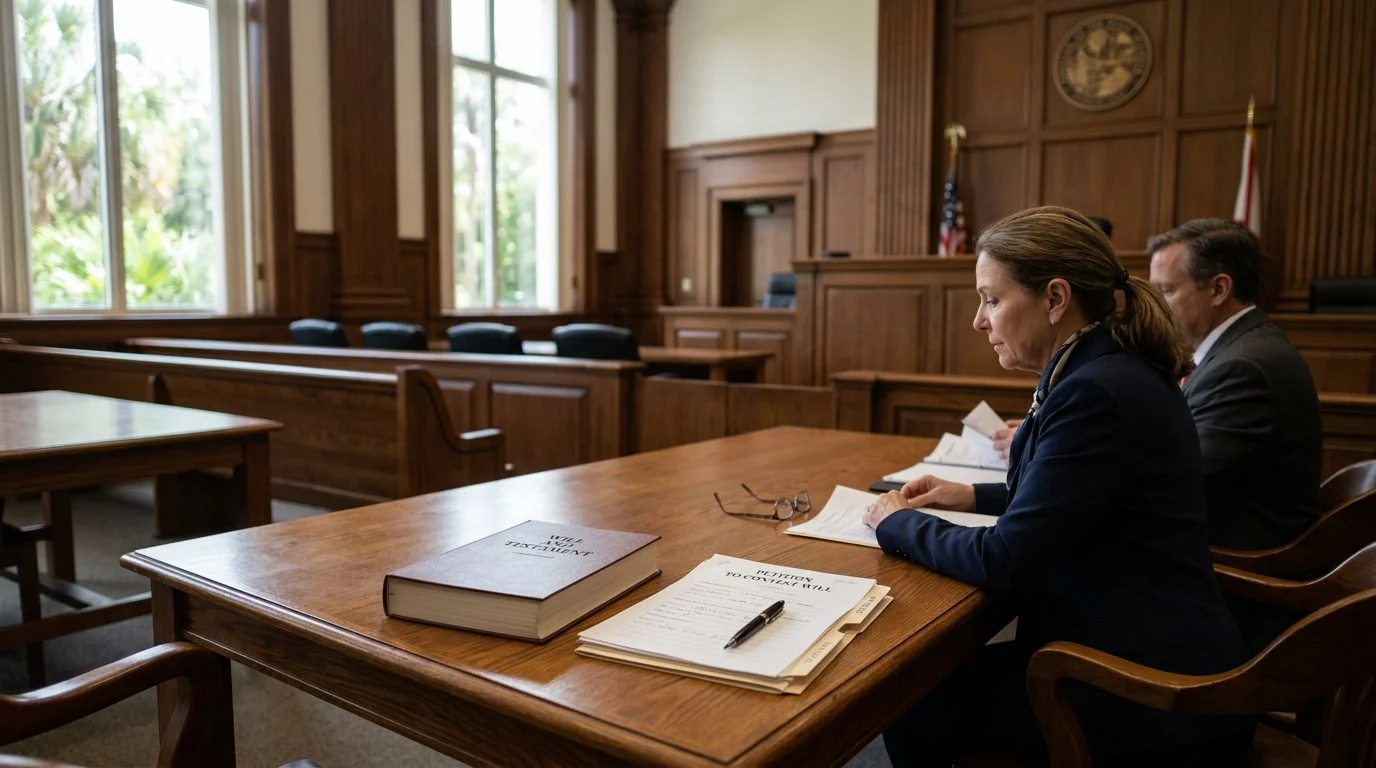
Contesting a will means filing a formal objection in the probate case. The objection asks the court to find the will invalid, in whole or in part.
This is different from a trust dispute, which is a separate case about a trust document. It is also different from a disagreement about how the estate is run day to day. Because the will is the central document, the case usually turns on whether that document is valid.
The objection comes from an interested person, such as a beneficiary or an heir. That means someone with a real stake in the estate. The personal representative (often called an executor) administers the estate, and that duty is set out in Fla. Stat. § 733.602.
For the wider picture of trust and estate disputes, see the trust litigation attorney page.

Not sure what your next step is?
Talk it through with our team — the first discovery call is free, confidential, and carries no obligation.
How hard is it to contest a will in Florida?
It depends on the facts, and the person contesting the will carries the main burden of proof. First, the person who wants the will admitted must show it was formally signed and witnessed. Fla. Stat. § 733.107 Then the contestant must prove the grounds for opposing probate. Fla. Prob. R. 5.275 states the same allocation.
A general feeling that something is wrong is only a starting point. A challenge needs specific facts that match a legal ground.
Florida also recognizes a presumption of undue influence in certain transactions. Under Fla. Stat. § 732.5165 (text), a will is void if the execution is procured by fraud, duress, mistake, or undue influence. Fla. Stat. § 733.107
The real question is whether the facts show a defect that the law recognizes.
What are the legal grounds for contesting a will in Florida?
The main grounds are fraud, duress, mistake, undue influence, and defects in how the will was signed. Florida law says a will is void if its execution was procured by fraud, duress, mistake, or undue influence. Fla. Stat. § 732.5165 If only part of the will was procured that way, only that part is void. The rest stands if it is not invalid for other reasons.
Improper signing is a separate ground. Florida requires a will to be in writing. The testator must sign at the end, or another person signs at the testator’s direction in the testator’s presence. Fla. Stat. § 732.502 The testator’s signing or acknowledgment must happen in front of at least two attesting witnesses. Those witnesses must sign in front of the testator and each other.
Being a witness who benefits does not, by itself, void a will. A will is not invalid because an interested witness signed it. Fla. Stat. § 732.504
Capacity is also a ground. Florida law allows a will to be made only by a person who is of sound mind.
Forgery claims are different. They depend on the paper itself, handwriting evidence, and who had access to the document.
Undue influence in probate: what courts look at
Undue influence means pressure or manipulation that overcame the testator’s free will. The document then reflects someone else’s wishes. A will procured by undue influence is void. Fla. Stat. § 732.5165
Courts look at the facts around the signing. Facts that often get examined include who arranged the will and who was present. They also include how the new will compares to earlier plans. Isolation of the testator and dependence on the person who benefits also come up.
The presumption is a key rule in these claims. When it applies, it shifts the burden of proof. Write that timeline down early.
Have questions about what happened?
Ask our team directly. The first conversation is free, confidential, and there is no obligation to continue.
Warning signs your family should know about
Warning signs include a late change that favors a caregiver. They also include a will signed shortly before death. Witness details that look incomplete or unusual are another sign. Each one is a reason to gather facts, not proof of wrongdoing.
Other signals include a document that conflicts with clearly stated earlier wishes. A signing that happened during illness, or while the testator relied heavily on one person, is another. Check whether the will shows the signing steps that Fla. Stat. § 732.502 requires.
Some families have innocent explanations for each of these facts. The facts themselves decide which explanation fits.
Write down dates, names of anyone present, where the signing happened, and what was said. Save earlier wills, letters, and emails that show earlier plans. Memory fades, so write it down now.
How short is the deadline to contest a will in Florida?
An interested person served with a notice of administration has three months from service to object to the will’s validity. If the objection isn’t filed in time, it is forever barred. Fla. Stat. § 733.212
The clock runs from service of the notice, not from the day the family first becomes suspicious. Mark that date on your calendar.
The 3-month period can be extended only for estoppel based on a misstatement by the personal representative about the deadline. Failure to disclose information or misconduct does not extend it. Unless sooner barred under subsection (3) of Fla. Stat. § 733.212, all objections to the validity of a will, venue, or the jurisdiction of the court must be filed no later than the earlier of the entry of an order of final discharge of the personal representative or 1 year after service of the notice of administration. Florida amended this section in 2024 (ch. 2024-238), and the current text controls.
A caveat is a different tool. An interested person who is apprehensive can file one with the court before the will is admitted to probate. Fla. Stat. § 731.110 A caveat filed before death expires 2 years after filing.
Claims held by a person who dies follow their own timing. Fla. Stat. § 733.104 If that person dies before the time limit ends, the personal representative may bring the action within the later of the deadline or 12 months after death.
What happens to the estate during a will contest?
The probate case keeps moving while a timely objection is pending. The dispute can slow administration and affect when assets are distributed.
The personal representative is a fiduciary. That person must observe the standards of care that apply to trustees. Fla. Stat. § 733.602 The duty is to settle and distribute the estate under the will and the probate code as efficiently as the estate’s interests allow.
A personal representative may take a commission from estate assets for ordinary services. Fla. Stat. § 733.617 On petition of an interested person, the court can increase or decrease that amount.
Trust Counsel’s attorneys can serve individually as trustee or personal representative, and the firm advises and represents trustees, personal representatives and beneficiaries.
Frequently asked questions
How hard is it to contest a will in Florida?
The answer turns on the evidence and the ground raised. The contestant generally must prove those grounds after the will’s signing is shown. Fla. Stat. § 733.107
Who can contest a will in Florida?
An interested person can object; one who is served with the notice of administration must generally do so within 3 months of service, and all objections must be filed no later than the earlier of final discharge of the personal representative or 1 year after service of the notice. Fla. Stat. § 733.212 Fla. Stat. § 733.212
Talking through a possible will contest with a Coral Gables trust litigation attorney
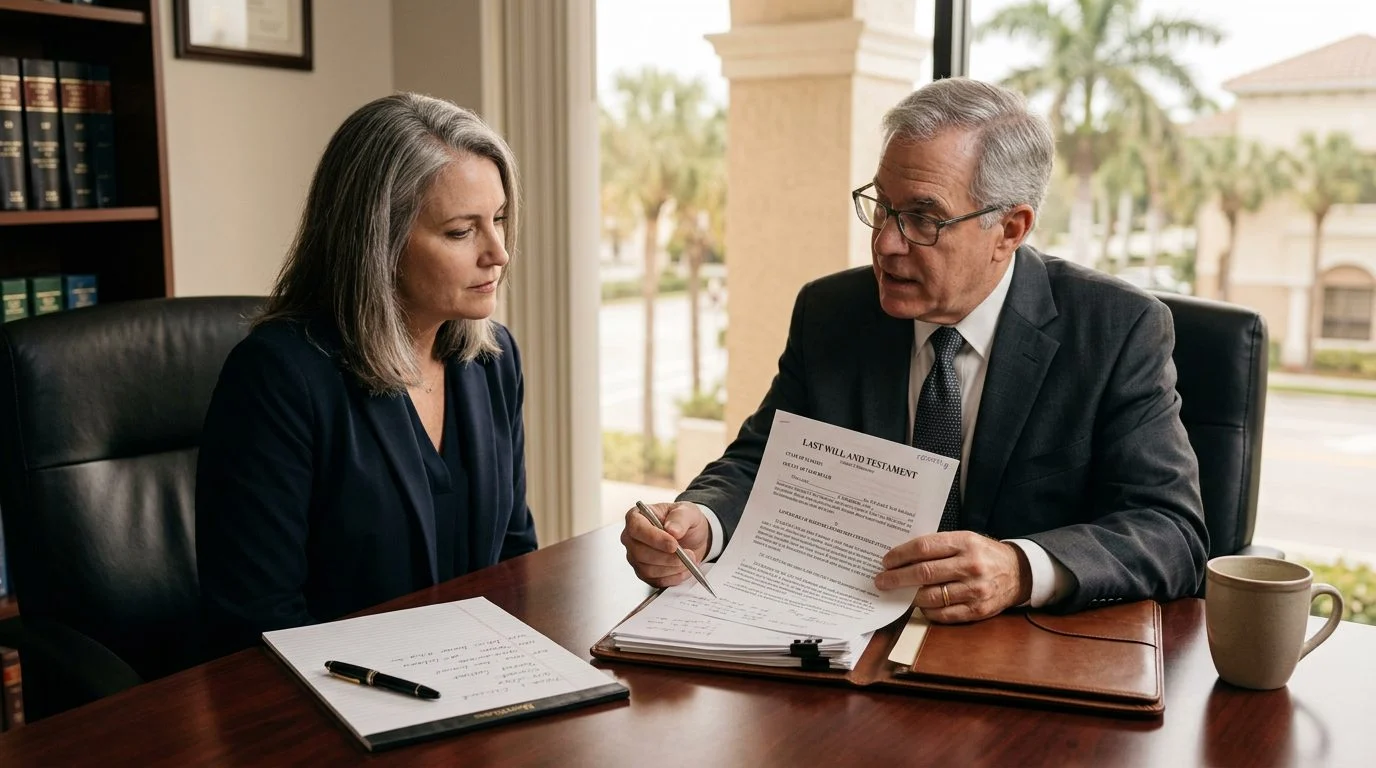
Trust Counsel, PL is in Coral Gables, Florida, and focuses on probate and trust litigation. If you’re asking how hard it is to contest a will in Florida, you may be grieving while a document you didn’t expect is in front of you. That’s a hard place to make decisions, especially with a short deadline.
Trust Counsel’s attorneys can review the will and the timeline with you. A matter may be referred to another lawyer or firm if that is the better fit.
Leslie V. Marenco is the responsible lawyer for this page. The firm’s lawyers include Leslie V. Marenco and Tanya Vega.
If a will is already in front of you and a deadline may be running, schedule a free first discovery call online or call (305) 707-7126. The first discovery call is free, confidential, and carries no obligation to continue.
Want to know where you stand?
Tell us what happened and our team will walk you through the options available to you, at no cost.
What shapes a will contest
The will itself
A review of the signed document and the circumstances surrounding its signing is often where a contest begins.
Specific grounds
Each challenge rests on particular grounds, and the proof offered for those grounds is central to the dispute.
Competing interests
Heirs, beneficiaries and the personal representative often have very different stakes in how the estate is handled.
Evidence drives the analysis
Records, medical history and witness accounts commonly shape how a challenge develops.
A confidential start
A conversation about the facts helps you understand your position before you decide on a next step.
Gather your papers before you call
Procedural steps in a will contest matter. Collect the will, any related estate documents and relevant correspondence before your first conversation with counsel.
How Trust Counsel can help
Probate litigation
Trust Counsel focuses on probate litigation, including disputes over wills and the administration of estates.
Trust litigation
The firm handles trust litigation for beneficiaries, heirs and fiduciaries in Florida.
Fiduciary roles
The firm advises and represents trustees, personal representatives and beneficiaries. Trust Counsel's attorneys can serve individually as trustee or personal representative.