

Probate and Trust Litigation | Coral Gables, Florida
Can a Power of Attorney Withdraw Money After Death?
A power of attorney gives authority during someone's life. Here is what changes at death, and who may act on the accounts next.
By Leslie V. Marenco · Published November 15, 2026
Can a Power of Attorney Withdraw Money After Death in Florida?
If a parent has died and you were named agent, you may have just learned the bank won’t honor your request. No, a power of attorney generally does not let an agent withdraw money after the principal dies. However, termination is not effective as to an agent who, without knowledge of the termination, acts in good faith under the power of attorney, and such an act, unless otherwise invalid or unenforceable, binds the principal and the principal’s successors in interest.
Not sure what your next step is?
Talk it through with our team — the first discovery call is free, confidential, and carries no obligation.
A Power of Attorney Ends When the Principal Dies
No. A power of attorney gives the agent no authority after the principal dies. Florida’s rule is direct: a power of attorney terminates when the principal dies, Fla. Stat. § 709.2109. A durable power of attorney keeps working through incapacity unless a court adjudicates the principal incapacitated and does not allow the agent’s authority to continue, but death is a separate trigger. Fla. Stat. § 709.2109 The statute ends the power at death whether it was durable or not.
An agent’s authority can be used only until it terminates, under the same statute. Timing matters, because a withdrawal dated after the death falls outside the document.
Florida protects an agent who acts in good faith without knowing the power ended. Under Fla. Stat. § 709.2109, termination is not effective against an agent who acts in good faith without knowledge of it. That protection depends on not knowing. Once a bank has notice that the power of attorney has terminated, it does not accept the document in good faith, Fla. Stat. § 709.2119.
For the wider estate steps, see trust administration after death in Florida.
Banks Often Refuse Requests Once They Learn of a Death
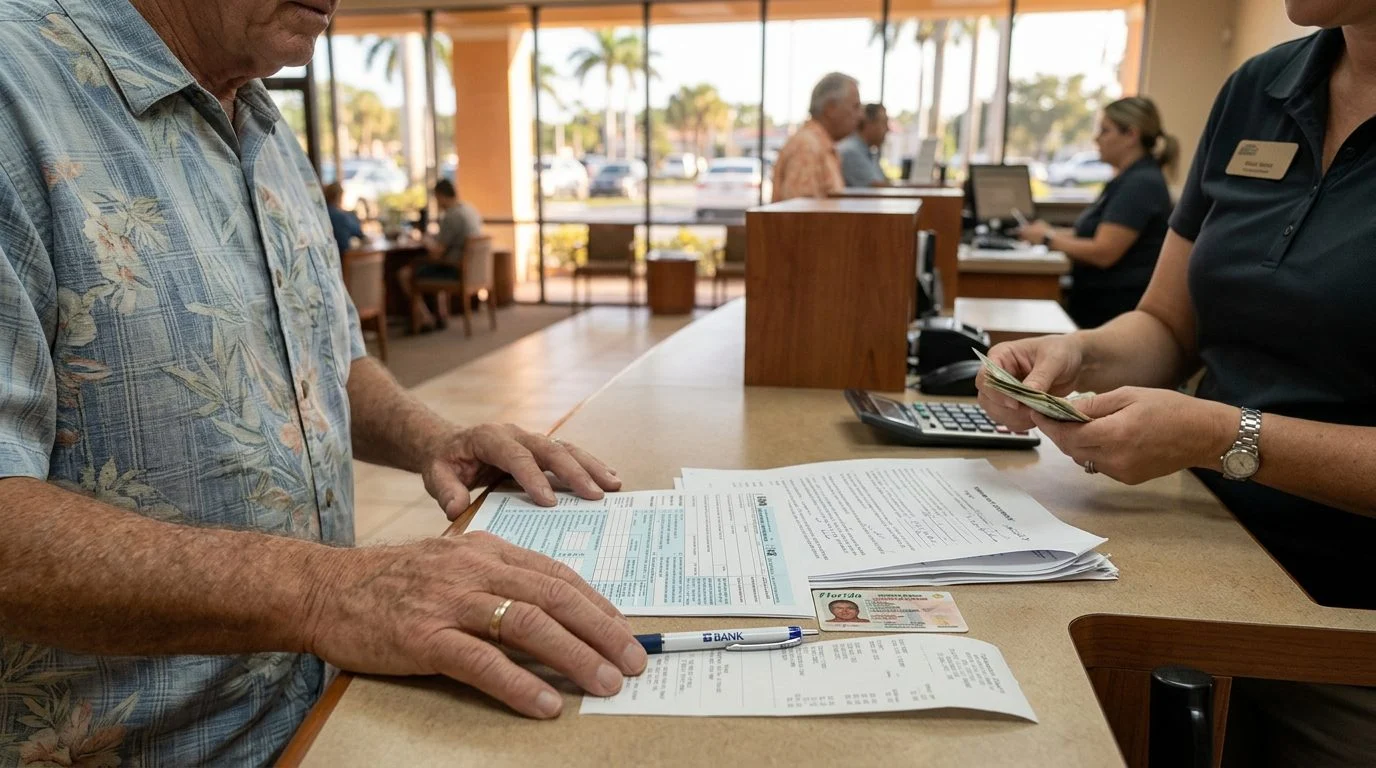
Once a bank knows the account holder has died, it can refuse a power of attorney request.
From the bank’s side, the question is simple: has the document terminated? Once the bank has notice of the death, the statute answers yes.
Bank staff may ask for a certified death certificate and may limit activity while they review the account. How long that review takes depends on the bank’s own process and how the account is titled, so ask the bank what it needs. If the bank declines, ask for the reason in writing and keep that letter with your records.
Authority during life was limited too. Except as provided in this section or other applicable law, an agent may use only the authority the document specifically grants, plus any authority reasonably necessary to give effect to that express grant, Fla. Stat. § 709.2201. A clause that lets the agent do anything the principal could do does not grant any authority.
Common mistakes include writing checks after death, using a debit card tied to the account, and moving funds to cover bills. Each one creates a record that heirs can ask about later.
Joint and Payable-on-Death Accounts Can Pass Differently
Some bank accounts pass to another person under their own terms, outside the power of attorney. A joint account may let the other owner keep the funds after death. Whether that happens depends on how the bank titled the account and what its account agreement says.
A common mistake is treating a joint account as if the agent’s role made the money theirs. The power of attorney gave authority to act for the principal, and that authority ended at death.
A payable-on-death (POD) designation names a person to receive the funds when the owner dies. The power of attorney does not control those funds.
Look at how the title reads on each statement, since the owner names show who holds the account. Pull the account agreement and recent statements too. They show which category applies. Readers comparing real estate transfer tools can read TOD deed disadvantages.
Have questions about what happened?
Ask our team directly. The first conversation is free, confidential, and there is no obligation to continue.
Withdrawals After Death Can Lead to Disputes
Withdrawals made after death can lead to disputes among heirs, beneficiaries and the estate.
Clear records make those questions easier to answer. An agent must keep a record of all receipts, disbursements and transactions made for the principal, Fla. Stat. § 709.2114.
Trust Counsel focuses on probate and trust litigation for beneficiaries, heirs and fiduciaries. The firm advises and represents trustees, personal representatives and beneficiaries. Trust Counsel’s attorneys can serve individually as trustee or personal representative.
What to Do When an Account Holder Has Died
Tell the bank in writing that the account holder has died, and send a certified death certificate. Then ask what the bank needs to review or release the account, and keep a copy of every letter.
Gather the power of attorney, account agreements, recent statements, and any joint ownership or beneficiary forms. Put them in one file with the bank’s written responses and the dates of each call.
Ask whether any bills or automatic payments still draft from the account. Tell those payees about the death so the charges can end.
If a court appoints a personal representative, that person takes over the estate’s property. Funds held in a revocable trust are handled by the trustee under the trust’s terms. Your role as agent ends at death.
Hold off on moving or spending funds while questions are open. For the trust side, see how a revocable trust works.
Does a power of attorney give access to a bank account after death?
No. A power of attorney terminates when the principal dies, under Fla. Stat. § 709.2109.
Can a personal representative take control of the account?
Yes, generally. Florida gives a personal representative the right to take possession of the decedent’s property, Fla. Stat. § 733.607.
Talk Through Your Situation With Leslie V. Marenco
If you were named agent and the bank has refused your request, you may be grieving and unsure what you’re allowed to do next. That’s a lot to handle at once, and you don’t need every answer before you call. Bring whatever papers you have, even if the stack is incomplete.
Leslie V. Marenco is the responsible lawyer for this page at Trust Counsel, PL. The firm’s only office is in Coral Gables, Florida.
Our free discovery call is confidential and carries no obligation to continue. Schedule online through our contact page or call (305) 707-7126.
Want to know where you stand?
Tell us what happened and our team will walk you through the options available to you, at no cost.
How Trust Counsel, PL Can Help
Focused practice
Trust Counsel, PL focuses on probate, trust, guardianship and estate planning matters for Florida families.
Representation for every side
The firm advises and represents trustees, personal representatives and beneficiaries. Trust Counsel's attorneys can serve individually as trustee or personal representative.
Trust administration
We help clarify which documents remain in force, which accounts are affected and which filings come next.
Coral Gables office
Our office is in Coral Gables. We serve clients in Fort Lauderdale, Boca Raton, West Palm Beach, Doral, Kendall, Pinecrest, Key Biscayne and Aventura.
Free discovery call
The first call is free, confidential and carries no obligation to continue.
Responsible attorney
Leslie V. Marenco is the responsible attorney for this page at Trust Counsel, PL in Coral Gables.
Before You Act on the Account
A power of attorney ends when the principal dies. Do not assume the document still allows access to the bank, brokerage or other accounts after death. Ask a lawyer first.
What to Bring to Your Free Discovery Call
The power of attorney
Bring the signed document and any amendments, so the scope and dates can be reviewed.
The death certificate
A certified copy helps confirm the timeline for the accounts and documents involved.
A list of accounts
Note the banks, brokerages and institutions that hold funds or property in the decedent's name.