
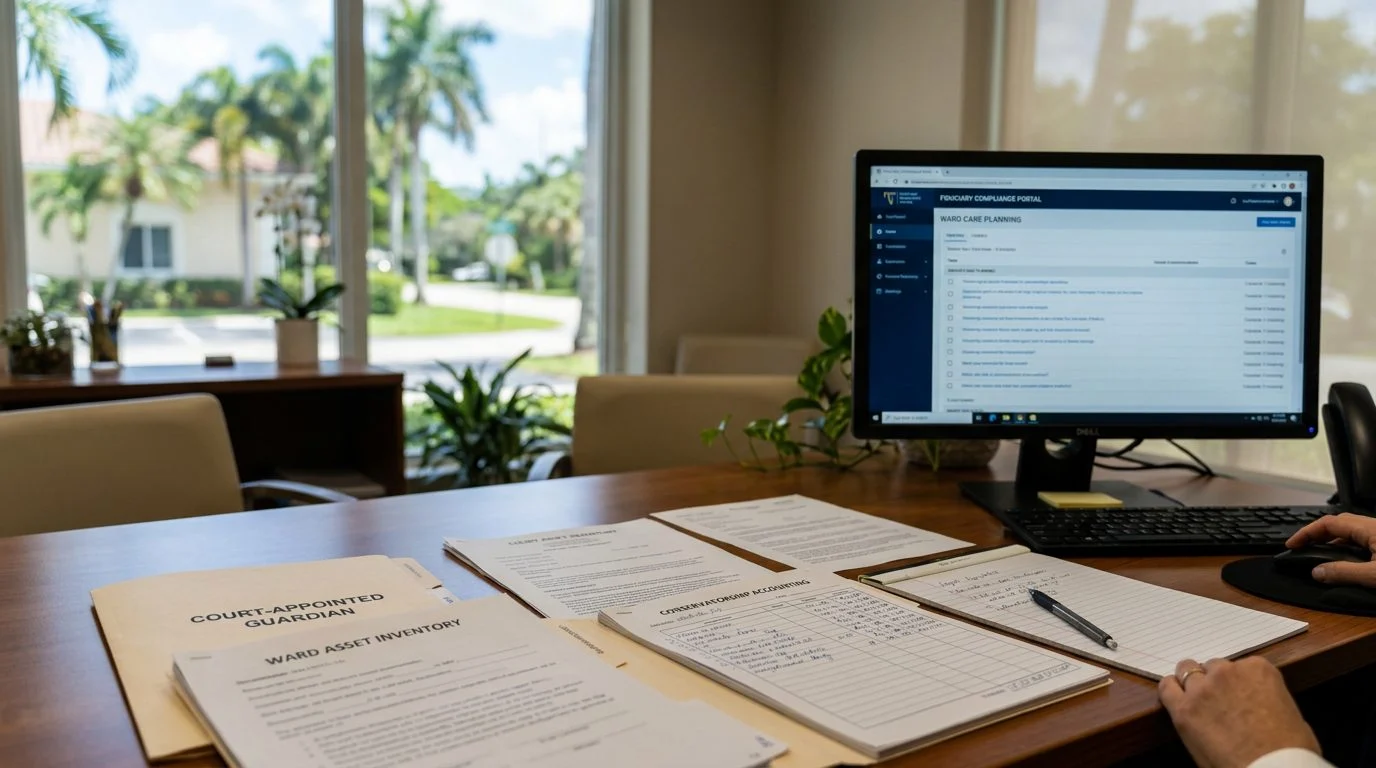
Key Biscayne Guardianship Attorney
Guardianship in Florida: Getting Clear Answers for Your Family in Key Biscayne
Start with the questions that matter most, then decide with confidence whether a court process is the right path.
By Leslie V. Marenco · Published November 15, 2026
If a parent or spouse can no longer handle money or health decisions, you may be wondering whether a court must step in. In Florida, a court can appoint a guardian for an adult only through a formal process with notice, medical review and findings. A guardianship attorney helps the family, or the person asking for a guardian, work through that process.
Florida guardianship is governed by Chapter 744 of the Florida Statutes. This guide walks through how that process works for families in Key Biscayne and across Miami-Dade County.
What does a guardianship attorney do for a Key Biscayne family?
The attorney does not make the final decision. The judge decides whether a guardian is needed and who should serve.
The court must weigh several voices. It must consider the wishes the incapacitated person has expressed about who should serve as guardian. When that person cannot state a preference, it must consider the wishes of the next of kin. It must also consider any guardian named in a will in which the person is a beneficiary. Fla. Stat. § 744.312 sets out those factors.
Trust Counsel, PL focuses its estate planning, probate, trust and guardianship work in one practice. Leslie V. Marenco is the responsible lawyer for this page. The firm’s only office is in Coral Gables. We serve clients in Key Biscayne.
Not sure what your next step is?
Talk it through with our team — the first discovery call is free, confidential, and carries no obligation.
When does a Florida court appoint a guardian?
A court can appoint a guardian for an adult only after an incapacity proceeding. A guardian for a minor can be appointed without that separate finding.
An adult’s case starts with a petition to determine incapacity. The petition must be verified, which means sworn to. It must state the petitioner’s relationship to the person and which rights the person cannot exercise. It must also say whether the person uses help such as supported decisionmaking (Fla. Stat. § 744.3201).
Within 5 days after the petition is filed, the court must appoint a three-member examining committee. One member must be a psychiatrist or other physician. Notice must be read to the person, given to the person’s attorney, and served on next of kin (Fla. Stat. § 744.331).
The petition also states the extent of guardianship wanted, plenary or limited, and the nature and value of the property involved (Fla. Stat. § 744.334). Florida also lists alternatives the petition must address. These include an advance directive, a durable power of attorney under chapter 709, and a trust instrument. Under Fla. Stat. § 744.334(1), a guardianship petition must state the reasons why alternatives to guardianship are insufficient, and the statute defines those alternatives to include a durable power of attorney as provided in chapter 709 (Fla. Stat. § 744.334). Whether a power of attorney avoids a court case depends on the facts.
Can you file for guardianship in Florida without a lawyer?
An adult can sign a guardianship petition, but the content rules are strict. The petition must list every known next of kin, their relationships and addresses, and the birth dates of any minors. It must name the person’s attending or family physician, if known (Fla. Stat. § 744.3201). If the petitioner lacks enough knowledge to say which rights the person cannot use, the petition must say so.
Missing details can slow the case. A lawyer can draft the petition, track the notice steps, and answer objections from relatives.
The work continues after appointment. Within 60 days after letters of guardianship are signed, the guardian files an initial report (Fla. Stat. § 744.362). A guardian of the person files an annual plan. A guardian of the property files an annual accounting (Fla. Stat. § 744.367). Fla. Stat. § 744.367 reads: “(2) Unless the court requires or authorizes filing on a fiscal-year basis, each guardian of the property shall file with the court an annual accounting on or before April 1 of each year.” Under Fla. Stat. § 744.367(4), any interested person, including the ward, may file written objections to any element of a guardian’s annual report within 30 days after the report has been filed (Fla. Stat. § 744.367). If an annual report is late, the judge can impose sanctions, including contempt or removal of the guardian.
What drives the cost of a guardianship case?
Cost tracks the work a case requires, and Florida courts review fees against set factors. A guardian or an attorney who serves the ward is entitled to a reasonable fee and reimbursement of costs. The court weighs the time and labor required, how novel and difficult the questions are, and the fee customarily charged in the locality (Fla. Stat. § 744.108). It also weighs the nature and value of the incapacitated person’s property. Every petition for guardian or attorney fees must include an itemized description of the services performed.
Several parts add to the total. Attorney time on the petition and notices is one. Court filings, service of notice and the examining committee’s work are others. A contested hearing takes more work than an uncontested one.
An uncontested case, where relatives agree and the person does not dispute the petition, tends to involve less work. A case with objections can take longer and cost more. On the free discovery call, the firm can walk through the expected steps and the cost parts of your case. The first call is free, confidential, and carries no obligation to continue.

Have questions about what happened?
Ask our team directly. The first conversation is free, confidential, and there is no obligation to continue.
How do Key Biscayne guardianship cases work in Miami-Dade County?
Families can start preparing before anything is filed.
Gather the proposed ward’s full name, age, county of residence and address. Gather the physician’s name and address. Gather the proposed ward’s full name, age, county of residence and address. Gather the physician’s name and address if known.
Many families gather medical records first and forget the property list. List the person’s property and its estimated value (Fla. Stat. § 744.334).
Write down every next of kin, with addresses and any minors’ birth dates. Those relatives must receive notice under the statute (Fla. Stat. § 744.331).
Choosing a guardian matters too. A person convicted of a felony, or otherwise unsuitable for the duties, cannot be appointed (Fla. Stat. § 744.309).
How does a guardian of a minor differ from a guardian of an adult?
A guardian of a minor can be appointed on petition without the separate incapacity finding an adult needs. A parent, sibling, next of kin or other person interested in the child’s welfare can petition. A guardian of a minor has the authority of a plenary guardian. The court may, in its discretion, appoint an attorney to represent the minor at the hearing (Fla. Stat. § 744.3021).
A minor who is 14 or older can state a preference, and the court must consider it (Fla. Stat. § 744.312). A parent who petitions needs no notice unless the other parent is living and does not consent (Fla. Stat. § 744.3371).
An adult found incapacitated keeps important rights. Some rights can be removed but not given to a guardian. A guardian also cannot commit the ward to a facility without first getting court authority.
Some families reach this point when a parent or spouse can no longer manage money or health decisions. The firm advises and represents petitioners, guardians and family members in both kinds of cases. Each matter turns on its own facts.
Should you talk with a guardianship attorney before filing?
Yes, it makes sense to talk through the facts before you file, because the petition has strict content rules. Bring what you have gathered: the person’s age and address, the physician’s name, the property list and the next of kin. Trust Counsel, PL can review those facts with you and explain which steps may apply to your family. If a parent or spouse in Key Biscayne can no longer make safe decisions alone, book a free discovery call at (305) 707-7126 or schedule online.
Want to know where you stand?
Tell us what happened and our team will walk you through the options available to you, at no cost.
Frequently Asked Questions
What does a guardianship attorney do for families in Key Biscayne?
A guardianship attorney helps families work through the Florida court process for asking a judge to appoint a guardian for an adult who cannot manage personal or financial affairs. Trust Counsel, PL is located in Coral Gables, and we serve clients in Key Biscayne.
How does a guardianship start in Florida?
A guardianship begins when an interested person files a petition with the circuit court, and the judge decides whether a guardian is needed under Chapter 744 of the Florida Statutes. The process requires notice to the person and other interested parties, along with evidence about the person’s capacity.
What is the difference between a guardian of the person and a guardian of the property?
A guardian of the person handles personal matters such as living arrangements, medical care, and daily welfare, while a guardian of the property manages money and other assets. The court can tailor the powers it grants to what the person actually needs.
Can a guardianship be ended or modified in Florida?
Yes, a guardianship can be modified or terminated, and rights can be restored, when the court finds the person no longer needs a guardian or has regained capacity. To talk through your family’s situation, you can book a free discovery call with Trust Counsel, PL at (305) 707-7126, and the free discovery call is confidential and carries no obligation to continue.
Why Families Start with Trust Counsel
Coral Gables Office
Our only office is in Coral Gables, and we serve clients in Key Biscayne.
Guardianship Within Estate Work
The firm focuses on guardianship alongside probate, trust and estate planning matters, so the same team can see the full picture.
A Confidential First Conversation
Your free discovery call is confidential and carries no obligation to continue.
Clear Guidance on the Court Process
We explain each step of a Florida guardianship petition in plain language before you make any decisions.
Take Time to Weigh the Options
A guardianship removes some of an adult's own decision-making authority, so families should understand the full range of options before filing. Talk through your situation with our office first.
What Your Free Discovery Call Covers
Share the Situation
Describe the person involved, the concerns you have and the decisions that need attention.
Review the Key Documents
Bring any existing estate planning documents, medical concerns or financial information that may be relevant.
Understand the Court Path
Learn how a Florida guardianship petition works, who is involved and what the court typically requires.
Decide on Next Steps
Leave with a clearer view of your options, with no obligation to continue with Trust Counsel.