
Florida Probate Law | Coral Gables, Florida
Florida Probate Laws in Plain English
Marenco · Published October 16, 2026
What are the probate laws in Florida? Together, these laws set out how a deceased person’s property is gathered, how valid debts are paid, and how what remains passes to heirs or beneficiaries. How those rules apply depends on the governing instrument, such as a will or trust, on applicable Florida law, and on the facts of each estate. This guide walks through the main pieces in plain English, one stage at a time.
What Probate Is and When Florida Probate Law Applies
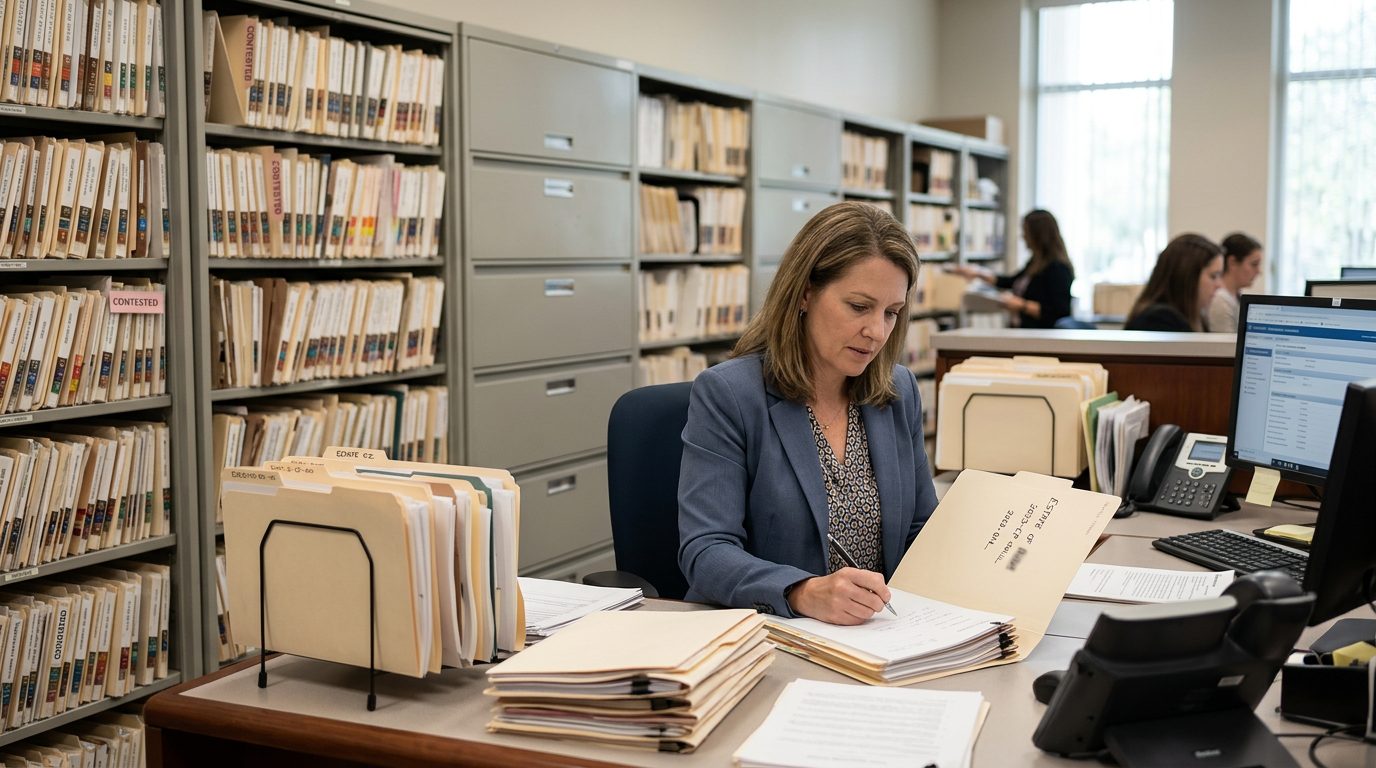
Probate is the court-supervised process for handling a deceased person’s assets. Whether it’s needed depends on how each asset is titled and what the governing instrument says. Property owned jointly with survivorship rights, accounts with named beneficiaries, and assets held in a trust often pass by their own terms rather than through probate. How that works depends on how each item is set up and on applicable Florida law.
Probate usually covers property that passes under a will or, without a will, under Florida’s intestacy rules. It runs in the probate court of the county where the estate is administered. Other statutes can also apply, depending on the facts. Florida’s term for the person who runs an estate is personal representative (often called an executor). Under Fla. Stat. § 731.201, an “interested person” is anyone who may reasonably be expected to be affected by the outcome of a proceeding.
Talk it through with Trust Counsel, PL — the first consultation is free, confidential, and carries no obligation.

Wills, Intestacy and the Documents That Guide the Estate
A will guides the estate only if it meets Florida’s signing rules. Under Fla. Stat. § 732.502, a will must be in writing. The testator must sign at the end, or have another person sign for them at their direction. That signing, or the testator’s acknowledgment of it, must happen in front of at least two attesting witnesses. The witnesses must sign in the testator’s presence and in each other’s presence. The rules are detailed, so small errors can matter. Whether an error changes the result depends on the facts and applicable law.
When there’s no valid will, the estate passes under intestacy rules. Under Fla. Stat. § 732.101, property not effectively disposed of by will passes to the decedent’s heirs. Heirs are the persons, including a surviving spouse, entitled under the intestate succession statutes. Under applicable Florida law, the portion of an intestate estate that passes to a surviving spouse is not the same for every family. That depends on whether there are surviving descendants and whose descendants they are.
Whether a will becomes part of a public court file depends on when and how it’s filed and on applicable Florida law.
Who May Serve as Personal Representative and Who Has Priority
When a will names a personal representative, Florida law generally begins there. Under Fla. Stat. § 733.301, in a testate estate the order of preference starts with the personal representative nominated by the will. Next is a person selected by a majority in interest of the persons entitled to the estate, then a devisee under the will. In an intestate estate, the order starts with the surviving spouse. Then comes a person selected by a majority in interest of the heirs, then the heir nearest in degree. If more than one person in a class applies, the court may choose among them. Who actually serves depends on the facts of each estate.
Trust Counsel’s attorneys can serve individually as trustee or personal representative, depending on the governing instrument and applicable law. The firm itself is not a fiduciary. The firm advises and represents trustees, personal representatives and beneficiaries. Its lawyers may advise or represent clients, subject to the governing instrument and applicable law.
The Main Stages of Florida Probate Administration
Florida probate generally moves through filing, notice, creditor claims, inventory and distribution, in an order that depends on the estate’s facts. Each stage can take a different amount of time.
The process starts with a court filing. The court may grant letters of administration, which give the personal representative authority to act for the estate, depending on the court’s order.
Next comes notice. Under Fla. Stat. § 733.212, a personal representative generally must promptly serve a notice of administration on certain known persons. These include the decedent’s surviving spouse and beneficiaries.
Creditors get notice too. Under Fla. Stat. § 733.2121, the personal representative generally must promptly publish a notice to creditors. That notice says claims must be filed within the periods set in § 733.702, or be forever barred. The same statute generally requires a diligent search for reasonably ascertainable creditors.
Then comes the inventory. Under Fla. Stat. § 733.604, a personal representative generally must file a verified inventory. It lists estate property with reasonable detail and estimated fair market value at the date of death, unless one was already filed.
Last, valid claims are paid, and what remains is distributed. The will or intestacy law generally directs who receives it. Each step depends on the governing instrument, applicable Florida law, and the facts of the estate.
Small Estates, Summary Administration and Other Simplified Options
Florida allows a simplified route for some smaller estates, but eligibility depends on the facts. Under Fla. Stat. § 735.201, summary administration may be available when the estate’s value, less property exempt from creditors’ claims, falls within the statutory limit, depending on applicable law and the facts of each estate. It may also be had when the decedent has been dead for more than 2 years. The statute also covers certain testate estates whose will does not direct administration.
Homestead property can follow its own rules. Under Fla. Stat. § 732.401, when a decedent leaves a spouse and descendants, the surviving spouse may take a life estate. The spouse may instead elect an undivided one-half interest as a tenant in common. The statute says an election, once made, is irrevocable. How these rules apply depends on the decedent’s situation and applicable law.
Whether any simplified option fits is a fact-specific question. It is not a fixed rule that applies to every estate of a given size.
How Much Probate Costs and How Fees Are Determined
Probate costs vary, and attorney fees are agreed between the client and the attorney according to the scope of the work. Fee terms depend on the work involved, the estate, and the agreement reached. Other costs may include court filing fees, certified copies, and newspaper publication. Under Fla. Stat. § 733.2121, publication of the notice to creditors runs once a week for 2 consecutive weeks. It appears in a newspaper in the county where the estate is administered, or as the statute otherwise provides. Those amounts depend on the court and the filing involved.
A personal representative’s pay is governed by statute and by any court order. Under Fla. Stat. § 733.617, a personal representative is generally entitled to a commission for ordinary services, payable from estate assets. The commission is based on the probate estate’s compensable value. The will, a written contract, or court action can change the amount. A personal representative may also give up all or part of the compensation. No single fixed figure applies.
Talk it through with Trust Counsel, PL — the first consultation is free, confidential, and carries no obligation.
How Long Probate Takes and Whether Estate Taxes Apply
Probate length depends on the estate’s complexity, creditor claims, disputes and court schedules, so no single timeline applies. A simple estate with few assets may move faster than one with real estate, several heirs, or contested claims. Timing is a question of the facts, not a fixed schedule.
Creditor claim periods can shape the pace. Under Fla. Stat. § 733.702, a claim is generally binding only if it’s filed in the probate proceeding on time. On time means by the later of 3 months after first publication of the notice to creditors, or 30 days after service on a creditor who must be served. The statute has exceptions. How the period applies depends on the facts of each claim.
Federal estate tax is a matter of federal law. Whether it applies depends on the estate’s size and on the law in effect at the time. According to IRS Revenue Procedure 2025-32, the basic exclusion amount for calendar year 2026 is $15,000,000.
When Probate Disputes Can Arise and Where Time Limits Matter
Disputes can arise over a will’s validity, a personal representative’s actions, or who inherits, and the outcome depends on the instrument, applicable law and the facts. According to the ACTEC probate video, disputes among beneficiaries, family members or creditors can lead to court involvement during estate settlement. Whether that happens depends on the facts of each estate.
Time limits matter. Under Fla. Stat. § 733.212, an interested person served with a notice of administration generally must file objections to the will’s validity, venue or jurisdiction within 3 months after service. The statute limits extensions to estoppel based on a misstatement by the personal representative. Whether and how that period applies depends on the notice given and the facts of each case.
The Miami-Dade Clerk probate page describes caveats, which heirs, interested parties or creditors may use. It also describes the deadline to deposit a decedent’s will. How those procedures apply depends on the facts of each matter.
The firm’s lawyers may advise or represent clients in probate litigation, subject to the governing instrument and applicable law.

Talking Through Your Family’s Probate Questions With Trust Counsel
Florida’s probate laws have many moving parts, and most depend on the documents and facts involved. You may be reading this after losing a parent, a spouse or a sibling, with court papers in hand. Asking what are the probate laws in Florida is a sensible first step.
Quick Answers to Common Questions
How long does a house stay in probate in Florida? It depends on the estate’s complexity, creditor claims, disputes and court schedule. No single timeline applies.
How much can you inherit in Florida without paying taxes? Whether federal estate tax applies depends on the estate’s size and the law in effect. The basic exclusion amount in § 2010(c)(3) is increased to $15,000,000 for calendar year 2026, as stated in the IRS revenue procedure.
Are wills public record in Florida? Whether a will becomes part of a public court file depends on when and how it’s filed and on applicable Florida law.
How much does it cost to do a probate in Florida? Attorney fees are agreed between the client and the attorney according to the scope of the work. Other costs depend on the estate and the court.
If you’re sorting through a loved one’s estate papers, Trust Counsel, PL in Coral Gables can talk through how these rules may apply to your family’s situation. You can call (305) 707-7126 or schedule online.
What This Guide Covers
Probate Basics
What probate is, how Florida probate law is structured and how the governing will or trust can shape the process.
Roles in the Process
How a personal representative, a trustee, heirs and beneficiaries may each be involved, depending on the instrument and applicable law.
Stages of an Estate
A plain-English overview of the main steps, from gathering assets to distribution, and how each step may vary by estate.
Questions to Ask a Lawyer
Practical questions to bring to a consultation so you can discuss how your own facts may apply.
Every Estate Is Different
Probate steps and timing can depend on the will or trust, applicable Florida law and the facts of each estate. Review your own documents before deciding on any step.