
As a parent or loved one, your primary goal is to ensure a lifetime of comfort, exceptional care, and unwavering support. Naturally, you want to leave a substantial inheritance to guarantee their quality of life.
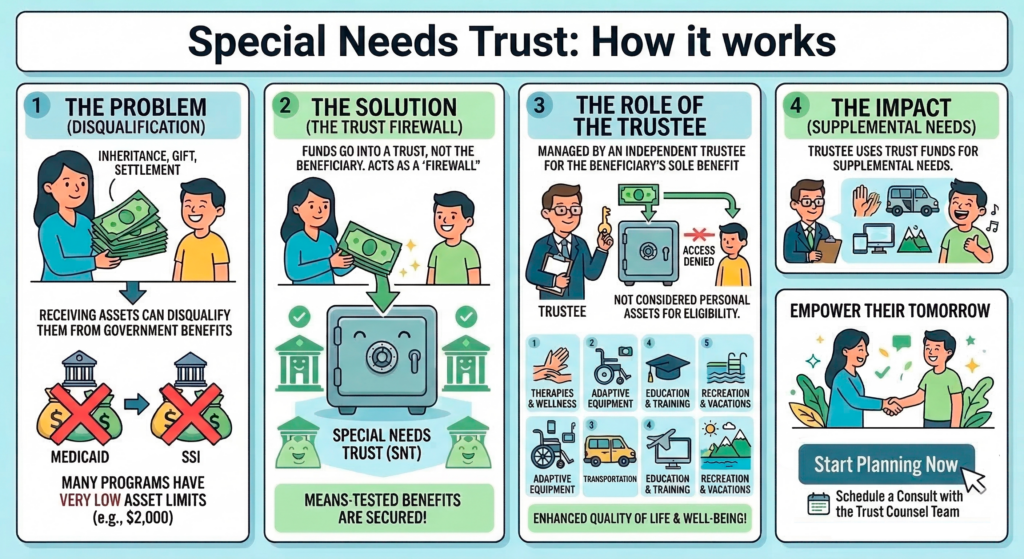
The Harsh Reality: Leaving money directly to a dependent with disabilities often triggers an unintended crisis. Because vital government programs like Supplemental Security Income (SSI) and Medicaid have strict asset limits (often as low as $2,000), a direct inheritance can instantly disqualify your loved one from the very benefits they rely on for survival.
What is a Special Needs Trust and How Does It Work?
At its core, a Special Needs Trust is a protective legal “bucket.” Instead of leaving an inheritance directly in your child’s name, you place the assets inside the trust.
Because the trust owns the assets, your child does not. This crucial distinction allows the funds to be used entirely for your child’s benefit without those assets counting against government eligibility. It is the only legally compliant way to bridge the gap between basic assistance and the high-quality life you envision.
Preserving Essential Government Benefits (SSI and Medicaid)
Government programs are designed to cover the bare minimum: basic shelter, standard food, and baseline medical care. But surviving is not the same as thriving.
A properly drafted SNT is designed to supplement, not replace, public benefits. By acting as a financial firewall, the trust ensures that your loved one never loses their essential Medicaid health coverage or monthly SSI stipends, while still having access to the private wealth you left behind.
Third-Party vs. First-Party Special Needs Trusts: The Critical Difference
Not all SNTs are created equal, and understanding the difference is vital for your family’s broader wealth preservation strategy:
Third-Party Special Needs Trust
This is funded by your money (the parent or grandparent) as part of your estate planning. The massive advantage here is that there is no “Medicaid payback” provision. When your special needs child eventually passes away, any remaining funds in the trust can be seamlessly passed down to your other children, grandchildren, or a charity of your choice.
First-Party Special Needs Trust
This is funded by the disabled individual’s own money (e.g., a personal injury settlement). By federal law, these trusts require a payback provision, meaning the state can claim any remaining funds upon the beneficiary’s death to recoup Medicaid costs.
What Can a Special Needs Trust Pay For? (Enhancing Quality of Life)
Government programs cover the “bare minimum”: basic shelter and baseline medical care. An SNT is designed to supplement, not replace, these benefits. The Trustee can use funds for:
- • Advanced Medical: Dental work, therapies, and treatments not covered by Medicaid.
- • Caregiving: Private companions and in-home caregiving services.
- • Independence: Customized transportation (wheelchair-accessible vans) and home modifications.
- • Enrichment: Education, tutoring, summer camps, vacations, and travel.
- • Technology: Computers, sensory equipment, and specialized furnishings.
Choosing the Right Trustee for Lifelong Care
A Special Needs Trust requires meticulous administration. If a Trustee accidentally gives cash directly to the beneficiary or pays for a “disqualifying” expense, it can trigger a loss of government benefits.
The “Hybrid” Approach: Many families appoint a trusted family member to advocate for the child’s personal needs, alongside a professional corporate trustee or legal advisor (like Trust Counsel) to handle the complex accounting, taxes, and strict government compliance.
Empower Their Tomorrow, Today.
Providing for a loved one with special needs requires more than just good intentions; it requires precise, specialized legal architecture.
At Trust Counsel, we are here to guide you every step of the way whether it involves Special Needs Planning, Asset Protection, Business Succession, or Probate, our Coral Gables-based attorneys are dedicated to protecting you and your family.
Don’t leave your child’s quality of life to chance. Secure their financial independence today.
This blog is for informational purposes only and does not constitute legal advice. Estate planning outcomes depend on individual facts and applicable law. Reading this article does not create an attorney-client relationship. Consult a qualified Florida estate planning attorney regarding your specific situation.


